


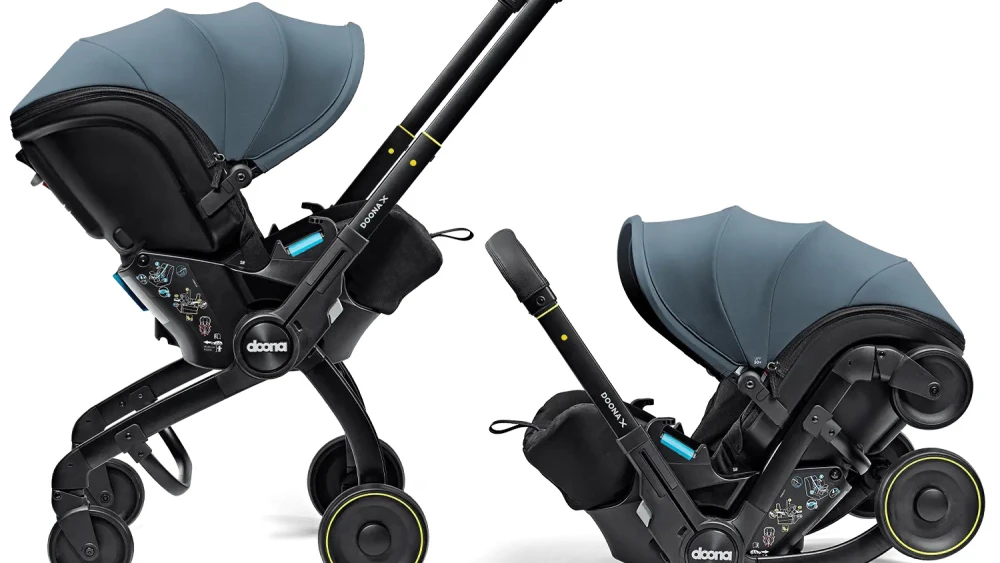
A robot that tends bee colonies. An AI model that scans medical images for urgent findings. A car seat that converts into a stroller. Time magazine’s Best Inventions of 2026 span almost every corner of modern life.
These, and more, are some of the entries that are connected to Israeli-linked companies.
Other entries from this year’s list come from multinationals that run engineering and research operations in Israel, which raises deeper questions: Where is the line between Israeli startup and corporate presence, and what impact did Startup Nation have on some of the year’s greatest technological achievements?
An Israeli company, a local R&D office, and components built by an Israeli employee are all different things. Time recognizes finished products under company names. So tracing the work behind those names requires a closer look.
Six very different inventions
In healthcare, Aidoc’s CARE clinical-grade AI foundation model analyzes medical images and information to help clinicians identify urgent findings and prioritize cases. Time describes it as an AI model intended to recognize a range of findings rather than perform one narrow detection task. Aidoc has engineering leadership and operations in Tel Aviv, although the geographic division of work on CARE itself is unconfirmed.
Nanox.Arc X addresses access to medical imaging. The system uses X-rays taken on a patient to produce three-dimensional views. Time reports that it received Food and Drug Administration clearance in 2025 and is in use at dozens of U.S. facilities. The company is headquartered in Petach Tikvah and has an active clinical collaboration with the city’s Beilinson Hospital.
SpotitEarly’s Lucid, meanwhile, combines breath samples, trained dogs, sensors and AI to detect signs associated with lung, breast, colorectal or prostate cancers. The company says its tests remain under development and validation and have not received FDA approval.
The other three Israeli-linked companies show how varied the list is. Bria’s Fibo is a generative imagery model built with attention to source attribution and compensation for the creators whose work informs it; Beewise’s ROBI is a mobile robot designed to tend bee colonies; and Doona X is Doona’s latest car seat that converts into a stroller, with additional seating positions and adjustments.
These six offer a picture of Israeli-linked innovation that extends beyond one sector. Some products are already being used by customers or clinicians; others, especially in medical testing, remain subject to validation.
The multinationals
Time’s list also features products from some of the world’s largest technology companies: Apple’s iPhone Duo, Nvidia’s NemoClaw, Meta’s Omnilingual ASR and Google’s SynthID.
Each company has significant operations in Israel. Apple recruits engineers there, Meta has identified Tel Aviv as a major regional AI research hub, Google operates a research center in Israel, and Nvidia’s acquisition of Mellanox gave it a substantial Israeli engineering base.
Those investments can be read as a vote of confidence in Israeli technical talent and in the country’s high-tech ecosystem. They do not, on their own, show that Israel-based teams worked on these specific products.
JNS sought clarification from all four companies on Oct. 22. At the time of writing, none had provided substantive confirmation of Israeli participation in the recognized products. Until the work can be identified or documented independently, their presence in Israel should not be treated as proof that these inventions were developed there.
Other entries invite similar questions. Samsung’s Galaxy S26 Ultra, IBM’s Nanostack and HP’s EliteBoard G1a come from companies with Israeli operations, while a custom AI chip from OpenAI and U.S. fabless semiconductor company Broadcom, which has several R&D hubs across Israel, received a “special mention.”
From Mazor to Medtronic
Perhaps the clearest multinational connection on the list is Medtronic’s Stealth AXiS surgical system. Medtronic acquired the Israel-based Mazor Robotics in 2018 for roughly $1.7 billion. It now describes Stealth AXiS as building on both its StealthStation navigation and Mazor’s robotic guidance, and JNS located its FDA filing, which names Mazor X as “a primary predicate device” for the newer system.
An important caveat: This does establish a technological lineage, but does not identify which of Stealth AXiS’s newest features were engineered in Israel.
Regardless, this can equally illustrate how an Israeli company’s work can become part of a broader product sold under a global name, making it part of an invention that Time has deemed among the most significant of the year.
Two pathways to global recognition
Time’s 2026 list captures two ways Startup Nation reaches a global audience. One through Israeli-linked companies building products under their own names, and another through the R&D teams that multinational companies have established or acquired in Israel.
The six recognized companies demonstrate the extent of that ambition. And alongside them, investment by global giants shows confidence in the country’s ability to contribute to technological progress across a variety of sectors.
The combination of homegrown ventures and multinational investment gives Israel a strong chance of developing the products that could appear on future lists and improve lives well beyond its borders.


