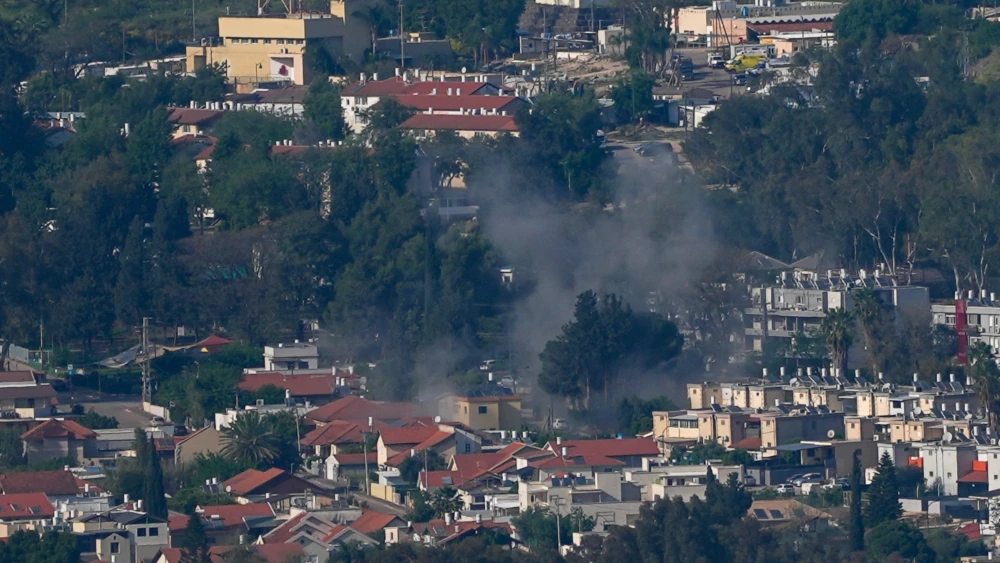
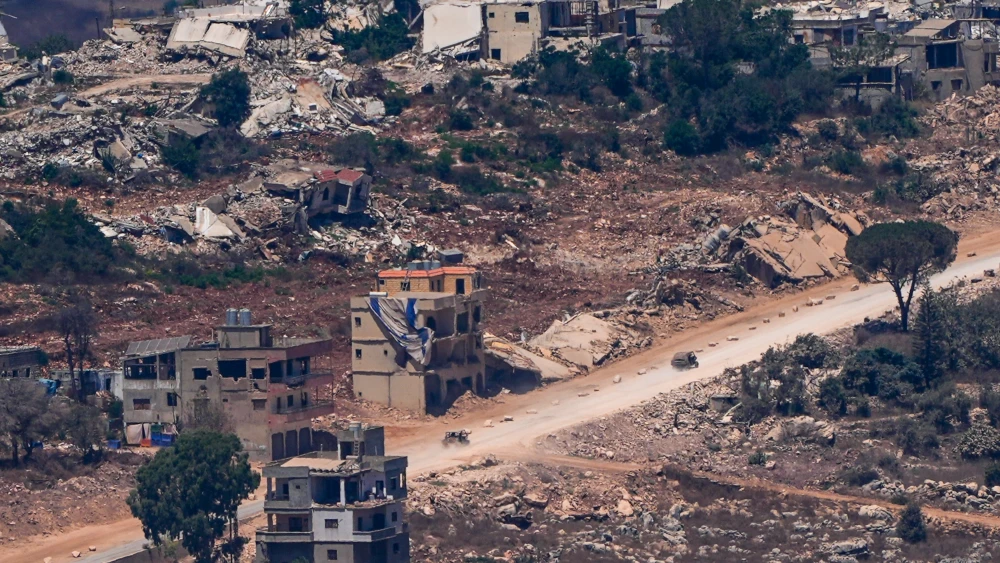
The sound of construction in Kibbutz Yiftah travels across the border with Lebanon and echoes among the ruins of the Shi’ite village of Blida, which Hezbollah used as a stronghold before Israel destroyed much of it.
“Blida is gone, and we are building new homes for new families who want to move here. That’s the story this image tells,” Annat Zisovich-Charrit, the head of civilian security at Kibbutz Yiftah and a mother of two, told JNS earlier this month near a construction site where homes for 22 new families are being built.
The scene reflects the broader rehabilitation of northern Israel following the mass evacuation that ended last year, after Israeli military operations severely weakened Hezbollah and pushed its forces and infrastructure away from parts of the border area. For years before the war, Hezbollah had harassed and intimidated Israelis living near the frontier.
The evacuation of some 60,000 northern residents beginning in October 2023 devastated the economy of the Upper Galilee, a tourist destination known for its mild climate, scenic beauty and streams.
Kiryat Shmona, the region’s only city, lost about a third of its roughly 25,000 prewar residents, who did not return after the evacuation, according to its mayor. The Kibbutz Movement estimates that the area’s kibbutzim lost about 12% of their population.
By September 2025, 87% of the evacuated population had returned, according to figures released by the government’s Tnufa North task force.
At the same time, hundreds of Israelis moved north as Israel’s operations against Hezbollah significantly improved the security situation. Kibbutz Yiftah, a community of about 700 people, lost 10 families but is now preparing to receive more than twice that number, Zisovich-Charrit said.
Yiftah is one of at least 10 evacuated communities whose populations had surpassed their prewar levels by September 2025, according to data released that month by Tnufa North.
Ze’ev Elkin, a minister in the Finance Ministry responsible for rehabilitating northern and southern Israel, said at the time that the growth demonstrated that the north’s demographic recovery had begun.
Neither Elkin’s office nor the Central Bureau of Statistics has complete population data for 2026. Updated figures are expected in the final quarter of this year.
To encourage residents to return and attract new families, the government approved a package of roughly 13 billion shekels, or about $4 billion, for the rehabilitation, development and protection of northern communities. The package is comprised of several separate government programs, including the multiyear Tnufa North development plan and a dedicated fortification program.
The fortification program includes full government financing for safe rooms in eligible ground-level homes that lack them. In communities such as Yiftah, which was established in 1948, many houses were built without safe rooms. Construction of the new fortified rooms is adding to the activity now underway in the kibbutz.
The rooms are essential because Israel’s warning system gives Yiftah residents only seconds to reach shelter before an incoming projectile strikes.
Rockets fired from Lebanon also ignited fires that consumed approximately 1,300 acres in the area. The flames destroyed much of Yiftah’s cherished nectarine orchards and reached the kibbutz’s eastern perimeter before volunteers extinguished them.
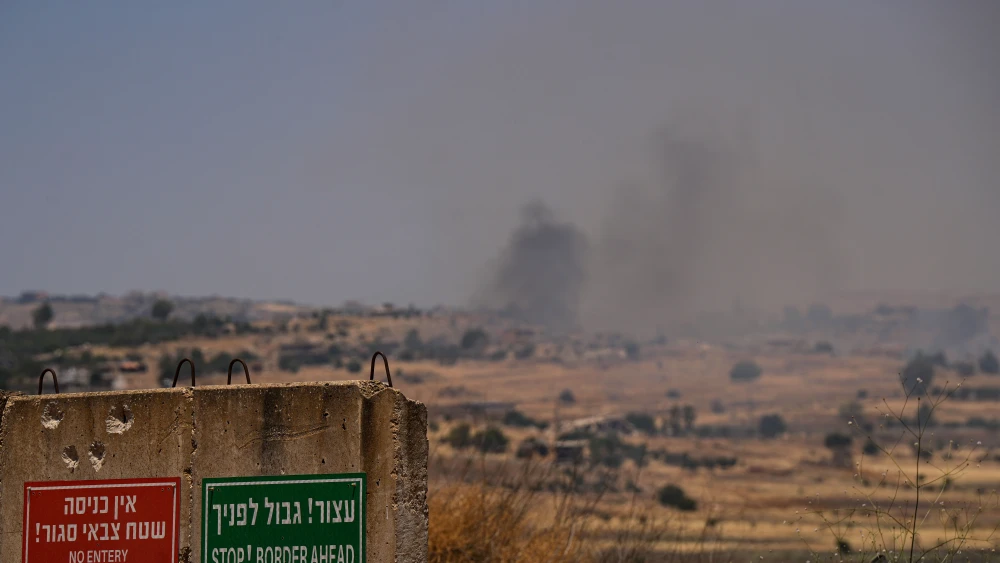
Just two months before Hezbollah began firing rockets into Israel in support of Hamas, Linoi and Shlomi Alfoma and their two children moved to Yiftah from Tel Mond, near Netanya.
Linoi remembers pointing toward Lebanon and telling her children that perhaps there would be peace one day and they could cross the border to visit. When Hezbollah joined the war, Shlomi, a reservist in the Nahal infantry brigade, was called up, and Linoi faced a choice: evacuate with the rest of Yiftah to a hotel near Tiberias or move in with her family in central Israel.
“I decided to stay with this community, in this place that we’d made our home,” she said. “I’m glad I did because, after that ordeal, we returned home. We found our home.”
The Alfomas and the rest of Yiftah spent about 16 months away.
When the residents returned last year, they made sure their neighbors across the border knew about it.
“I thought that the return should be heard in Lebanon,” Zisovich-Charrit recalled. “All the people from the kibbutz, all the families, drove in their cars and honked. I hope they heard us. I think this is our victory.
“We were refugees from our home in our country. So I thought that we should announce that we are coming back.”
Daily life has returned alongside the drilling and hammering. Children play outside. The swimming pool is open. Residents tend their gardens, and farmers work to restore the damaged orchards.
Hezbollah abandoned or was driven from many of its border positions after Israel killed much of the organization’s senior leadership in September 2024 and crippled parts of its middle management in the Mossad’s booby-trapped pager operation. Israel and Lebanon are discussing the deployment of the Lebanese Armed Forces in areas from which Hezbollah withdrew. The terrorist organization is believed to have lost thousands of fighters during the war.
Many Israelis remain concerned that diplomatic pressure limiting Israeli operations in Lebanon could give Hezbollah an opportunity to rebuild the military capabilities it lost and resume the provocations it carried out before its 2024 setbacks.
Zisovich-Charrit shares those concerns, but said she does not allow geopolitics to dictate her family’s routine.
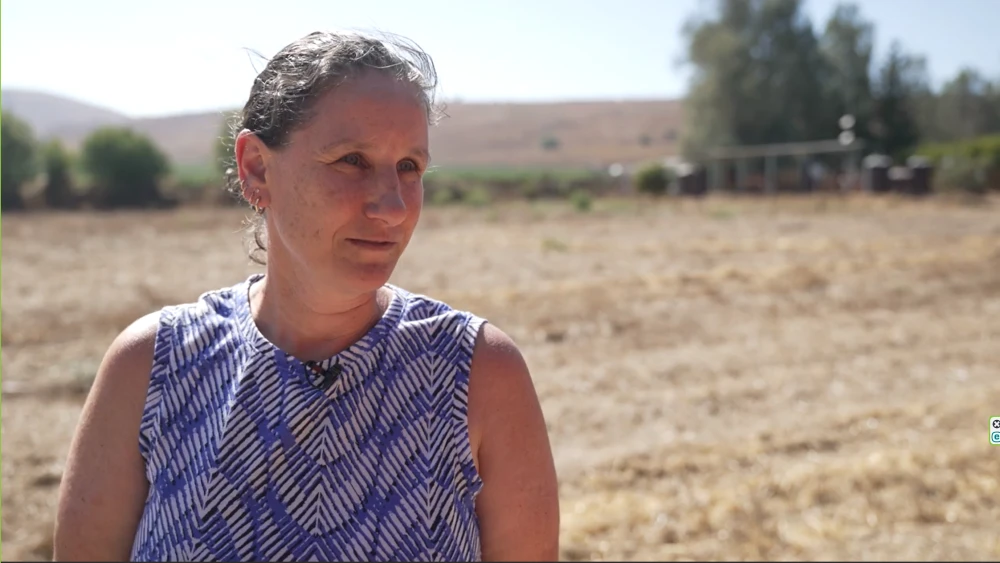
“There are no special instructions. Live life normally. Be a kid,” she said, when asked what she tells her children about the possibility of a return to war.
One thing has changed since the war, she noted.
“Come what may, we are not leaving this place again,” she said. “We will not go through another evacuation. We will not leave our home again for anyone.”