Danny Ayalon, the Jewish state’s ambassador to the United States from 2002 to 2006, tried unsuccessfully to remain awake in Israel as U.S. midterm election results came in early in the morning on Wednesday.
When he awoke and saw what happened—what pundits are widely calling a “blue tsunami”—he had a “very, very dismayed feeling” about Democrats accomplishing a “real sweeping” of both chambers of Congress, the former envoy told JNS.
“I think Israelis should not repeat the mistake of Bibi Netanyahu and favor one party over the other,” Ayalon said.
As Democratic control of both houses of Congress looms in January, Ayalon and other Israeli foreign-policy experts told JNS that the Jewish state’s next government, whose composition remains uncertain, will face challenges rebuilding bipartisan support in Washington.
“One of the foundations of Israel’s special relations with the United States was the bipartisan support,” Ayalon told JNS.
He thinks that Israeli Prime Minister Benjamin Netanyahu, whose Likud party came away with the most votes but an insufficient number to form a winning coalition, bears some of the blame for the deterioration of bipartisan U.S. support for the Jewish state.
“Partly, it was because of Obama’s hostility in many ways, but Bibi Netanyahu is prime minister,” Ayalon told JNS. “That was his responsibility to act more nuanced and sophisticated and not so flagrantly favor Republicans.”
“Now it seems like we have lost many in the Democratic Party and also, unfortunately, some in the Republican Party,” the former Israeli envoy said.

Some Democrats accuse the Jewish state of being “racist, apartheid and genociders,” while some Republicans “blame Bibi for pushing Trump toward the campaign in Iran, which is very unpopular,” Ayalon said.
The Israeli prime minister “basically gambled” and “put all our fortune on one side of the political map, on the Republicans,” he told JNS. “You cannot gamble on something which is so crucial to Israel’s national security—the relationship with the United States.”
Danny Danon, Israeli ambassador to the United Nations, told JNS that the Jewish state and the United States will have close relations irrespective of who leads Israel’s next government.
“The bond between the United States and Israel remains strong and is rooted in longstanding shared values,” he said. “Regardless of which government is formed in Israel, it will work closely with President Trump and both chambers of the U.S. Congress to advance the mutual interests of our two great nations.”
Ayalon told JNS that rising anti-Israel Democratic sentiment is not “because of what Israel is doing.”
“It’s because they have turned to a progressive, ultra-progressive, anarchistic, almost communist behavior, which was also funded very much by hostile countries like Qatar,” he said.
He thinks that Netanyahu failed to adequately address those developments.
“It was Bibi Netanyahu’s government that knew about it and didn’t do anything to stop it by different means,” Ayalon told JNS. “The prime minister of Israel has a lot of capabilities and a lot of tools that he could have changed the situation, but he wasn’t mindful, and he didn’t want to do it.”
Martin Sherman, founder and CEO of the Israel Institute for Strategic Studies, disputed that characterization. Sherman, who is also a senior researcher at the Israel Defense and Security Forum, told JNS that Netanyahu is best suited to deal with a Democrat-controlled Congress.
“I’m not an uncritical apologist for Netanyahu,” he said. “I think he’s a flawed leader, who hasn’t done many things that he should have done and has done many things that he shouldn’t. But as far as his stature goes, his experience, his language skills, his grasp of a wide range of topics puts him in a league of his own.”
There will be “strains with the Democratic Party,” which “has undergone a very negative metamorphosis” and become “anti-American,” but Netanyahu has a strong relationship with Trump, according to Sherman.
The claim that Gadi Eisenkot, leader of the Israeli opposition bloc, would be better than Netanyahu “would be like comparing an expensive sports car to a donkey cart,” he told JNS.
“Eisenkot is spectacularly unsuited to become prime minister,” Sherman said. “I don’t think he has the international standing. I don’t think he has the government experience.”
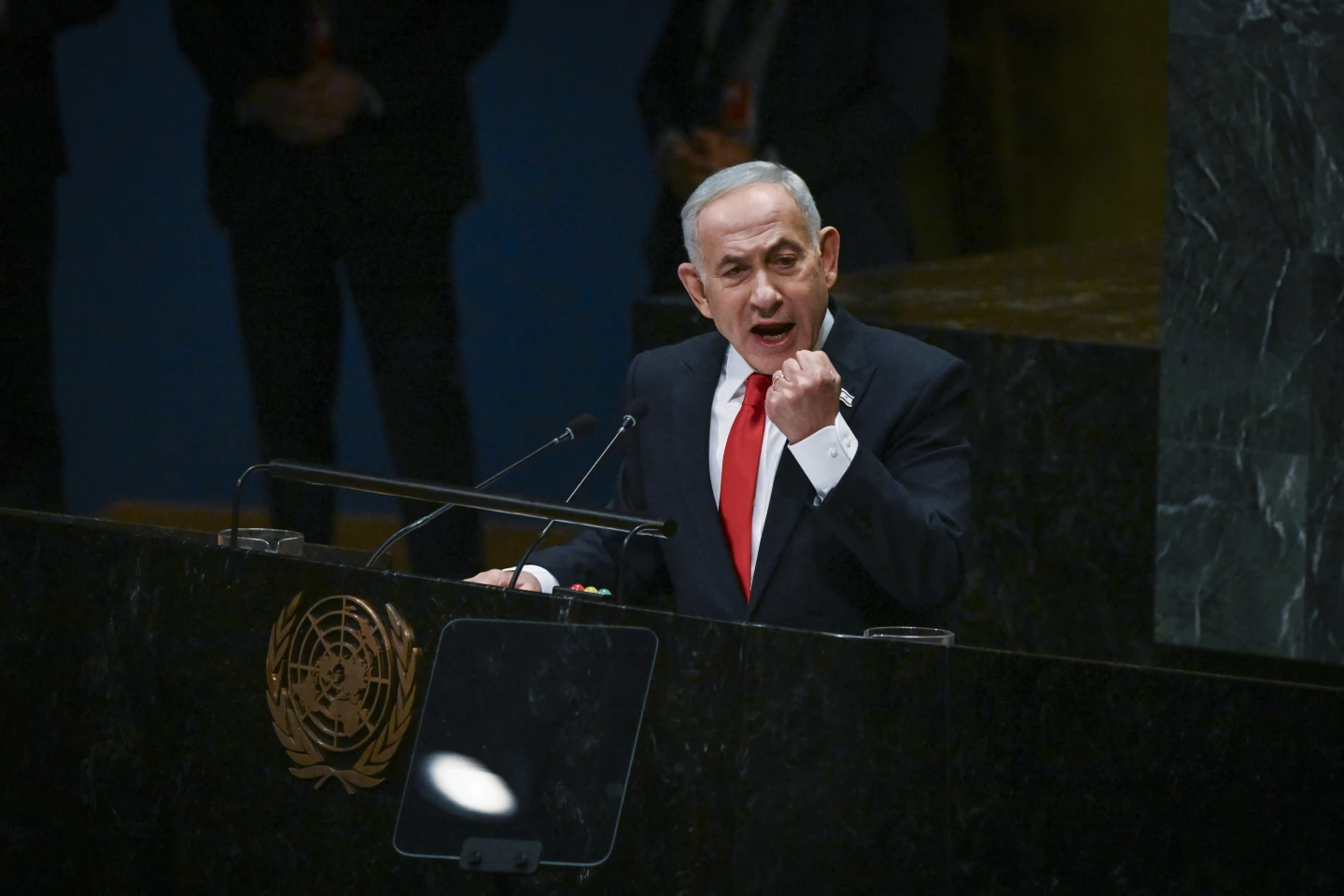
Ayalon, the former envoy, noted that Republican leaders arranged Netanyahu’s 2015 address to a joint session of Congress amid disagreements with the Obama administration over U.S. negotiations with the Iranian regime.
“Israel should have never been in the middle, in the political crossfire between Republicans and Democrats,” he said. “And Bibi did it.”
“It’s time to regroup and do the right thing,” Ayalon told JNS. “In that respect, I’m afraid only a new face of Israel abroad, with a new prime minister and a new government, can do the job.”
A new government would show “Americans how much Israel respects the United States, and it would be a first step in bringing back the special relationship, to restore it to where it was,” he said.
Brig. Gen. (res.) Amir Avivi, founder and chairman of the Israel Defense and Security Forum, told JNS that he thinks Netanyahu ought to remain at the helm of the Israeli government.
“It’s very important during the war, and taking into account the very close relationship between Netanyahu and Trump, that Netanyahu continue as prime minister,” he said. “Israel, in the long term, has to invest a lot in the relationship also with the Democratic Party.”
“Probably we’ll see in the coming two, three years also changes in Israel,” Avivi told JNS. “We’ll have to see where all this is going.”
Eytan Gilboa, a professor at Bar-Ilan and Reichman Universities and expert on U.S.-Israel relations, told JNS that Netanyahu’s relationship with Democrats could complicate Israel’s dealings with the incoming Congress, which may be hostile toward the Jewish state.
“Netanyahu gave up on the Democrats, and he supported the Republicans since 2012,” Gilboa said. “There is a whole question whether or not he could create some connections with the present Democratic representation and leadership in Congress.”

Gilboa said Pennsylvania Gov. Josh Shapiro and Sen. Jon Ossoff (D-Ga.), both Jewish Democrats who won reelection resoundingly on Tuesday—Shapiro by 22 points in a state that Trump won in 2024, and Ossoff by 18 points—are examples of pro-Israel politicians critical of Netanyahu.
“Certain Democrats have, and this is even worse—they are trying to distinguish between Netanyahu and Israel,” he told JNS.
“These two are probably planning to participate in the Democratic primaries for president, like two Jews,” he said, of Shapiro and Ossoff, both of whom are thought to be 2028 contenders.
JNS asked Gilboa if Israel would be better off with a different prime minister.
“You know, regretfully, I think so,” he said. “I think we need not only just a prime minister. We need a new government.”
Jonathan Rynhold, academic director of the Jonathan Sacks Institute at Bar-Ilan University and former head of the university’s political studies department, told JNS that older Democrats “would come back to supporting Israel” if Eisenkot became prime minister and formed a government without Netanyahu.
Younger Democrats, on the other hand, “are more dovish,” he said.
“They are more secular, and the Israeli government for the last year has been the most conservative, religiously Orthodox, and it’s also been the most hawkish in Israel’s history,” he told JNS. “The voices that they hear are ones of Ben-Gvir and Smotrich, and so they associate Israel with Netanyahu and with Ben-Gvir and with Smotrich.”
Itamar Ben-Gvir and Bezalel Smotrich are Israel’s national security and finance ministers, respectively. Both are frequent targets in international news reporting and from the political left and are called “ultranationalist.”
“It is going to be very, very hard to turn that around,” Rynhold told JNS.
Democrats have associated Netanyahu with Trump and with Republicans ever since his speech to Congress in 2015, according to the professor.
“It was extremely hard to overturn the pro-Israel sentiment among Democrats,” he said. “Even when the Democrats were becoming a more liberal party between 2006 and 2013, 2014, sympathy for Israel was actually going up among Democrats in that period.”
“But with a government that is openly rejecting a two-state solution and which is tolerant of attacks by settlers on Palestinian civilians, and whose rhetoric confirms some of the antisemitic bias of some of the Democratic candidates about Jews and about Zionism and about Israel, things look very bad going forward,” he told JNS.

Not a matter of who
Ya’akov Selavan, deputy head of the Golan Regional Council, rejected the idea that replacing Netanyahu would necessarily soften criticism from the American political Left.
“I don’t think it’s a matter of who,” he told JNS, of who should run the next Israeli government. “It’s a matter of how.”
“You can put the most liberal guy in the Israeli government, and still they’ll criticize and still they’ll say what they say, because it’s more than facts now,” Selavan said. “We’re past facts. If we were just in an era of ‘Let’s look at facts,’ then Oct. 7 would change everything.”
“The fact that we were slaughtered. We were raped. We lost 1,200 people and they started it—should have given everyone an answer,” he told JNS.
Whoever is the next Israeli prime minister will be looked at as “the prime minister of a state that carries out a genocide” and “a state that occupies, of colonizers, whatever it is,” he said.
“It doesn’t matter if your name is Eisenkot, if your name is Bennett, if your name is Lapid or if your name is Bibi,” Selavan told JNS.
Dan Diker, president of the Jerusalem Center for Foreign Affairs, rejected the argument that Netanyahu was responsible for Israel’s declining relationship with Democrats.
“I would say it was the Democrats that moved away from Israel. Not Israel away from the Democrats,” he said. (Diker co-hosts a podcast for JNS.)
Democrats have moved “so far to the Left” and are “kidnapped by a misguided idea that if you create another Oct. 7, Palestinian terror state in the hills overlooking Ben-Gurion Airport in Judea and Samaria, you’re going to solve the problem of the Islamic Republic of Iran.”
“That is simply and clearly untrue,” he told JNS.
At 77, Netanyahu “seeks at least another two years,” according to Diker.
“In the current political reality in Israel, it’s realistic to assess that he would very much reach out for some sort of, I would call it, national emergency government and serve for the coming two years in order to accomplish his number one goal, which is to cause the collapse of this Islamic Republic death cult, which is called the Iranian regime,” he told JNS.
“That’s where Prime Minister Netanyahu is placing his bets that in that partnership, he can continue in some form as prime minister, even on a rotational basis, for the next two years,” he said.
For Ayalon, the former Israeli envoy, the results of Tuesday’s U.S. midterm elections underscored the urgency of changing Israel’s approach to Washington.
“You cannot suspect Bibi that he doesn’t know America or that he’s stupid,” he said. “He did it willingly for his own reasons. Some of them were political reasons here.”
“But now we need a new government, at least a national unity government,” he told JNS. “Now it’s more important than ever.”