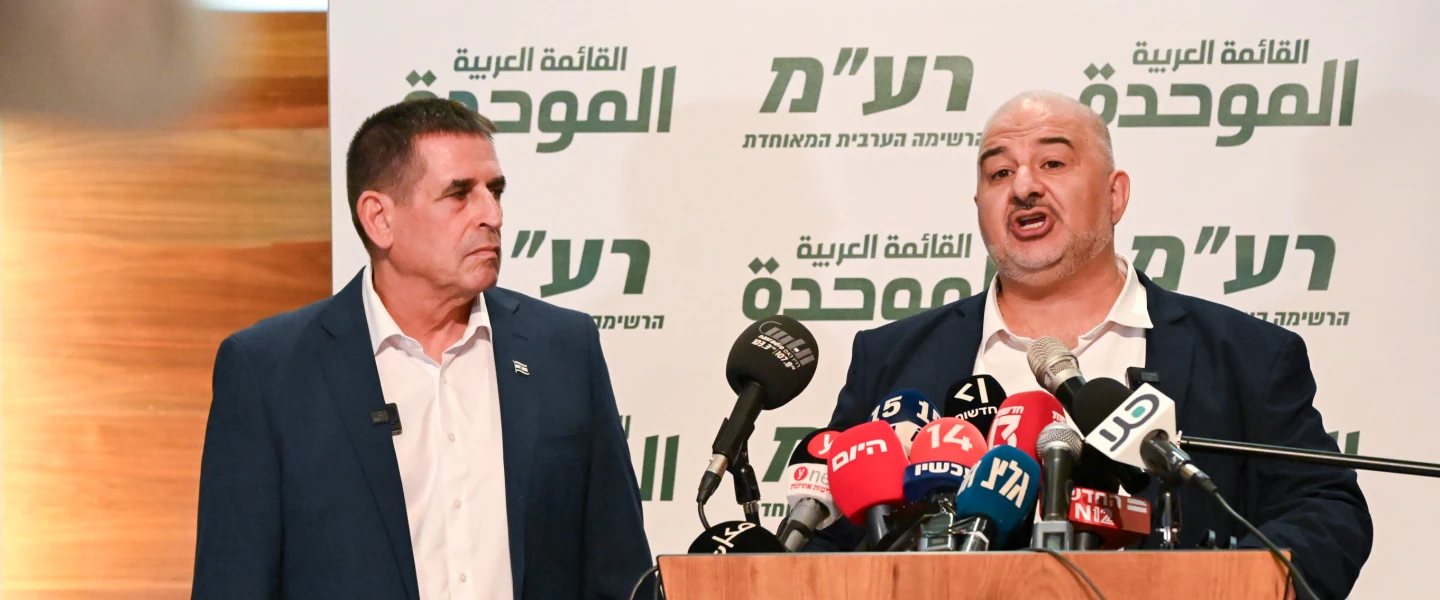
The effort to replace Benjamin Netanyahu could give decisive parliamentary leverage to parties whose disagreements with Israel’s Zionist mainstream extend to the character of the state itself. Mansour Abbas’s Islamist Ra’am and Yousef Jabareen’s Joint List approach the Oct. 27 election seeking influence through different routes: participation in government for Ra’am, conditional outside support for the Joint List. Behind that tactical divide lie four movements rooted in political Islam, communism, and Palestinian nationalism.
The movement
Ra’am emerged in 1996 from the Southern Branch of Israel’s Islamic Movement, whose ideology and organizational model were shaped by the Muslim Brotherhood. Its Islamist outlook promotes a political vision of Islam, with major political decisions historically subject to the religious Shura Council. Its longstanding positions include Palestinian statehood, settlement evacuation, and Right of Return. (Right of Return is a policy advocating for blanket citizenship for up to six million descendants of Arab refugees from the 1948-49 war of independence.)
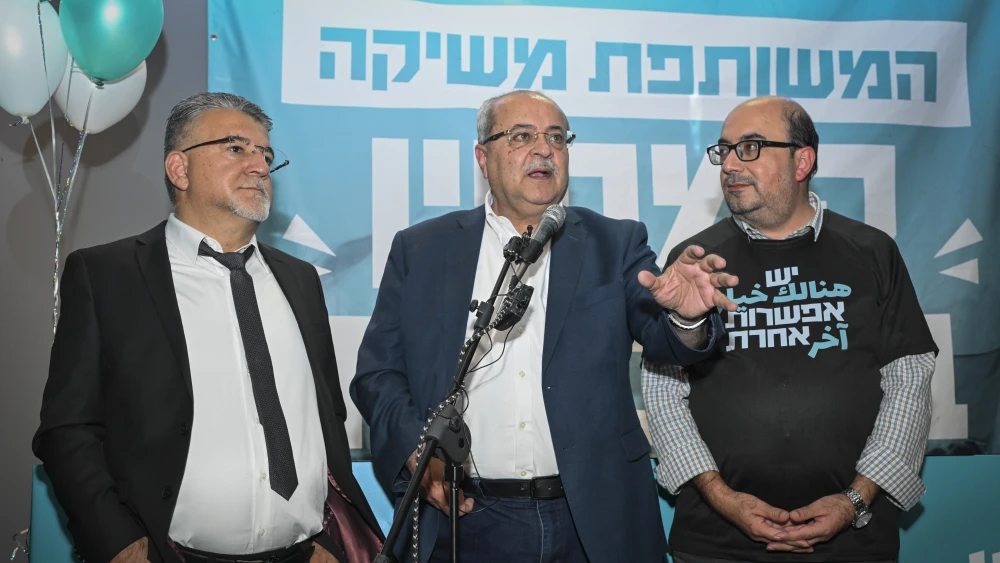
The Joint List brings together communist and secular Palestinian-nationalist movements. Hadash, rooted in Israel’s Communist Party, combines socialist economics with opposition to Israeli control of Judea and Samaria. Ta’al is led by Ahmad Tibi, a former adviser to arch-terrorist Yasser Arafat. Tibi’s party advances Palestinian statehood through Israel’s parliamentary system. Balad challenges Israel’s Jewish identity most explicitly, with its program seeking to replace the Jewish-national constitutional framework, end official recognition of Zionist institutions, and secure the Right of Return.
These movements first united electorally in 2015 after the threshold for entrance to the Knesset rose to 3.25%. Their alliance reached 15 seats in 2020, but the question of cooperation with Israeli governments helped divide it. Ra’am departed in 2021 and joined the Bennett-Lapid coalition. Hadash, Ta’al and Balad eventually reunited in August 2026 under Jabareen, who had succeeded Ayman Odeh as Hadash leader, while Abbas retained Ra’am’s independence.
Abbas has sought to broaden Ra’am’s political acceptability, although controversies involving the party and its senior figures have complicated those efforts. In July 2026, Abbas repeatedly refused to say whether Hamas was a terrorist organization that should be destroyed, dismissing the question as a political loyalty test. Fellow Ra’am lawmaker Iman Khatib-Yassin was sanctioned by the Knesset in 2023 after publicly denying reports of Hamas atrocities, including sexual violence. In May 2026, a court ordered the dissolution of a charity associated with the Islamic Movement and linked to Ra’am, citing cooperation with designated terrorist organizations. Against this backdrop, Abbas has moved to separate the party from the Shura Council and recruited former Yesh Atid lawmaker and senior police commander Yoav Segalovitz as his second candidate.
The Joint List faces controversies involving several of its most prominent figures. Tibi was severely reprimanded by the Knesset Ethics Committee in 2012 for a speech glorifying Palestinian martyrs, which the committee determined could be interpreted as expressing sympathy for terrorism. Hadash lawmaker Ofer Cassif faced a failed Knesset expulsion vote in 2024 after supporting South Africa’s genocide case against Israel, with 85 lawmakers voting for his removal, five short of the required majority.
Balad chairman Sami Abu Shehadeh attracted particular scrutiny over an article published immediately after the Oct. 7, 2023, massacre discussing the attack’s historical and strategic significance, leading to his disqualification from the upcoming election by the Elections Committee. He withdrew his candidacy in October 2026 after a Supreme Court majority indicated its intention to uphold his disqualification. He remains Balad’s leader, while the court separately overturned the Elections Committee’s disqualification of Cassif and both Arab electoral lists, finding insufficient legal grounds to exclude them.
The platform
Both lists support Palestinian statehood, but they differ in how prominently they place it in their immediate political demands. Jabareen advocates a Palestinian state along the pre-1967 lines and renewed negotiations toward that objective. Abbas also reaffirmed his support for statehood in August. He further drew a distinction between accepting Israel’s Jewish character and endorsing it. “The Jewish character of the state is a reality imposed upon us,” he wrote, explaining that Arab parties accepted it in practice to avoid electoral disqualification.
The Joint List’s security proposals go considerably further than renewed diplomacy. Its published economic program calls for deep military-spending cuts and an end to funding the war against Hamas in Gaza, settlement in Judea and Samaria, and Israeli control of Syrian and Lebanese territories.
The party’s agenda further envisages extensive state intervention in the economy. The Joint List proposes nationalizing previously privatized companies and services, expanding government-built housing and establishing a state mortgage bank offering interest-free loans to eligible first-time buyers. It would cap rent at 20% of household net income, provide free education from birth through advanced university degrees, and raise the minimum wage to at least 70% of the national average. Its tax proposals combine reducing VAT from 18% to 10%, exempting earnings up to the average wage from income tax, a 30% capital-gains tax, and the removal of corporate tax benefits.
For Arab communities, both lists seek expanded housing, infrastructure and public funding, alongside action against organized crime. Ra’am places the anti-crime campaign at the center of its governing ambitions, proposing that Segalovitz direct the effort. The Joint List advocates a dedicated prosecution unit, coordinated police and financial investigations, confiscation of criminal assets, and protection for threatened witnesses and municipal officials.
Their approaches to service obligations differ. Abbas has proposed a civilian-service framework for young Arab citizens, emphasizing employment and community participation rather than compulsory military enlistment. Jabareen rejects a state-imposed national-service arrangement and insists that any framework require agreement with Arab community leadership.
The partners
Ra’am’s strongest advocate among the opposition parties is Yair Golan. The Democrats’ leader supports bringing Abbas back into government and has pledged to persuade his prospective coalition partners to accept the arrangement. “Yes, with Ra’am. Jewish-Arab partnership in government is a positive thing,” he told Channel 12 on Oct. 3. The other principal opposition leaders have resisted that proposal.
B’Yahad party’s Naftali Bennett has ruled out another government dependent on Arab parties, whether as coalition members or outside supporters. Yashar’s Gadi Eisenkot requires prospective partners to accept Israel’s Jewish and democratic character, the 1948 Declaration of Independence, service obligations and the destruction of Hamas. He says the Arab parties do not currently meet those conditions.
Eisenkot has nevertheless proposed forming a government without a parliamentary majority of its own. On Oct. 14, he said he would attempt to form a minority government and take office with fewer than 61 coalition lawmakers. Although he insists he would not solicit Arab-party support, such a government would need outside votes or abstentions to secure approval. Avigdor Liberman, chairman of the Yisrael Beiteinu party, has rejected this approach, ruling out even a temporary minority government and reiterating his opposition to governing with either Arab list.
The Joint List, meanwhile, has offered conditional outside support for a minority government, despite the refusal of the major parties to negotiate a political partnership with it. Jabareen’s demands include a funded anti-crime program, development of Arab localities, a halt to demolitions of homes built without permits in Arab communities, programs for young Arab citizens, a permanent halt to fighting in Gaza, and negotiations toward Palestinian statehood. “There is no automatic support. We are not offering anyone a blank check, certainly not the opposition leadership,” he told Radio 103FM on Oct. 13.
The two Arab lists have signed a surplus-vote agreement to improve their seat allocations in the election. An Oct. 14 Madad survey projected 50 seats for the main opposition parties and 51 for Netanyahu’s bloc. Even with the support of the unaffiliated Reservists-New Economic Party joint list, the opposition would remain seven seats short of a majority. Ra’am’s projected six seats and the Joint List’s nine could help close that gap, but only through arrangements the prospective partners have yet to accept.
Ra’am and the Joint List are thus likely to win enough seats to help determine who governs or to force a second election. The decisive question is what concessions they would demand, and which commitments the opposition would be prepared to revise to obtain their support.