


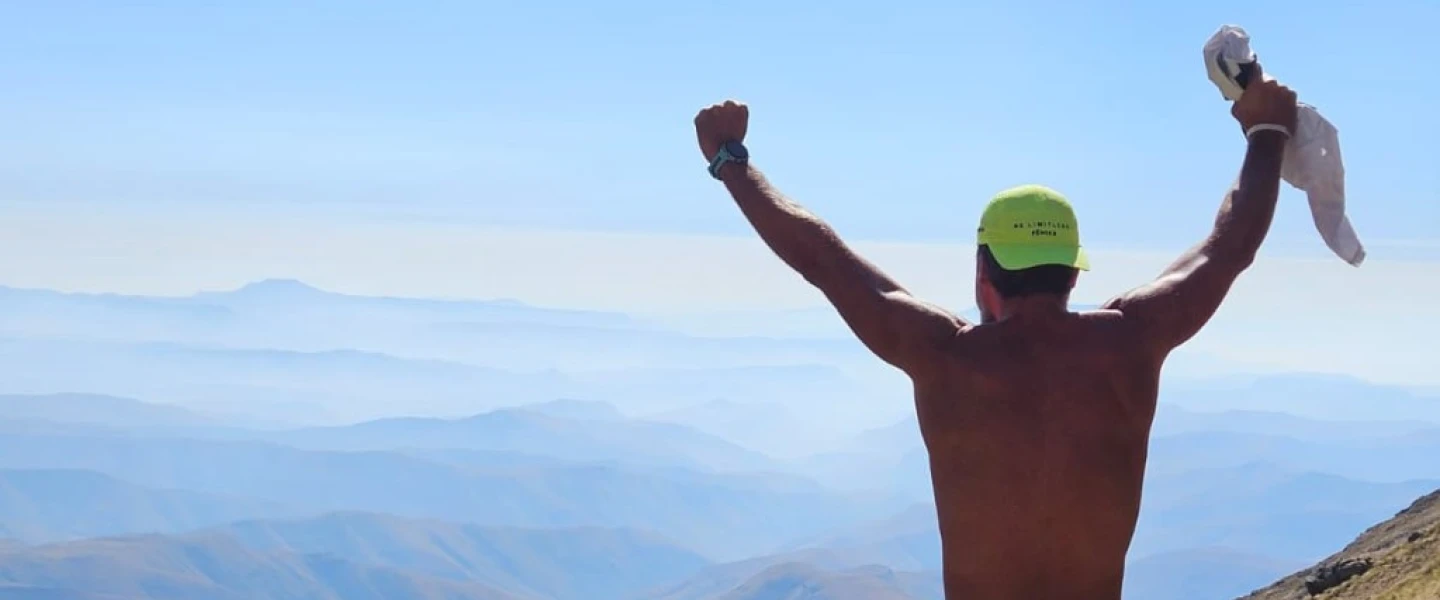
Ten wounded Israeli soldiers traveled to South Africa recently for a recovery program combining support from local Jewish communities with a demanding trek through the Drakensberg mountain range.
Among them was Lt. Col. (res.) Almog S., 41, who was wounded in the thigh while commanding troops in Beit Hanoun in northern Gaza. Despite his injury, Almog declined evacuation, fearing that the sight of a wounded commander could undermine his soldiers’ morale, and continued directing his forces for hours.
After his reserve duty ended, however, Almog faced what he described as another battle: coping with the psychological impact of combat.
The trip was organized by Belev Echad, a New York-based nonprofit that supports Israeli soldiers wounded in action through respite programs, rehabilitation and emotional assistance.
The delegation’s first stop was Cape Town, where members of the local Jewish community hosted the soldiers.
“Considering the intense political sensitivities and hostility in South Africa surrounding Israel, we had to keep all activities strictly under the radar,” said Rabbi Pinchas Hecht, who helped organize the visit with the Marais Road Synagogue community. “We marketed the events exclusively within the local Jewish community, creating intimate, incredibly powerful engagements.”
The soldiers joined local residents for a run, attended synagogue services and shared their experiences with community members.
“It was an absolute honor to host these very special people. I think the soldiers deeply appreciated the opportunity to connect and see firsthand that—despite what the news says about South Africa—our community is immensely supportive and forever grateful to those who risk their lives” for Israel and the Jewish people, Hecht said.
The delegation then headed to the Drakensberg mountain range for four days without cellphones. The soldiers hiked about 15 kilometers (9 miles) a day, carrying 30-kilogram (66-pound) rucksacks and reaching elevations approaching 3,000 meters (9,800 feet) in freezing winter conditions.
“Up there, where the air is thin and the screens go dark, the noise of war and trauma fades away,” said Belev Echad founder Rabbi Uriel Vigler.
“When you take ten men who have sacrificed so much, put 30-kilogram bags on their backs, and lead them up the highest peaks in South Africa, they stop surviving as isolated individuals. They are forced to lean on one another,” Vigler’s wife, Shevy, added.
The journey ended in Johannesburg, where the soldiers were hosted by the Sydenham Synagogue and met with about 150 congregants at a Shabbat dinner.
“We made sure to spoil them, to thank them, and to give them experiences where they were pampered and loved,” Sydenham’s Rabbi Yehuda Stern said. “But we were inspired by them, by their heroism, by their courage, by what they’ve done.”


