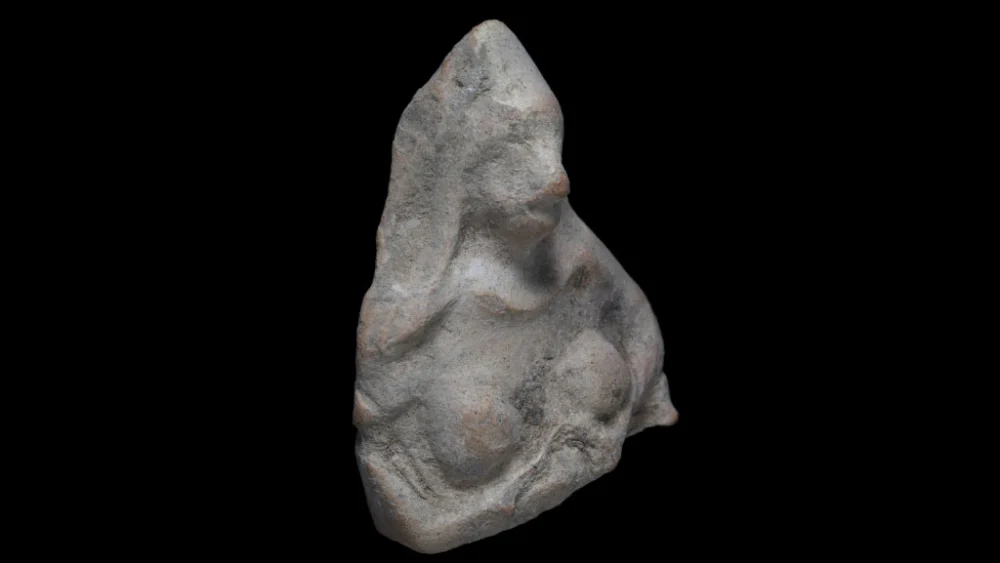
An 11-year-old Israeli boy has uncovered a rare, 2,500-year-old amulet during a family excursion in the northern Negev Desert, the Israel Antiquities Authority said on Tuesday.
Zvi Ben-David of Beersheva came across the pottery figurine in Nahal Besor. He showed it to his mother, a professional tour guide, who contacted the IAA.
According to Oren Shmueli, the IAA’s district archaeologist for the western Negev, the statuette, depicting a bare-breasted woman wearing a scarf, was believed to protect children or increase fertility.
“The figurine that Zvi discovered is rare and only one such example exists in the National Treasures collection,” said Shmueli and Debbie Ben-Ami, curator of the Iron Age and Persian periods for the IAA. “It was probably used in the sixth to fifth centuries BCE, at the end of the Iron Age or in the Persian period [the late First Temple period].”
The figurine, measuring 2.8 inches high by 2.4 inches wide, was made in a mold, according to the experts. It shows a woman with a scarf covering her head and neck, schematic facial features and a prominent nose. The woman is bare-breasted with her hands folded under her chest.

The only other example of such an amulet in the National Treasures collection was also discovered in the northern Negev.
“Pottery figurines of bare-breasted women are known from various periods in Israel, including the First Temple era. They were common in the home and in everyday life, like the hamsa, and served to ensure protection, good luck and prosperity,” said Shmueli and Ben-Ami.
“We must bear in mind that in antiquity, medical understanding was rudimentary,” they noted. “Infant mortality was very high and about a third of those born did not survive. There was little understanding of hygiene, and fertility treatment was naturally non-existent. In the absence of advanced medicine, amulets provided hope and an important way of appealing for aid.”
The archaeologists said that the find would “improve our understanding of cultic practices in biblical times, and man’s inherent need for material, human personifications.”
Shmueli and Ben-Ami also commended Tzvi, who was awarded a certificate of appreciation by the IAA, for his “exemplary citizenship.”