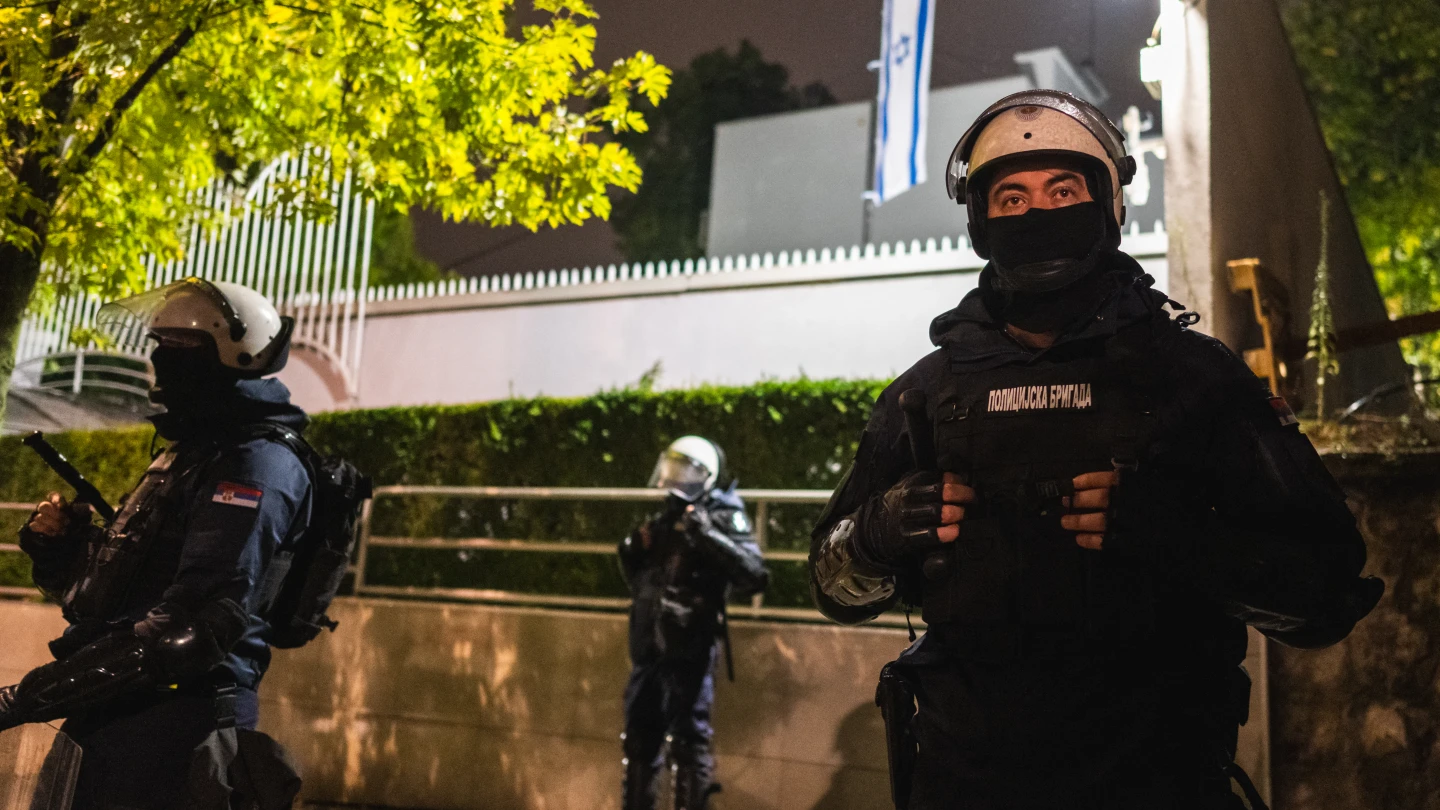
An agreement to incorporate Albanian troops within the International Stabilization Force slated for deployment in the Gaza Strip was announced by the Board of Peace on Friday.
The international organization, chaired by U.S. President Donald Trump, labeled the agreement “important” and said that it provides “additional security operations support” for the mission in Gaza.
Albania is the third country to commit to contribution of forces to the ISF following Morocco and Kosovo.
Important agreement between the International Stabilization Force and Albania that provides additional security operations support and operations planning capabilities for the mission in Gaza. Albania’s contributions add to those of Morocco and Kosovo, and will be critical in… pic.twitter.com/sozc93EYdA
— Board of Peace (@BoardOfPeace) October 23, 2026
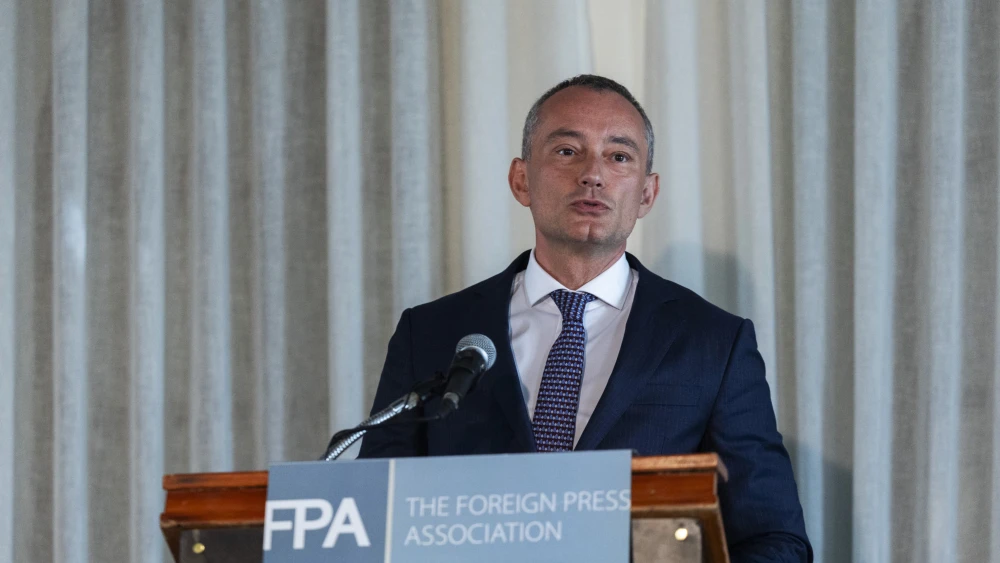
Board of Peace High Representative Nickolay Mladenov on Saturday welcomed the addition of Albania, saying that its “support will be critical in advancing governance, security, humanitarian efforts, the rule of law, and reconstruction under the Comprehensive Plan and U.N. Security Council Resolution 2803.”
I warmly welcome #Albania’s agreement with the International Stabilization Force, which provides additional security operations support and operations planning capabilities for the mission in Gaza. #Faleminderit for this important contribution. Together with Morocco and Kosovo,… pic.twitter.com/Gcd0sdSU7V
— Nickolay E. MLADENOV (@nmladenov) October 23, 2026
Resolution 2803 was adopted on Nov. 17, 2025, accepting Trump’s 20-point plan to end the conflict in the Gaza Strip, while authorizing the Board of Peace as a transitional governing body, including the International Stabilization Force, until such a time that the Palestinians can govern themselves.
Since then, the parties have established the Palestinian-led National Committee for the Administration of Gaza (NCAG) and have advanced talks with the Hamas terrorist organization about its disarmament. Hamas has shown no signs of willingness to lay down its weapons.
On Sept. 7, Mladenov said that the Board of Peace is making “good progress” on the International Stabilization Force, but is “a little bit stuck” on Israel’s commitments. He said the Israeli election campaign was “making things perhaps a bit complicated for domestic political reasons.”
Mladenov said political leaders and the international community face only three choices: continuing the current policy, an Israeli reoccupation of Gaza, or the Board of Peace road map, which he said was the only reasonable one.
Kushner cites editorial urging Israel to help implement Gaza plan
U.S. Special Envoy for Peace Missions Jared Kushner on Tuesday shared a Wall Street Journal editorial urging Israel to take interim steps in Gaza to help the Board of Peace advance Trump’s plan before the Jewish state’s Oct. 27 election.
“A durable peace in Gaza requires an end to Hamas rule, security for Israel, and a better future for the Palestinian people,” Kushner wrote.
He labeled the column an “important perspective.”
The Journal Editorial Board’s editorial, titled “How Israel Can Help the Board of Peace” and published on Oct. 20, identified three measures: allowing a new Gaza police force to train in Egypt and return to the Strip, signing an agreement authorizing international forces to operate in Gaza, and finalizing arrangements for water and sanitation services.
“Israelis are united on the end goal. Getting there will likely require doing more to help a friendly Board of Peace,” the editorial stated.
On the other hand, it noted that the Board of Peace has not pressed Netanyahu for “controversial moves,” which could “backfire” before the Oct. 27 elections.
In August, Israel’s Finance Minister Bezalel Smotrich and Settlements and National Missions Minister Orit Strook urged Prime Minister Benjamin Netanyahu to immediately convene the Security Cabinet to revoke its decision approving the entry of the International Stabilization Force into Gaza.
The ministers wrote in a letter that the ISF must not enter Gaza until its “purpose, legal authority, and missions” are properly amended and clearly delineated.
Netanyahu has since insisted that there will be no reconstruction or deployment of external forces into Gaza until its terrorist groups disarm.