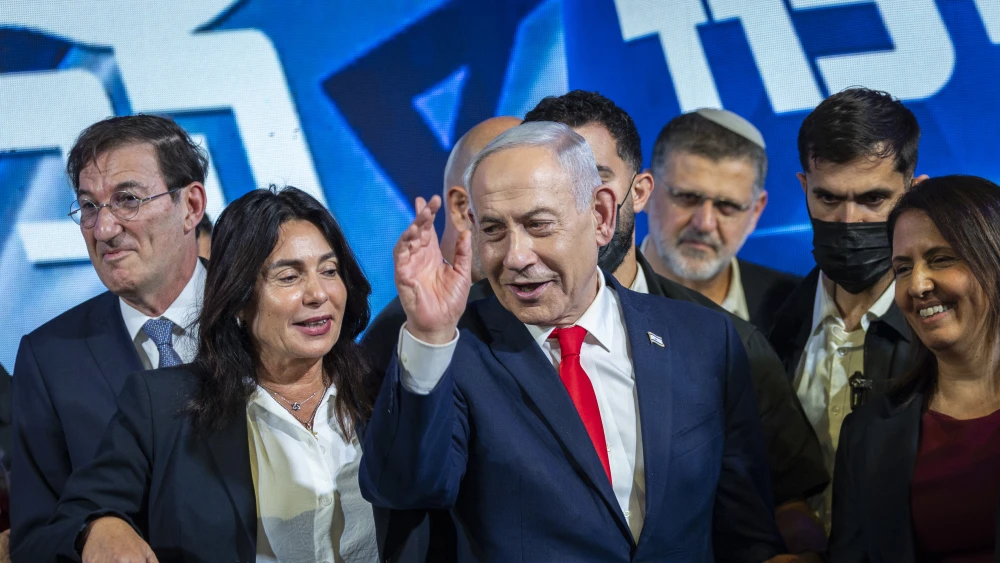
Israeli Prime Minister Benjamin Netanyahu on Saturday warned against cooperation with Arab lawmakers Mansour Abbas and Ahmad Tibi, as Yashar Party chairman Gadi Eisenkot outlined terms for forming the next government.
“Cooperation with Mansour Abbas and Tibi is a disaster for Israel,” Netanyahu wrote on X on Saturday evening.
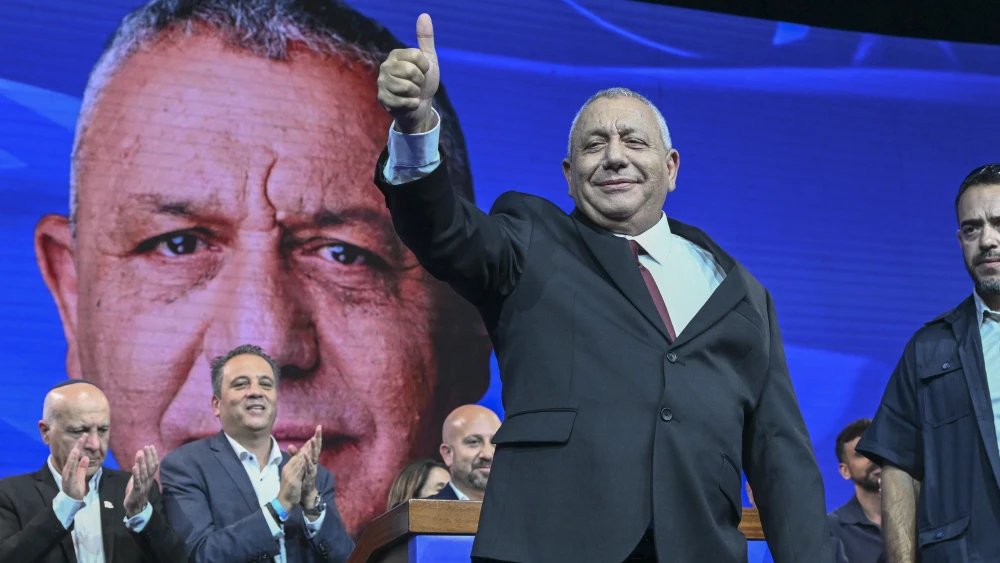
Eisenkot said in a written statement on Saturday that any lawmaker accepting his four core principles could be a potential partner in forming Israel’s next government.
Eisenkot’s conditions include recognizing Israel as a Jewish, democratic, liberal and egalitarian state; commitment to the values of the Declaration of Independence; mandatory military, national or civilian service for all Israeli citizens; and recognizing Hamas as a terrorist organization and the obligation to destroy its military and governing power in the Gaza Strip.
“Any member of Knesset willing to sign on to these principles is a possible partner on the path to establishing a new and better government for Israel,” Eisenkot wrote on X.
Eisenkot said he intended to form the broadest possible Zionist government committed to national responsibility, coordinating with his partners to expand cooperation and seeking the widest possible national consensus.
He also said he intended immediately to act to give effect to a “clear parliamentary majority,” including by establishing a state commission of inquiry, advancing mandatory service for all, strengthening military manpower, providing appropriate compensation and recognition for those serving, and repealing legislation he characterized as part of a “judicial coup.”
“Don’t let anyone mislead you: In the State of Israel, it is the Knesset that expresses confidence in the government, not the other way around,” he wrote.
Eisenkot said the high turnout on election day, and the challenges facing Israel, required an extraordinary effort to avoid another election and a prolonged political crisis.
In a statement posted early on Sunday, Likud accused Eisenkot of intending “to breach the trust of Israel’s citizens and cooperate with parties that support terrorism.” Likud described his response as “hysterical” and “disconnected from reality.”
Otzma Yehudit leader Itamar Ben-Gvir on Sunday urged haredi parties not to help the left form a government, warning in a post on X that doing so would be a “historic mistake.”
Ben-Gvir accused the left of promising to waive military conscription for haredim in exchange for their help forming a government, after campaigning on hatred of them. “You have nothing in common with the left,” he wrote, warning that such a government would strengthen a judicial system that would pursue their communities for years.
Meanwhile, Tibi ruled out participation in the government but offered support for replacing the Knesset speaker during an appearance on Channel 12 News’ “Meet the Press” on Saturday, according to the network’s account of his remarks.
With all votes counted in the Oct. 27 election, Netanyahu’s bloc won 53 seats, Eisenkot’s opposition bloc 48 and the Arab parties 19—11 for the Joint List and eight for Ra’am. Neither Netanyahu’s bloc nor Eisenkot’s secured the 61 seats needed for a governing majority in the 120-member Knesset. Likud remained the largest party with 27 seats, followed by Eisenkot’s Yashar with 21.
Voter turnout reached 77.9%, the highest since 1999, according to the Central Elections Committee. The committee is scheduled to present the official results to Israeli President Isaac Herzog on Wednesday, and the 26th Knesset is due to be sworn in on Nov. 10.
The coalition maneuvering comes amid an Israel Security Agency (Shin Bet) investigation into suspected foreign interference in the election. Central Elections Committee acting director-general Dean Livneh said the inquiry “will not affect the final results submitted to the president.” The Shin Bet described the investigation as “focused and limited,” saying it did not cast suspicion on an entire sector that had exercised its democratic and legal right to vote.
Eisenkot also said that, until a new government is formed, he would back military moves only if Israel faced direct and immediate threats that could not wait until the government was sworn in.