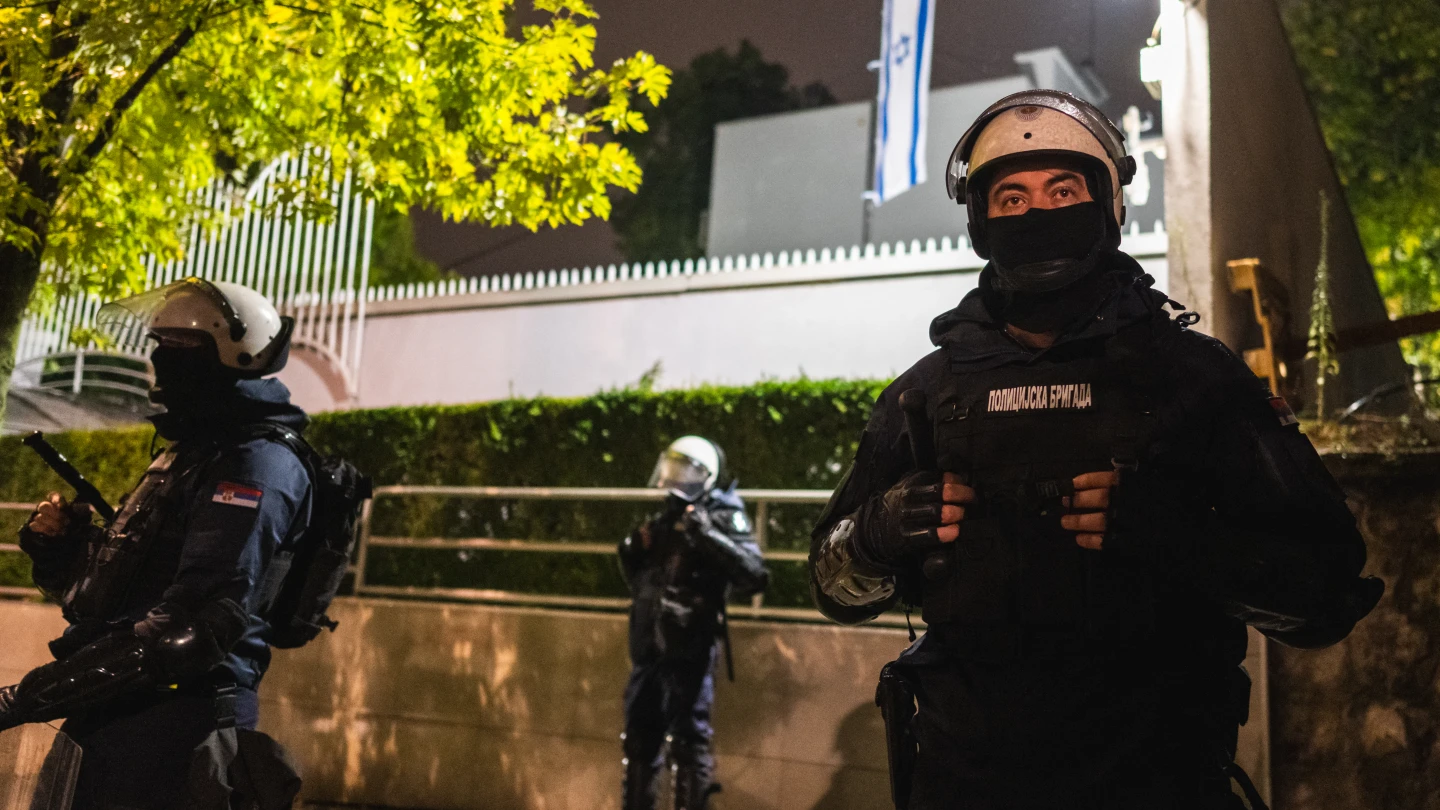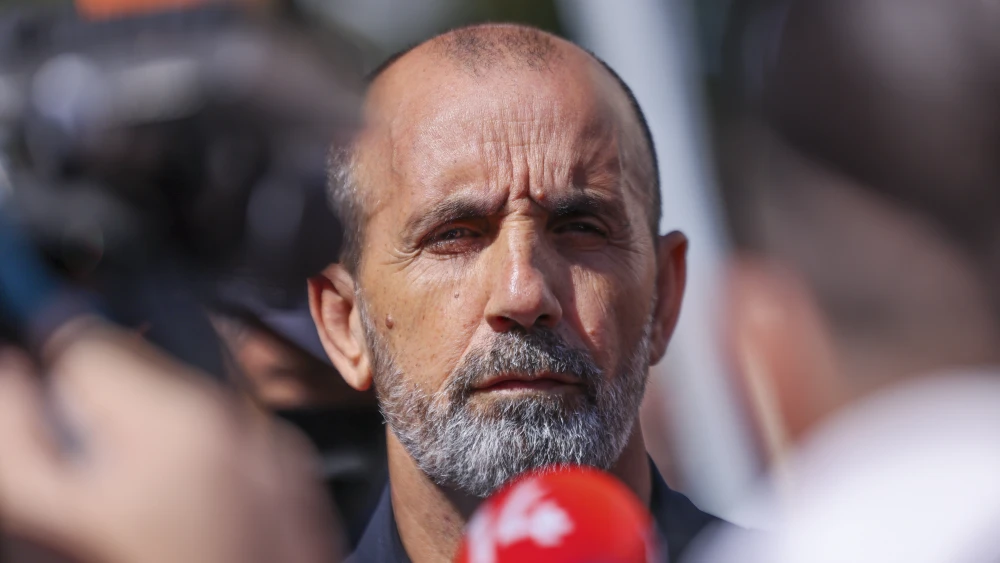
Israel Police Commissioner Danny Levi met on Sunday with Central Elections Committee Chairman Justice Noam Sohlberg to discuss operational preparations ahead of the country’s vote on Oct. 27 for the 26th Knesset.
They reviewed all aspects of the police force’s readiness to safeguard election integrity, maintain public order and ensure a sense of security, the police said in a statement.
The police official in charge of elections, Assistant Commissioner Eli Pinto, and the CEC’s acting director-general, attorney Dean Livne, attended the meeting as well.
“Our finest commanders and officers have conducted systematic, thorough and professional planning over recent months, under the leadership of the head of the Elections Directorate, to ensure that this important day for Israeli democracy proceeds as safely and smoothly as possible,” Levi said in a statement.
“The police are prepared in the best possible manner,” Sohlberg said. “More than 20,000 police officers will be deployed in the field on Election Day and are expected to provide an adequate response.”
In a separate police statement, Levi appealed to the Israeli public, saying, “Ensuring that you can exercise your democratic right to vote is our mission. On Election Day, the Israel Police will be deployed at polling stations, along roads and in the streets to safeguard Israeli democracy and protect public safety and security.”
Police preparations also include measures to address terrorist threats in cooperation with the Israeli Security Agency (Shin Bet), alongside plans to maintain public order following the announcement of the election results and in the days thereafter, the statement read.
The commissioner vowed not to allow violence, threats, incitement or criminal activity “to undermine the will of the voters.”
He went on to say that the Israel Police “will not allow bullying from any side to harm the democratic process, and that is what we will do. Safeguarding Israeli democracy is our mission. We will carry it out without bias and without compromise.”
Levi assured the voters they can “feel safe exercising your democratic right. We will be there to ensure that your right is fully protected. I call on the entire public to follow police officers’ instructions and maintain law and order.”
More than 7.3 million Israeli citizens are eligible to vote in the election for the Knesset, with some 810,000 of them living abroad, according to data released by Israel’s Central Bureau of Statistics last week.
A national holiday by law, schools, kindergartens and most workplaces are expected to be closed for Election Day, as millions of citizens will take to more than 11,000 polling stations operating across the country to elect the members of the next Knesset.
Ban on police officers to express political views
On Oct. 14, Levi met with senior commanders to review the force’s readiness for the Oct. 27 Knesset election.
“We are prepared for any scenario in order to safeguard the integrity of the election, in all operational aspects,” he said.
Levi stressed that the Israel Police “is a professional and apolitical police, and will remain so.” He said he had ordered that no officer voice political views while on duty, and that anyone who violates the order “will not be able to continue serving.”