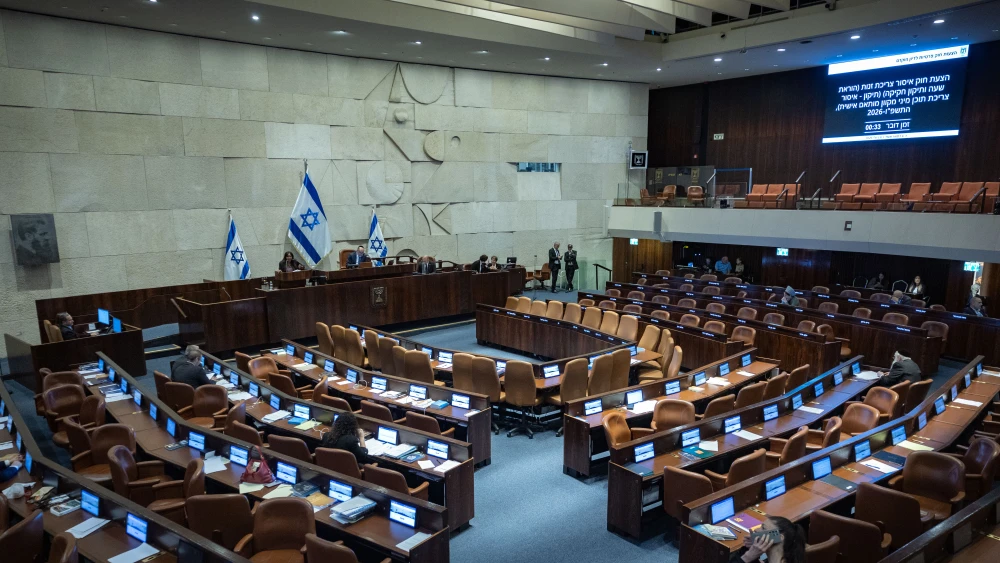
A critical Israeli parliamentary vote on recognizing the violence against Armenians by the Ottoman Empire during World War I as a genocide has been suspended, an Israeli official said Sunday.
The move comes at a delicate diplomatic time with the region facing renewed turbulence following the breakdown of a ceasefire with Iran over its persistent attacks in the Gulf. It also follows a NATO summit in Turkey last week at which Ankara pushed U.S. President Donald Trump to acquire American F-35 fighter jets.
The Israeli Cabinet had unanimously approved a proposal last month to classify the violence as genocide amid fast-deteriorating ties with Turkey over Erdogan’s inflammatory language against Israel, and a vote had been planned in the Israeli parliament to give final approval to the move.
The Israeli official told JNS on Sunday that the vote had been suspended.
The Knesset is set to go to summer recess at the end of the week and will be out of session until the Oct. 27 national elections.
A spokesman for Israeli Foreign Minister Gideon Sa’ar, who put forward the proposal in the Cabinet last month, did not return calls or messages for comment on Sunday.
In the past, Israel has refrained from officially labelling the century-old violence as a genocide, but with relations with Turkey in free fall, it went ahead with the move in the Cabinet.
Israeli Prime Minister Benjamin Netanyahu has described the violence against Armenians as a genocide, but until now no formal vote was ever taken on the issue.
Turkey, which has been one of the biggest critics in the world of Israel over the war in Gaza, called the Israeli cabinet move “politically motivated.”
A decision to freeze the parliamentary vote could be seen as part of an international effort to reduce tension between the two countries amid the regional turbulence.
Last month, Azerbaijan condemned the Israeli Cabinet’s recognition and urged the government to reverse the move.
The secular Shi’ite Muslim country has historic ties with both Turkey and Israel and has long worked to serve as an interlocutor between its two allies.
Azerbaijan’s position is both significant and sensitive for Israel as Jerusalem and Bakuhave long forged a strategic relationship rooted in a centuries-long affinity between the two nations which has blossomed into a robust security- and energy-related focus.
Three years ago, Azerbaijan made history by becoming the first Shi’ite Muslim country to open an embassy in Israel, defying threats of violence from Iran, and has maintained its staunch alliance with Israel throughout this time of regional wars.