


Israel’s Central Elections Committee said on Wednesday that no evidence of irregularities affecting election integrity or results for the 26th Knesset had been found, paving the way to presenting the official results to Israeli President Isaac Herzog at noon.
The CEC “examined every complaint and request for review submitted by political parties, candidate lists and members of the public, including all polling stations identified in those submissions,” the committee spokesperson’s office said in a statement.
The review involved examining records from 9,069 polling stations. Where necessary, officials conducted more detailed checks of election materials, including ballot papers, voter registers and other documentation, the statement read.
The statement went on to say that some 250 public-sector lawyers, working alongside committee staff, carried out the review over six working days, from Oct. 28 through Nov. 3.
Seven examination rooms and a dedicated operations center operated in morning and evening shifts, it added.
Dean Livne, the committee’s acting director general, said that every complaint was examined “individually and thoroughly.” The committee has the responsibility to voters and parties to “examine every claim carefully,” and “make our findings public,” he added.
The hard work of the committee’s staff and the legal teams “has enabled us to complete this review and present the public with carefully verified results that accurately reflect the choices voters made at the ballot box,” Livne said.
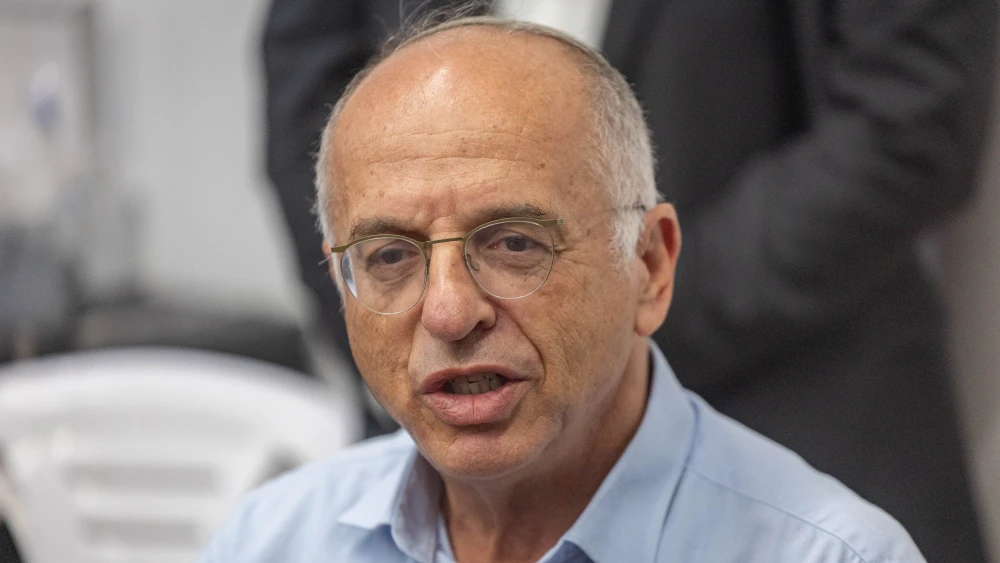
CEC chairman Justice Noam Sohlberg said that the committee conducted thorough checks of an “unprecedented number” of polling stations.
“The scale and quality of this review demonstrate the Central Elections Committee’s commitment to ensuring that the election results reflect the voters’ choices as accurately as possible. I would like to thank everyone involved for their hard work, professionalism and dedication,” he added.
The publication of the committee’s findings shows that 9,069 polling stations were reviewed, representing approximately 75% of all 12,018 regular polling stations. This is a 78% increase compared with the 25th Knesset election, when 5,100 polling stations, or 43.5%, were reviewed.
Of the 9,069 polling stations, 350 underwent detailed examinations of voting materials and documentation. More than 2,450 requests for reviews concerning 1,350 polling stations were submitted by political parties and candidate lists. Another 1,239 requests were received from members of the public on Election Day and afterward, concerning 750 polling stations.
All requests were examined in the committee’s review process, according to the statement.
Election fraud allegations
The integrity of the general vote that took place on Oct. 27 came under question after Sohlberg last week instructed Israel Security Agency (Shin Bet) head David Zini to investigate suspicions of foreign interference in Tuesday’s Knesset election, according to a letter shared with JNS.
“Serious suspicions have been brought before me of improper influence, through foreign funding by external actors acting against the Israeli interest, on the elections,” Sohlberg wrote.
“I cannot attest to the nature of the aforementioned suspicions,” he continued. Because the suspicions concern foreign actors, there is “a duty to investigate them properly,” he wrote.
The Israel Police arrested seven people in connection with vote-buying allegations, all of whom have since been released by the courts.
Aviad Menachem Libman, a local ballot supervisor in the Arab city of Majd al-Krum in the Galilee, told JNS on Tuesday that dozens of Arab men attempted to intimidate another ballot supervisor at the voting station.
Libman further related, “We noticed there was a person at the voting station who was not part of the ballot committee, who was keeping tabs on who showed up. Marking a list. Voters gave him a serial number. We reported about it.”
He suggested that tracking the serial numbers was part of an illegal scheme meant to reward voters financially for showing up to vote.
Amit Halevi, a Likud Knesset member who serves as the party’s representative on Israel’s Central Elections Committee, said he’d seen a similar system at several voting stations in Rahat, a Bedouin city in the Negev. “It’s meant to indicate who gets paid,” he told JNS.
Israeli Prime Minister Benjamin Netanyahu’s Likud Party on Oct. 28 accused Arab parties of stealing the election through widespread fraud and called for a police and Shin Bet investigation.
The party alleged that thousands of envelopes containing cash and Ra’am ballots were found at polling stations in Arab communities. It also alleged identity fraud and ballot-count discrepancies.
Ra’am categorically denied the election-fraud allegations, accusing Netanyahu and National Security Minister Itamar Ben-Gvir of trying to suppress Arab voter turnout.
Meanwhile, Zini has reportedly complained that the agency’s legal adviser, together with Israeli Attorney General Gali Baharav-Miara, is interfering with his ability to investigate the case of foreign influence over the election, as well as election fraud.
Zini shared his concerns with Solhberg during a six-hour meeting on Sunday, according to a report by Israel’s Channel 14 television.
“The head of the Shin Bet, David Zini, complained to his associates and also told Judge Sohlberg during the meeting that the Shin Bet’s legal adviser is blocking him and raising difficulties in order to thwart the investigation into election bias in the Arab sector in close cooperation with the attorney general,” according to Channel 14‘s political correspondent Moti Kastel.
However, in a joint video statement featuring Sohlberg, Zini and Gali Baharav-Miara broadcast on Sunday evening, no outward signs of disagreement were visible.
Sohlberg said that the suspicions were not enough to overturn the results. “Our position is that even if the suspicions are substantiated, this would not undermine the integrity of the electoral process or the election results as a whole,” he said. “This coming Wednesday, the official results will be published and submitted to the President of Israel, as they stand.”
Likud lawmaker Halevi told JNS on Wednesday that the CEC’s certification of the results was meaningless as long as suspicions of foreign interference remain.
The concern surrounding the Arab-Israeli vote, which due to its record turnout garnered 19 seats in the Knesset, the largest number ever, is that the Arab parties could now emerge as potential kingmakers, providing the opposition, currently with 48 seats, the required number to form a government, or alternatively supporting a minority government from outside the coalition.
Netanyahu and Israel’s current right-wing coalition insist that relying on the anti-Zionist Arab parties would cross a red line.
One of Eisenkot’s campaign pledges was that he wouldn’t form a government resting on anti-Zionist parties.
Herzog to meet faction leaders
At noon on Wednesday, Herzog will receive the official results of the elections from Sohlberg, in accordance with procedure and Israeli law.
According to Israel’s legal procedures, the president meets with representatives of each faction and hears its recommendations for a candidate to forge the next government coalition. Following the consultations, he assigns the task to a member of Knesset.
Herzog is slated to begin the round of consultations with all elected political parties at 5 p.m. on Wednesday. The first faction scheduled to meet with the president is Israeli Finance Minister Bezalel Smotrich’s Religious Zionist Party.
The other meetings in order will be ultra-Orthodox Shas faction at 6:15 p.m., Avigdor Liberman’s Yisrael Beiteinu party at 7:30 p.m. and the Zehut party, led by former lawmaker Moshe Feiglin, at 8:45 p.m., according to the president.
Faction leaders who wish to make an official statement to the media will be able to do so following their meeting with the president.


