U.K. Foreign Secretary Ed Miliband said on Tuesday that a two-state solution was “unlikely” in the coming weeks or months, even as London presses ahead with measures against Jewish communities in Judea and Samaria.
Speaking on the British podcast “The Rest Is Politics,” Miliband said the current trajectory regarding the two-state solution must be reversed. He called for the disarmament of the Hamas terror group, an Israeli withdrawal from the Gaza Strip, Palestinian Authority reform and an end to the expansion of Jewish communities in Judea and Samaria and what he described as “settler terrorism.”
He expressed harsh criticism of Israel’s actions in Gaza, saying, “All of us condemn in the strongest terms the murder that Hamas did on October the 7th, but nothing can justify what has unfolded in Gaza since then.”
Miliband claimed that 1,200 Palestinians had been killed since the U.S.-brokered truce, which he referred to as “the so-called ceasefire,” took effect on Oct. 10, 2025.
The figure cited by Miliband comes from the Hamas-run Gaza Health Ministry, which does not differentiate between combatants and civilians in its casualty reports. The Israel Defense Forces has carried out targeted strikes against terror operatives violating the truce terms during that period, though it has not published an official total count of operatives eliminated since the agreement took effect.
Referring to the recently announced sanctions on Judea and Samaria businesses, Miliband said London wanted to send “a very clear message to the Israeli people” ahead of the Oct. 27 Knesset election, but denied the measures were timed to influence the vote, adding that whom Israelis elect “is a matter for them.”
He also said Britain plans to extend its sanctions regime, potentially allowing further action related to the Gaza Strip.
Miliband told Parliament on Sept. 8 that the United Kingdom would ban imports from Israeli communities in Judea and Samaria, impose sanctions on “extremist settlers who have supported or incited acts of violence against Palestinian communities” and target companies and people involved in “settlement expansion.”
The United Kingdom plans to ban advertising “illegal settlements” in the United Kingdom and restrict exports of goods that it says “materially contribute to the occupation,” he said.
He went on to state that “ethnic cleansing” was happening in parts of Judea and Samaria.
“Settler terrorism is rampant,” Miliband said. “The U.N. reports an average of six violent settler attacks against Palestinians per day this year, the highest on record.”
“The British government agrees that there is ethnic cleansing of Palestinians in areas of the West Bank perpetrated by settler terrorists,” he said. “All too often the Israeli government has turned a blind eye to this and worse, members of it have made statements and taken actions to support the forced displacement of Palestinians.”
Shortly after Miliband’s announcement, he and the foreign ministers of 11 other countries—Canada, Denmark, Finland, France, Iceland, Norway, Poland, Portugal, Sweden, Spain, Sweden and Spain and Ireland—said jointly that they intended or were considering restrictions on trade in goods from Jewish communities in Judea and Samaria.
Danny Danon, Israeli ambassador to the United Nations, told JNS on Sept. 8 that he rejects the term “settler violence,” and said that those carrying out attacks against Palestinians in Judea and Samaria should be treated as criminals rather than terrorists.
“I don’t think it is terrorism, because I don’t think it’s organized,” he said. “You don’t see ideology or budget.”
The Israeli envoy compared what he called “so-called settler violence” with Hamas, which he said has a “chain of command” and “goals.”
“We’re talking about a few thousand gangsters who commit sporadic activities,” he said, referring to Israelis who commit violence against Arabs in the region. They “should be arrested, and that’s it,” he said.
Danon told JNS that when he was a child, members of an “organized” Jewish terrorist organization “were all arrested and put in jail.”
“That’s not the case today,” he said. “Today, you see those outlaws, and I don’t think labeling them terrorists is the right definition.”
When asked whether the attention surrounding “settler violence” is a concern, Danon told JNS that “it’s a concern because it’s impacting public opinion. It’s impacted governments.”
In response to Miliband’s Sept. 8 announcement, Israel announced a raft of retaliatory measures the following day.
The British Consulate in eastern Jerusalem was given 30 days from Sept. 8 to close, while diplomats assigned there would lose their accreditation, an Israeli official told JNS on Sept. 9.
British officials at the U.S.-led International Gaza Support Center in Kiryat Gat were told to halt their operations immediately, the official said, adding that the same order was issued to the British Support Team, which trains Palestinian Authority police forces in the Samaria city of Ramallah.
Both contingents were given seven days to depart, according to the Israeli official.
In addition to closing the consulate and expelling British officials from Kiryat Gat and Ramallah, Jerusalem also denied entry to 12 British elected representatives and other British nationals involved in antisemitic or anti-Israel activity, said Israeli Foreign Minister Gideon Sa’ar.
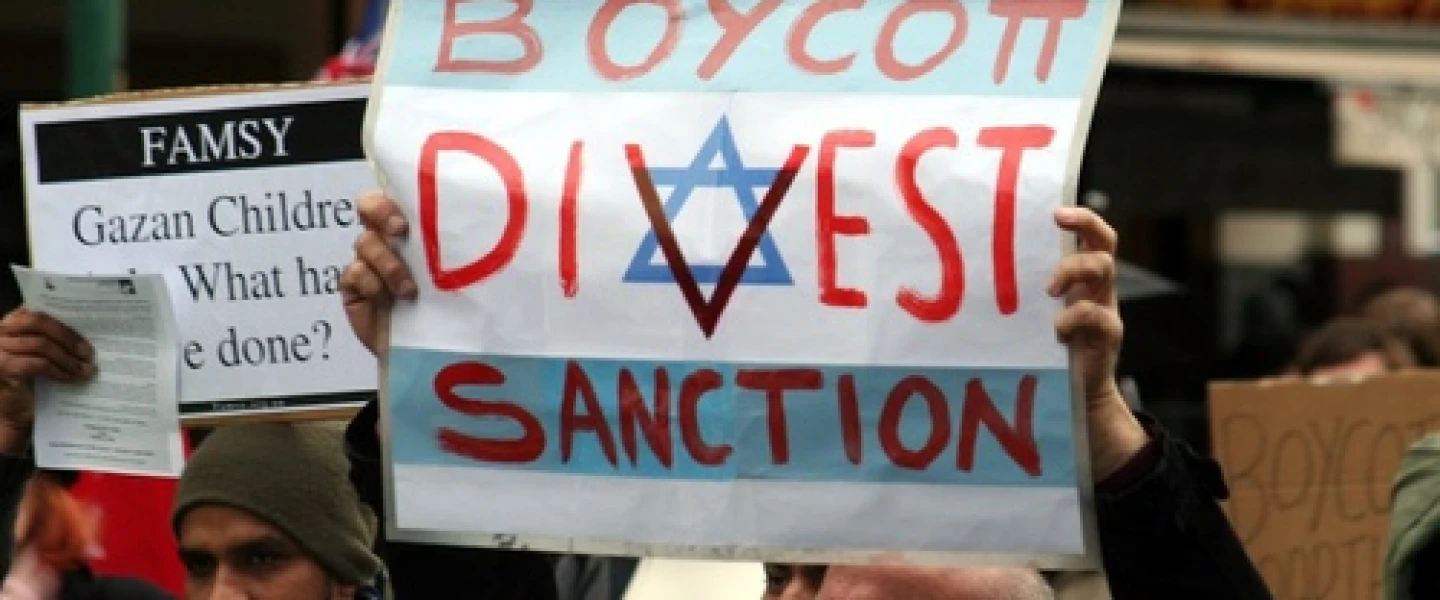
“A boycott of goods from Judea and Samaria is a despicable practice that harms hard-working, law-abiding citizens. The Labour Government has decided to employ this practice of boycotts and BDS only against the Jewish state,” he said on Sept. 9, referencing the anti-Israel Boycott, Divestment and Sanctions movement.
Sa’ar added that the Israeli public overwhelmingly supports the Jewish communities in Judea and Samaria and just as overwhelmingly opposes the creation of a Palestinian state in its heartland. “This is something that the Labour government is attempting, through measures that are doomed to fail, to force upon Israel. It will not work,” he said.