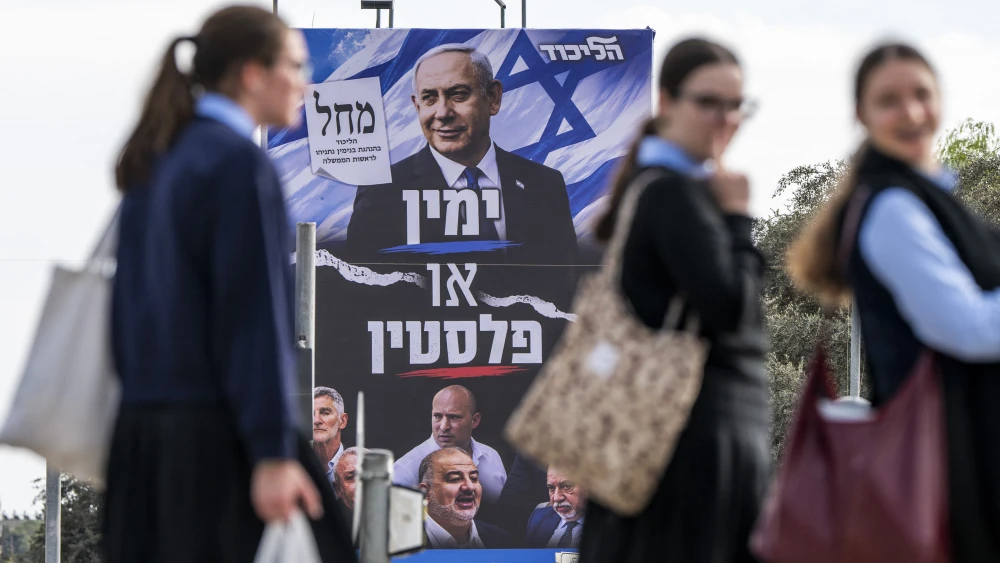
Israeli Prime Minister Benjamin Netanyahu warned on Wednesday that an Israeli government dependent on Islamist parties would be unable to confront radical Islam and would “tear us apart from within.”
Writing on X, the premier called the prospect “a matter of our very survival.”
Netanyahu renewed his call for a broad national government led by his Likud Party. It would include all members of his right-wing political bloc, as well as any Zionist parties willing to join.
He accused opposition leaders of putting political interests first by pursuing a minority government that would depend on parties he described as supporters of terrorism.
Netanyahu also demanded a full investigation into suspected foreign interference in the Oct. 27 Knesset elections, citing an inquiry by the Israeli Security Agency (Shin Bet), launched at the direction of Justice Noam Sohlberg, chairman of the Central Elections Committee.
However, Sohlberg has said the available evidence does not undermine the election results.
אזרחי ישראל היקרים,
— Benjamin Netanyahu - בנימין נתניהו (@netanyahu) November 4, 2026
האסלאם הקיצוני הוא האתגר שמפרק היום מדינות באירופה. זהו האתגר שמאיים גם עלינו. הוא מאיים מבחוץ על ידי איראן וגרורותיה, ומבית על ידי מפלגות אסלאמיסטיות של תומכי טרור.
הם חותרים למחוק את הזהות היהודית של מדינת ישראל. הם אומרים זאת בגלוי. הם חותרים למנוע מאיתנו… pic.twitter.com/t4K7pRiiOH
Netanyahu reached across the aisle on Monday evening, offering to form a unity government with himself at its head. But the chances are slim given the opposition’s continued determination to oust him from office.
“The public in Israel does not want a government that depends on Ra’am and the Joint List—parties that support terrorism and reject the existence of the Jewish state,” Netanyahu posted to X on Monday, referring to the two Arab parties.
“A clear majority in the Jewish public chose the Likud as the largest party and me, as prime minister, to lead the next government. We aspire to form a broad government with our partners and with any party that wishes to do so and does not support terrorism. I am open to holding discussions on the matter,” he said.
Opposition leaders have interpreted the results differently, insisting the Likud was handed a resounding defeat, though the result is a political stalemate as neither bloc won enough Knesset seats to form a government. Netanyahu’s coalition has 53 to the opposition’s 48. Likud remains the largest party with 27 Knesset seats to Yashar’s 21.