The Israel Defense Forces said early on Monday that soldiers had eliminated an individual during an attempt to infiltrate a military outpost in the Syrian security zone.
No injuries to IDF personnel were reported.
Later in the day, IDF soldiers identified two suspects riding a motorcycle towards an IDF post in the security zone. The soldiers apprehended the two suspects. No IDF injuries were reported.
“The IDF will continue to operate in the security zone in southern Syria in order to remove any threat to Israeli civilians and IDF soldiers,” the IDF said following the incidents.
Last month, Syrian President Ahmad al-Sharaa addressed the 81st session of the United Nations General Assembly in New York, accusing Israel of “launching attacks against Syria” and claiming that the Golan Heights “will remain Syrian territories.”
Al-Sharaa accused Israel of carrying out 500 airstrikes, more than 1,200 cross-border incursions and 300 detentions inside Syria. Reaffirming Syria’s commitment to the 1974 Disengagement Agreement, he called on Israeli forces to withdraw to the lines in place on Dec. 8, 2024, before the fall of the Assad regime. He said Damascus remains open to peace that safeguards regional rights and security.
Jerusalem maintains that the Golan Heights is an integral and non-negotiable part of Israel, with its status enshrined in the 1981 Golan Heights Law. It also says the deployment of Israel Defense Forces troops across the border serves as a defensive buffer against hostile factions and will remain in place until firm security guarantees are established.
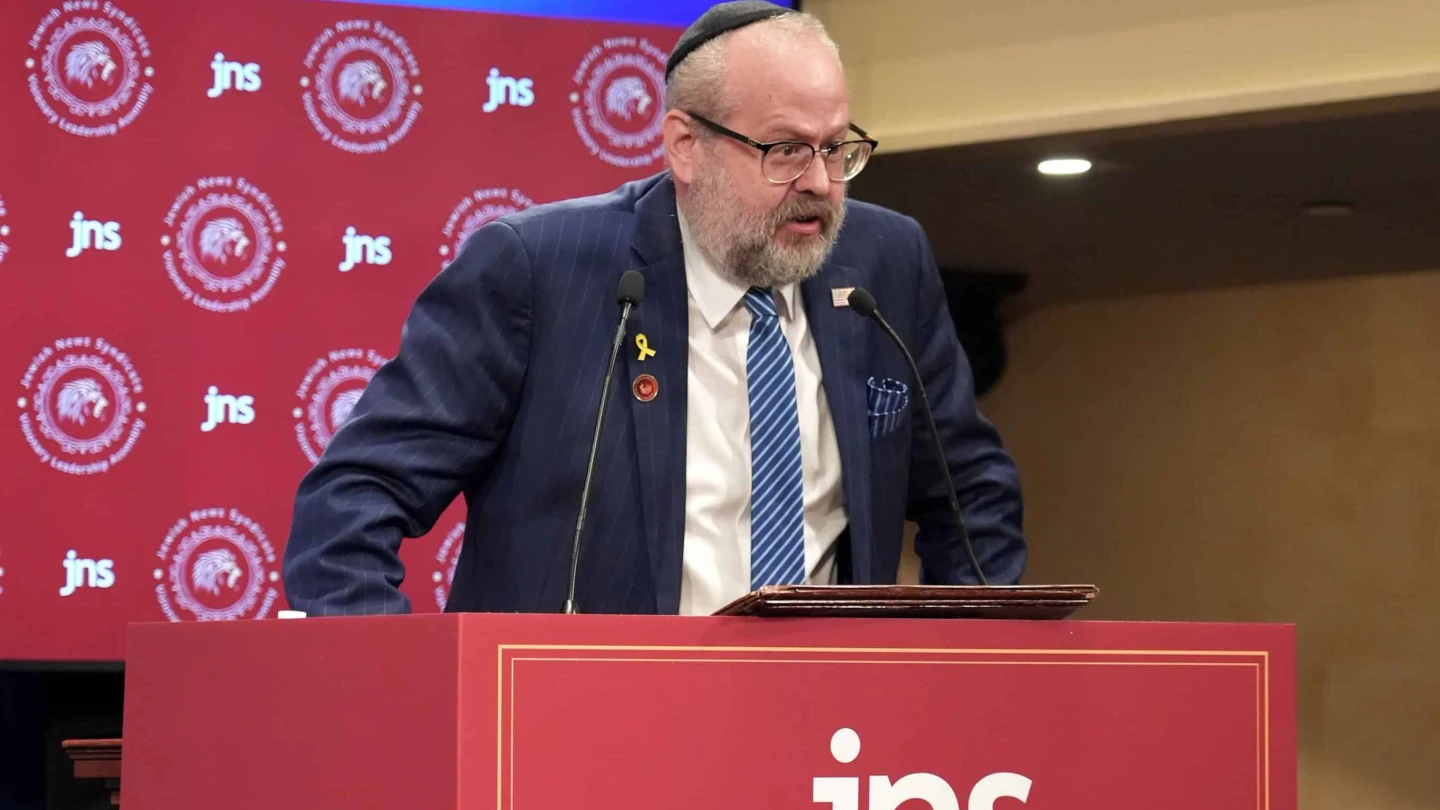
Syrian Foreign Minister Asaad Hassan al-Shaibani met U.S. Special Envoy to Monitor and Combat Antisemitism Rabbi Yehuda Kaploun in New York, on the margins of the U.N. General Assembly, according to Syria’s Foreign Ministry.
“During the meeting, a number of issues of common interest were discussed, as well as ways to enhance dialogue and communication in a manner that serves shared interests,” the ministry said.
In August, Prime Minister Benjamin Netanyahu said that Israel would not tolerate Turkish military entrenchment in Syria that moved south, following strikes on the Abu al-Duhur military base near Aleppo.
Netanyahu said Jerusalem had learned of plans for Turkey to establish itself “on the southern side of the line close to Aleppo,” and had sent a message to Ankara: “Don’t.”
The Israeli premier noted the message had been delivered but “apparently they didn’t hear it,” adding, “We made sure it was better understood.”
The Prime Minister’s Office added that Damascus had been on the verge of violating the security status quo by allowing Turkish troops to deploy at the base.
The same month, IDF Chief of Staff Lt. Gen. Eyal Zamir said during a tour of the Syrian front that Israel would not allow “hostile forces” to establish themselves along its borders.
“We are operating in a multi-front reality, in which the challenges are constantly changing and developing; the Syrian arena is one of them,” said Zamir.