


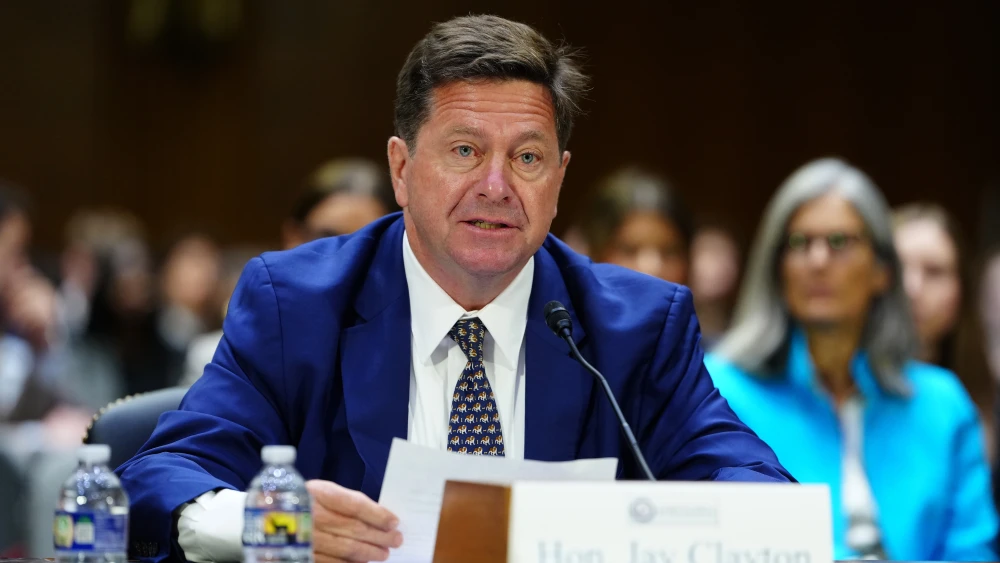
The Senate confirmed Jay Clayton by a 51-47 party-line vote to be U.S. director of national intelligence.
Clayton had some Democratic support until a July 16 hearing, in which he refused to say whether U.S. President Donald Trump lost the 2020 election.
He will oversee that nation’s 18 intelligence agencies and replace interim leader Bill Pulte, a controversial pick due to his criminal referrals of political enemies of U.S. President Donald Trump for mortgage and insurance fraud while he served as director of the Federal Housing Finance Agency.
Tulsi Gabbard held the DNI position until June, when she stepped down after a tumultuous tenure during which she reportedly lost Trump’s favor and confidence.
Clayton has served as the U.S. attorney for the Southern District of New York since 2025, a role in which he pursued several terrorism cases, including announcing terrorism charges against an Iran-backed militia commander plotting attacks against Jewish and Israeli targets.
He also chaired the Securities and Exchange Commission from 2017 to 2020.
Clayton’s confirmation paves the way for the Senate to approve the renewal of Section 702 of the Foreign Intelligence Surveillance Act, which permits the government to conduct warrantless, programmatic surveillance of foreigners located abroad with the help of electronic communication service providers.
Senators, including many Republicans, refused to give that power over to Pulte.
“Jay Clayton is a highly qualified nominee with a deep experience combating a wide range of national security threats,” stated Sen. Tom Cotton (R-Ark.) after the vote on Tuesday.
“As U.S. attorney, Mr. Clayton has worked hand in glove with our intelligence agencies and counterterrorism personnel to lock up criminals who threaten our national security,” the senator said.
Clayton’s biography does not describe any intelligence background or extensive national security experience, a legal requirement for the DNI role, but his experience as U.S. attorney in arguably the most powerful such office in the country included enough national security work for most senators to allow his confirmation to move forward.
“Clayton is well qualified to lead the DNI office and strengthen our intelligence efforts,” stated Sen. Ted Budd (R-N.C.). “I have no doubt he will do an exceptional job safeguarding this nation from our adversaries.”



