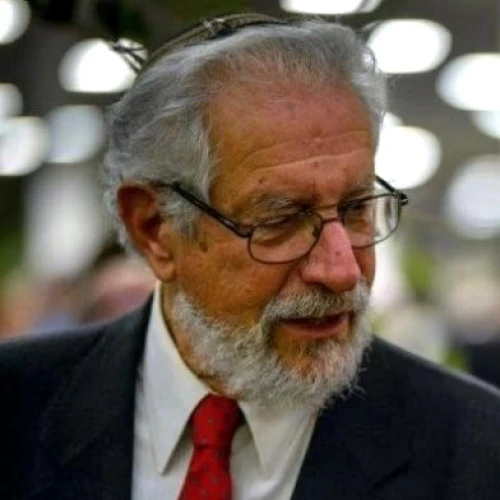
Jewish musician Mikey Pauker is appealing a federal court ruling that dismissed his discrimination lawsuit after a California retreat center canceled his scheduled Chanukah concert after community members raised concerns about his support for Israel.
Pauker’s attorneys filed their opening brief in the appeal with the U.S. Court of Appeals for the Ninth Circuit on Aug. 14, arguing that the district court erred in finding that Harbin Hot Springs could not be held liable for responding to discriminatory customer complaints.
Stanford Law School’s Religious Liberty Clinic and the National Jewish Advocacy Center are representing Pauker in the appeal. The center announced the appeal on Aug. 21.
Matthew Mainen, litigation counsel at the National Jewish Advocacy Center, told JNS that “Mikey needs to demonstrate three things: Zionism is part of his Jewish identity, the cancellation campaign against him was anti-Jewish and businesses cannot cater to such customer bigotry.”
“The lower court already agreed with us on the first two but not the last,” he said. “We anticipate the appellate court correcting this error.”
Pauker told JNS that “for many Jews, Zionism is inseparable from our Judaism, ancestry, peoplehood and our religious and historical relationship to the Land of Israel.”
“Discriminating against a Jewish person because of that deeply held relationship should not be dismissed simply by labeling it ‘political,’” he said. “I hope this case helps establish stronger protections for Jewish Americans and encourages more Jewish musicians, artists and other creatives who experience discrimination to stand up for their rights.”
‘Politics and divisiveness’
Pauker sued Heart Consciousness Church, which owns and operates Harbin Hot Springs in Middletown, Calif., in April 2025, alleging that the cancellation of his 2024 Chanukah concert violated Title II of the Civil Rights Act of 1964 and California civil rights laws.
According to the appeal, the venue canceled Pauker’s show after community members complained about his “Zionist views” and Harbin said it wanted to avoid “politics and divisiveness” related to the Israeli-Palestinian conflict.
At the center of the complaints was a Facebook post Pauker made after the Hamas-led terrorist attacks in southern Israel on Oct. 7, 2023, in which he shared an image of two Israeli soldiers in a tank with an Israeli flag and the words “I stand with Israel” over the picture.
An anonymous user responded by accusing Pauker of playing “genocide music” and urging others to pressure Harbin to cancel his concert, according to the appeal. The anonymous user later commented on another photograph of Pauker participating in a Jewish ritual, accusing him of playing “terrorist music.”
Harbin canceled the concert the following day and referenced Pauker’s “I stand with Israel” post in its explanation, per the appeal.
The U.S. District Court for the Northern District of California dismissed Pauker’s lawsuit in February, ruling, among other things, that he had not sufficiently alleged that Harbin canceled the concert because of his race or religion. The court also found that Harbin’s initial willingness to host a concert for the Jewish holiday by Pauker weighed against an inference that the venue had discriminated against him.
Pauker’s appeal challenges that reasoning, arguing that under current law “a business cannot cave to discriminatory customer preference” and that because the venue’s rationale included Pauker’s Facebook post, “the alleged animus was not limited to customers but included Harbin directly.”
The brief further alleges that Harbin allowed musicians who were openly anti-Israel to perform, including one whom Pauker says engaged in Holocaust denial and quoted Hamas leader Yahya Sinwar, whom the brief describes as one of the architects of the Oct. 7 attack.
Regarding the district court’s reasoning that the venue was unlikely to have discriminated against Pauker after initially booking him for a Chanukah show, the appeal states that “the law forbids taking adverse action based on stereotype or distinctions within a protected class.”
“In short, Harbin cannot discriminate against Pauker as a Zionist Jew in concluding that, unlike celebrating Chanukah, embracing Zionism contradicts its subjective vision of an acceptable Jew,” the appeal states.