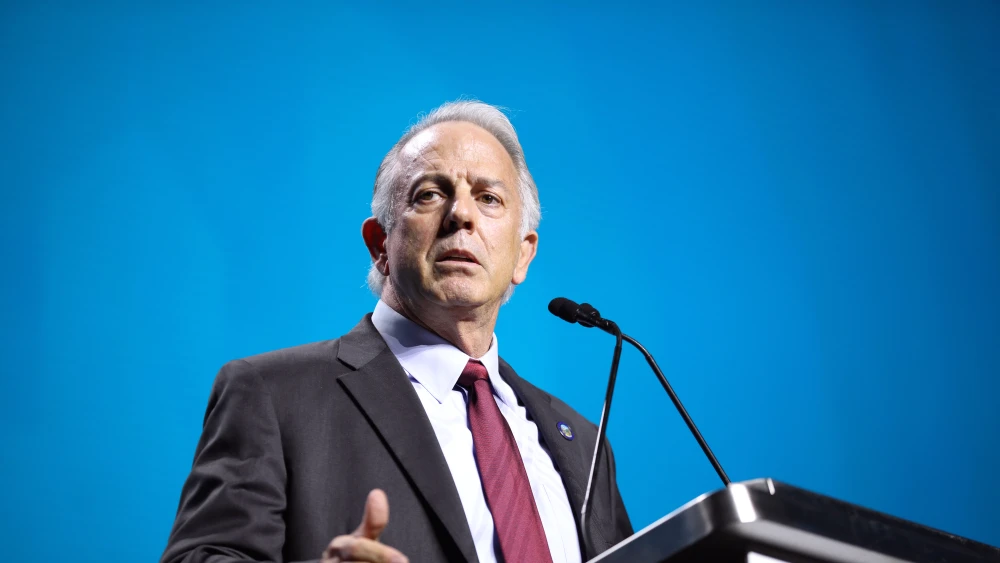
The state of Nevada was listed as one of 21 on an amicus brief, a “friend of the court” message, in support of Harvard University, after the Trump administration has sought to strip the Ivy of federal funding over its response to Jew-hatred on campus.
“The amici states write to underscore the enormous public benefit of university research and the dire risks posed by federal attacks on such research,” the 20 states and the District of Columbia write in the brief.
“Harvard’s contributions to Massachusetts are a prime example of the significant impact that research universities can have,” they add.
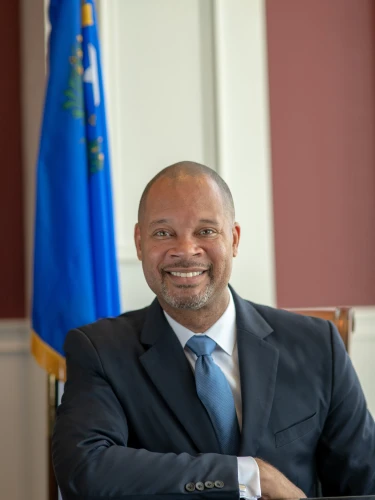
Drew Galang, communications director for Nevada Gov. Joe Lombardo, a Republican, told JNS that “the governor’s office was not consulted before Attorney General Ford joined the brief.”
Aaron Ford, Nevada’s chief legal officer, is listed as a signatory of the brief alongside attorneys general of Massachusetts, California, Colorado, Connecticut, Delaware, Hawaii, Illinois, Maine, Maryland, Michigan, Minnesota, New Jersey, New Mexico, New York, Oregon, Rhode Island, Vermont, Virginia, Washington and the District of Columbia.
Mark Goldfeder, director of the National Jewish Advocacy Center, told JNS that Nevada law did not require Ford to “ask the governor’s permission.”
The law “lets the attorney general act on his own opinion of the state’s interest, and attorneys general of both parties have used that authority for a decade,” Goldfeder said. “But authority is not a reason to sign.”
Goldfeder noted that the brief does not mention “the discrimination and harassment of Jewish students that precipitated” the freeze of federal funds. “The words ‘antisemitism,’ ‘Jewish,’ ‘civil rights’ and ‘Title VI’ appear nowhere in it,” he said.
“For the record, the remedy they are concerned about, how it affects their own bottom lines, has been available the entire time: tell Harvard to comply with civil rights law and protect its Jewish students,” he said. “Do that, and there is no freeze to litigate. Antisemitism is not an acceptable cost of doing research.”
The Nevada attorney general, a Democrat, is running to unseat Lombardo as governor.
“Ford put Nevada’s name on a brief that never mentions Jewish students, apparently without a word to the governor’s office, while running against that governor,” Goldfeder told JNS. “He had the power to make that choice. He now owns it, and everyone should know that.”