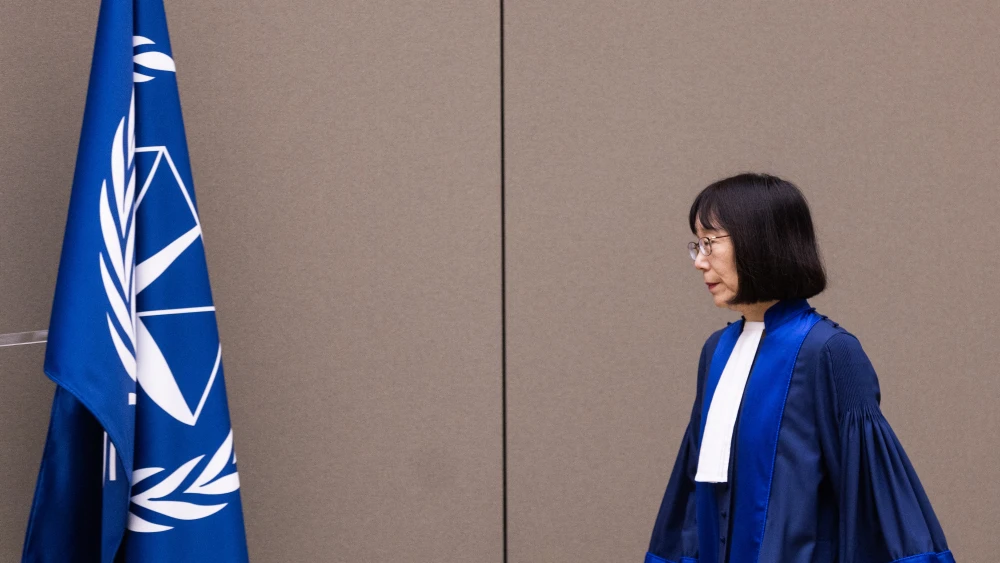
The Trump administration imposed sanctions on Tuesday against the president of the International Criminal Court and a senior trial lawyer, escalating its campaign against the Hague-based tribunal over its investigations of Israeli and U.S. officials.
ICC president Tomoko Akane of Japan and Abdoulaye Seye of Senegal were designated for sanctions because they “have directly engaged in efforts by the ICC to investigate, arrest, detain or prosecute officials whose government has not consented to ICC jurisdiction,” U.S. Secretary of State Marco Rubio stated.
“The International Criminal Court is a corrupt and fatally politicized supranational court that has maliciously abused its authority and exceeded its mandate,” Rubio said. “We will not tolerate its assault on state sovereignty.”
The Trump administration has vowed to dismantle the court, which issued arrest warrants in 2024 for Israeli Prime Minister Benjamin Netanyahu and then-Israeli Defense Minister Yoav Gallant over alleged war crimes in the Gaza Strip. Israel and the United States are not parties to the Rome Statute, the treaty that established the ICC, though the court maintains that it has jurisdiction over alleged crimes committed in Palestinian territories.
The tribunal has also investigated alleged crimes by U.S. personnel in Afghanistan, prompting longstanding opposition from Washington.
The United States previously sanctioned ICC judges and prosecutors, including officials involved in the court’s cases concerning Israel. The latest designations add to Washington’s growing pressure campaign against the tribunal.
“Our whole-of-government campaign to dismantle the threat posed by the ICC to national sovereignty will be sweeping, and we expect more countries to join our campaign by ending their funding and participation in this politicized and unaccountable court,” Rubio said. “The ICC’s ability to target American nationals and those of other non-States Parties must end.”
The U.S. campaign comes as the ICC faces a wave of withdrawals. Burkina Faso, Mali and Niger formally began withdrawing from the Rome Statute in June, followed by Chad and Venezuela in July.
Hungary, meanwhile, reversed its planned withdrawal in May after Hungarian Prime Minister Péter Magyar’s government pushed legislation to keep the country in the court. Parliament voted 133-37, with five abstentions, to remain an ICC member.