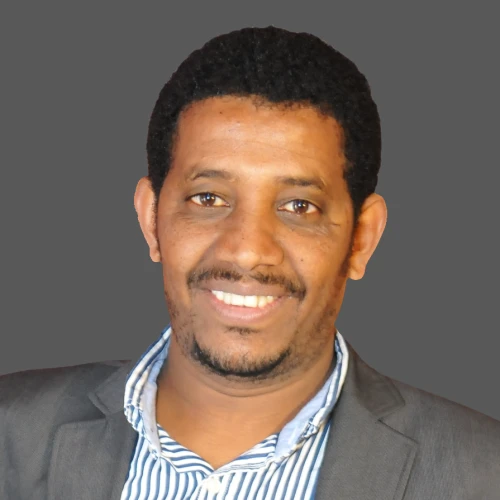
Stav Cohen, 30, an Israeli attorney and special-forces reservist, has spent more than 12 years fighting terrorists. He now plans to deploy his combat skills against another threat to the Jewish state—this one found on American college campuses.
“A loaded M16 is to prevent the next attack tonight,” but it’s necessary to talk to college students before they become “the next Mamdani or the next Congress leaders,” the grandchild of Holocaust survivors told JNS.
Cohen is co-founder of the Israeli nonprofit Frontline Advocates, which trains Israeli veterans and others to defend the Jewish state and which is about to lead a seven-member delegation to New York from Aug. 23 to 30.
“For me, this is the only way to build a better future,” he told JNS. “To stop the bloodshed.”
Cohen and Itay Sagi, 27, plan to lead the delegation, which is slated to spend the week holding public debates and filming social media posts near New York University, Columbia University, Fordham University, Fashion Institute of Technology, City College and Stony Brook Southampton, per a preliminary schedule that JNS viewed.
The group is also scheduled to participate in Jewish communal and church events in the Hamptons, and it plans to return to Israel on Aug. 30.
Most members of the delegation are young Israelis, in their 20s.
Cohen told JNS that the nonprofit isn’t funded by the Israeli Foreign Ministry, although the latter supports it in other ways, including providing it with facilities and instructors for a six-week speaker-training program in Israel.
‘Sneak into most horrible places’
After Oct. 7, Cohen realized that the stories his grandfather told him about Auschwitz were repeating themselves and that fighting terrorists one-by-one, as he does as a special-forces reservist, was not enough to confront the broader threat, he told JNS.
“My job is to sneak into the most horrible places, where terrorism cells are breathing, get the bad guys and scram out,” he said. “Most of the time it gets messy, and lots of shooting happens.”
After many experiences that he called “near-death” and injuries, “if God, fate or the world, whoever that is, decided that I still have a job to play, a role to play here, then this is to build bridges between Jews, Muslims and Christians and stop this craziness,” he said.
“Because,” he told JNS, trailing off, “good people are dying.”
Cohen told JNS that the group brings private security to its events and often holds public appearances outside campus buildings, because indoor events have presented security problems in the past.
“I was once giving a lecture at John Jay College, and 150 masked protesters—masked as in, wrapped keffiyehs around their faces—tried to break in,” he said. “They physically attacked police officers.”
“They managed to break in,” he said. “They were stopped literally in the hallway before they got us to the class, and then I had to sneak out through the back door.”
“Two police cars escorted me back to the hotel,” Cohen told JNS.
Cohen is nervous about bringing the group to New York City amid concerns about antisemitic violence in the city.
“I’m seeing what’s going on in New York,” he told JNS. “I’m getting death threats on a daily basis, and they’re tracking us down, and they know that we’re coming.”
“I fear for my speakers’ lives,” he said.
Unfillable void
“I’m not afraid of anyone,” Sagi told JNS, of going to the Big Apple. “I’m mostly afraid for my speakers, but I’m sure they’re gonna be fine.”
After being critically wounded in combat shortly after Oct. 7, Sagi grew determined to make the loss of his friends “worth it,” as he put it.
“We need this place to be somehow worth their loss,” he told JNS. “It will never be. It’s a void.”
The Hebrew word for death is tied to the notion of a void that “you can never fill,” according to Sagi.
“But we need to try, and we need to shed light on it,” he told JNS. “That’s what I’m trying to do.”
Yuval Patiev, 23, was a 20-year-old commander in the Golani Brigade when Hamas terrorists stormed across the Gaza border on Oct. 7, leaving him critically wounded.
Nearly three years later, after more than a year of rehabilitation, he plans to share his story in New York City with students close to the age he was when he fought that day. He said he plans to do that, so they can “know my reality.”
“I can tell them the story that at 20 years old, I was surrounded by terrorists and basically accepted my death,” he told JNS. “I felt that because I have a crazy story to tell, and I have the ability to tell and share, then I must do it because a lot of people can’t.”
One of the memories that has stayed with Patiev most from that day was realizing that he might not live.
“We saw them inside Israel, not even running. They were walking,” he told JNS, of the Hamas terrorists. It was crazy. It was insane. We couldn’t believe what we were witnessing.”
As the attack unfolded and he remained trapped for hours after being wounded, Patiev began to come to terms with what he assumed would be his fate.
“You accept death, and you’re thinking about—how is your family going to react,” he told JNS. “How is your funeral going to be? What are people going to say about you?”
For Eliana Solomon, 24, the trip marks a return to the city where she grew up.
Raised in New York City in a Zionist family, she made aliyah alone at 18 and served as an officer in the Israeli military. She now leads the training program at Frontline Advocates and has traveled with the group on two prior delegations.
“Our war that we’re fighting here in Israel is not just the physical war,” she told JNS. “It’s really the advocacy war, which is the media and the lies that are going around about our country.”
‘The real side of Israel’
“I realized it wasn’t enough,” Solomon said, of serving in the Israeli military.
“I realized that there was an entire other front that we’re completely forgetting about,” she told JNS.
During a previous Frontline Advocates visit to Washington Square Park in lower Manhattan, delegation members set out Israeli flags and spoke with passersby.
Some shouted at them from a distance. One man cursed the group, made violent remarks and tried to physically confront Cohen before being arrested, she told JNS.
“I want to show people the real side of Israel,” she said. “I want to show people that we’re people, and that at the end of the day, the IDF soldiers that everyone’s so scared of are young people just like me.”
“We’re not just fighting for Israel,” she said. “We’re fighting for the future of America as well.”
Cohen told JNS that beyond that goal, he is fighting for his 4-month-old daughter, who was born during Iranian ballistic-missile attacks on Israel.
“She’s a baby. She’s a pure baby,” he said. “She was born in a bomb shelter four months ago when Iran shot ballistic missiles.”
The delivery was complicated, Cohen said, and the umbilical cord wrapped around his daughter’s neck twice amid attacks outside.
“It all happened through sirens over and over and explosions,” he said. “It was crazy.”
For Cohen, the experience reinforced the stakes of trying to change minds abroad—not only for Israel today but for the country in which his daughter will grow up.
“This is for my 4-month-old baby daughter, and just an M16 won’t do that,” he told JNS. “It just ain’t gonna cut it no more. We have to fight with words and by the narrative.”
“This is why we’re trying to build bridges, and this is why I’m dedicating my life to building a better future,” he said.