


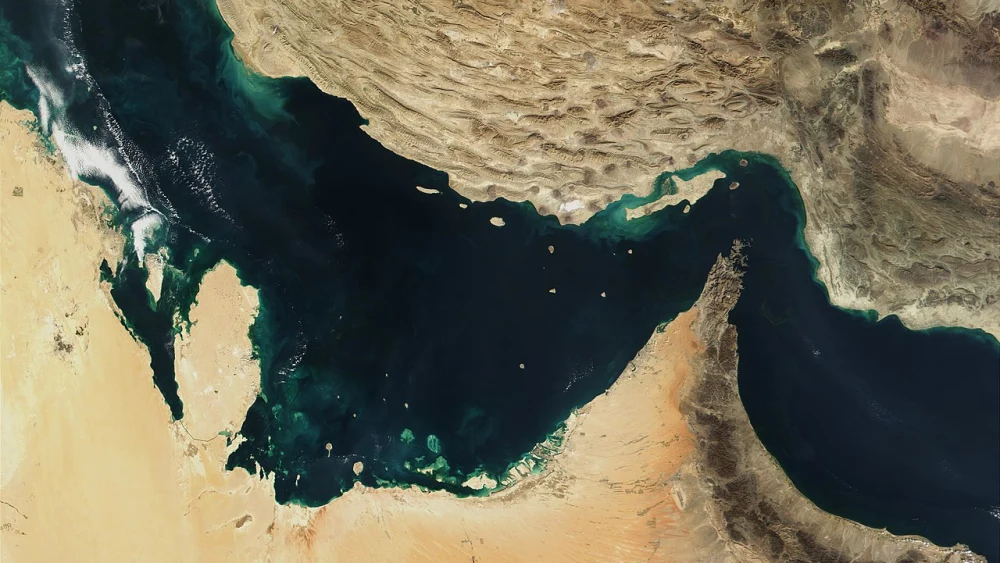
The speakers of the Iraqi and Iranian parliaments were engulfed in a toponymic dispute on Thursday over what to call the body of water to the south of both countries.
U.S. President Donald Trump may have instigated the disagreement when he posted a map on Tuesday that labeled the Strait of Hormuz as “new U.S. territory.”
The following day, Iranian Parliament speaker Mohammad Bagher Ghalibaf published an uncaptioned photo of himself sitting in front of a map with “Persian Gulf” displayed prominently in English and Farsi over his shoulder.
— محمدباقر قالیباف | MB Ghalibaf (@mb_ghalibaf) August 19, 2026
The speaker of Iraq’s Council of Representatives, Haibat al-Halbousi, then posted an edited image of himself in a similar pose with “Arabian Gulf” superimposed in Arabic over the waterway.
#الخليج_العربي pic.twitter.com/K5VyYudX6Y
— هيبت الحلبوسي (@HaibetHalbousi) August 20, 2026
The two speakers met in Iraq earlier in the week to discuss Iraqi oil exports, which have been hampered by the ongoing war between the United States and Iran. Al-Halbousi is a member of the Progress Party, a Sunni bloc that opposes the Iranian-backed parties in Iraq.
“Persian Gulf” has been the most common nomenclature to describe the Middle Eastern body of water, which is technically a sea of the Indian Ocean, for centuries.
Many Arab countries began to prefer using the term “Arabian Gulf” after the rise of Arab independence movements in the early 20th century.
Trump told reporters in the Oval Office in May 2025 that he was considering using the Arab convention ahead of a trip to Saudi Arabia.
Iran’s consulate in Najaf responded to al-Halbousi’s post with photos from an Iraqi government geographical guide from 1936 that labeled the body as the “Persian Gulf.”
The Islamic Republic’s consulate in Hyderabad, India, attempted to more directly mock al-Halbousi.
“Every masterpiece of art has its ridiculous echo,” it wrote.


