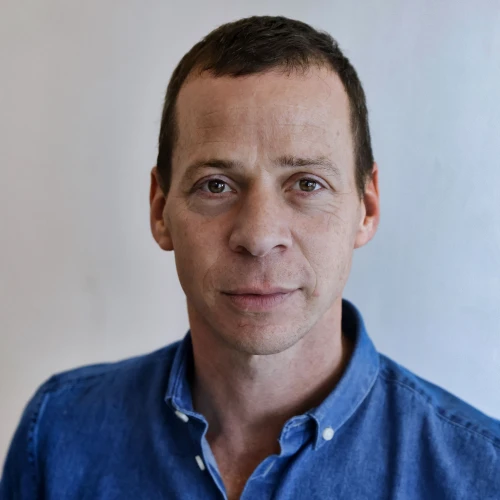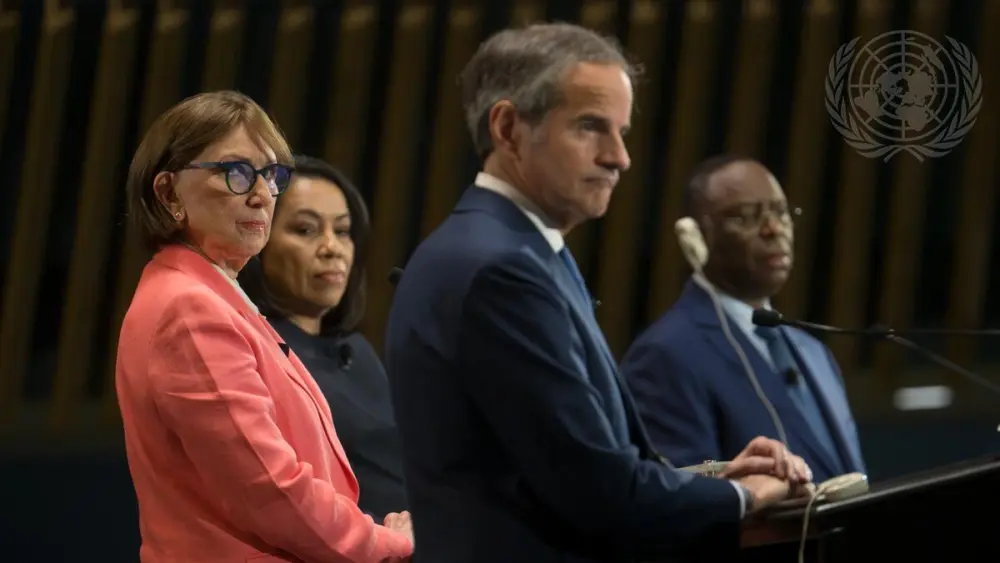
Rebeca Grynspan, an economist and former Costa Rican vice president who is Jewish, still leads the race to become the next United Nations secretary-general. But the number of “negative” votes she received in the U.N. Security Council’s fifth straw poll, on Wednesday, was double what she received in the previous poll.
A U.N. executive and daughter of Holocaust refugees, Grynspan fell from 10 “encourage” votes in the last poll to nine on Wednesday, according to results widely leaked to the press.
Her “discourage” votes doubled, from three to six.
A candidate needs at least nine votes from the council and must avoid getting even one veto from the council’s five permanent members: China, France, Russia, the United States and the United Kingdom.
None of the polls, which are conducted by secret ballot, have so far revealed how the permanent five plan to vote.
Multiple diplomatic sources with knowledge of the matter told JNS that they expect the next straw poll, tentatively set for Oct. 16, to use color-coded ballots that will reveal if veto holders vote “discourage.”
Rafael Grossi, the Argentinian who leads the International Atomic Energy Agency, got six “encourage,” seven “discourage” and two “no opinion” votes on Wednesday, losing two “encourage” votes from the last poll, taken on Sept. 29.
Carolyn Rodrigues-Birkett of Guyana, who won the second straw poll and remains the only candidate to top Grynspan, fell hard on Wednesday, registering five “encourage,” nine “discourage” and one “no opinion” votes.
Last time, she had eight “encourage,” six “discourage” and one “no opinion.”
Olara Otunnu of Uganda and Macky Sall of Senegal each had double-digit “discourage” votes.
María Fernanda Espinosa of Ecuador, a former U.N. General Assembly president and Ecuadorian foreign affairs and defense minister, received just three “encourage” votes, and nine “discourage” and three “no opinion” votes.
The race remains open to new candidates, but there are no signs of dark horses emerging yet. This year’s election is running deep into the calendar, with António Guterres’s second and final term as secretary-general set to expire at the end of December.
The previous two races led to decisive results much earlier in the search.