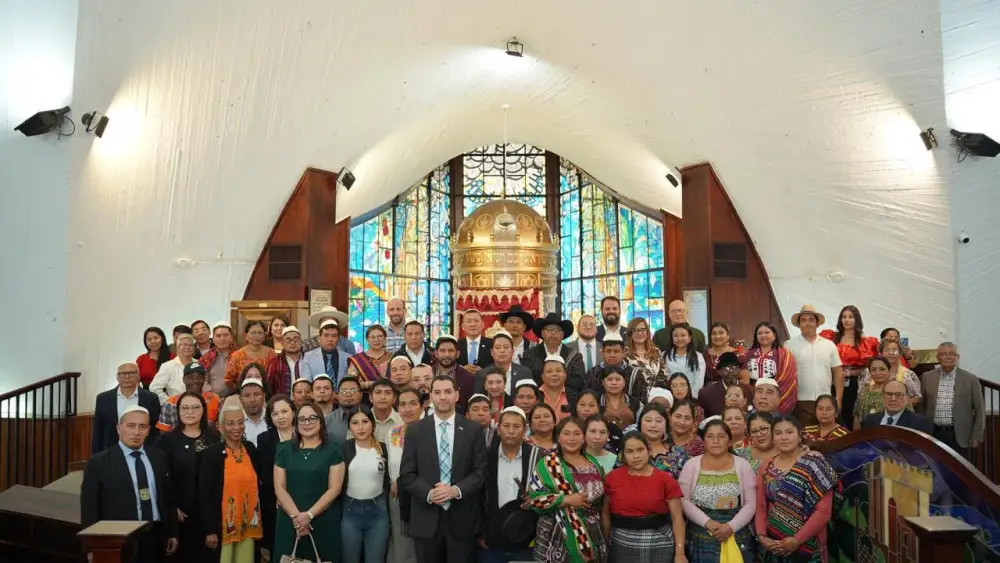
Guatemalan indigenous leaders from the Maya, Garifuna and Xinca peoples gathered at the Shaarei Binyamin synagogue in Guatemala City on Oct. 22, to discuss ideas with members of the Jewish community in what Israel’s Foreign Ministry described as an “extraordinary meeting.”
The central focus of the conversation: How to preserve language, identity and connection to the land from one generation to the next.
For indigenous leaders working to protect their languages and heritage, the story of the Hebrew language, preserved for hundreds of years in exile as a written language, and then revived in the 19th century to once again become a spoken language, was deeply affecting, the Foreign Ministry told JNS. The story touched on the challenge preoccupying their communities, passing on an ancient tradition to the next generation and securing a place for it in modern life.
The meeting, organized by the Israeli embassy in Guatemala in cooperation with the Jewish community, brought together leaders and heads of municipalities from the aforementioned peoples together with embassy and community representatives. The embassy said this is the first meeting of its kind with representatives of these peoples.
The meeting exposed the Mayan, Garifuna and Xinca representatives to the Jewish story. It opened a dialogue about questions of concern to all peoples with an ancient heritage: How to preserve historical memory? What connects the generations? What role does language and the connection to the land play in preserving identity?

The guests toured the synagogue, participated in lectures and discussion on historical memory, identity and resilience. The indigenous leaders are deeply engaged in the challenge of preserving their own languages and passing on their heritage to future generations.
Connection to the land was another topic with which they identified. This connection was a starting point for a conversation about belonging, mutual respect, and the possibility of forging partnerships between geographically distant communities.
“This is a groundbreaking first step,” said Israeli Ambassador to Guatemala Alon Lavie. “The meeting laid the foundation for a deep intercultural dialogue based on a history of resilience, preserving identity, and a deep connection to the land and roots.”
The embassy wants to turn the meeting into a first step toward joint action. “We initiated this meeting to open a window to future collaborations and development and support projects that will serve indigenous communities across the country,” Lavie said.