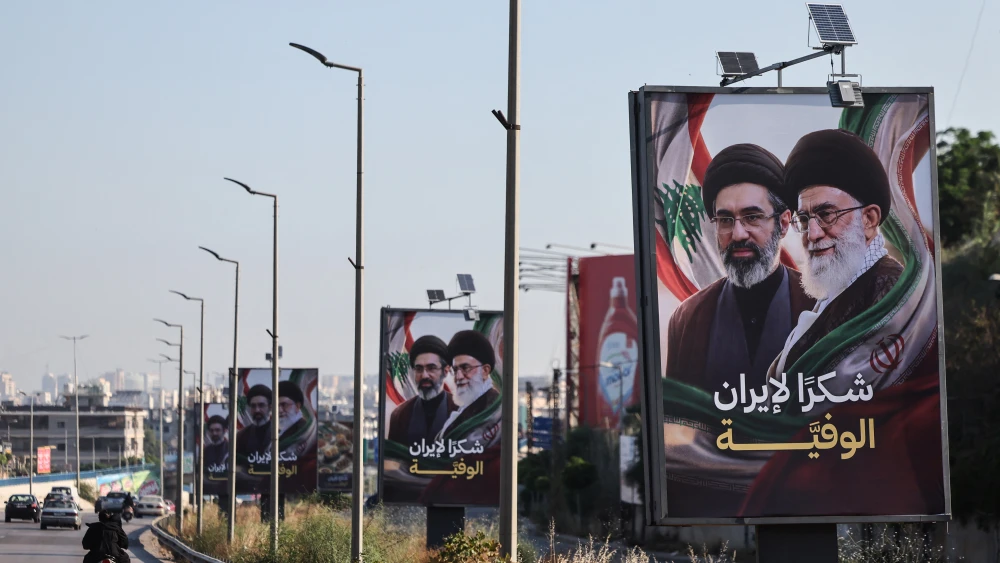
Iranian Supreme Leader Mojtaba Khamenei reiterated on Sunday that any deal with the United States must include an “absolute, unconditional” end to the fighting in Lebanon, adding that the defense of the Hezbollah terror group remains the Islamic Republic’s “strategic mandate.”
In a message addressed to Hezbollah Secretary-General Naim Qassem posted to social media, Khamenei praised the Iranian terror proxy for what he described as its “steadfastness” against Israel.
“The Islamic Republic of Iran considers the defense of these oppressed yet powerful mujahideen [Jihad fighters] to be its strategic mandate,” Khamenei wrote on X, saying the policy followed the path set by his father, the slain Supreme Leader Ayatollah Ali Khamenei.
He also declared that Tehran had made the preservation of Lebanon’s “territorial integrity” and the “absolute, unconditional termination” of what he described as the “Zionist regime’s aggression” its primary condition for any agreement with the United States.
“There remains no path forward except jihad and resistance,” Khamenei wrote, accusing Washington and Jerusalem of “tyranny and oppression.”
The supreme leader also paid tribute to slain Hezbollah chief Hassan Nasrallah and other senior terrorists killed since the terror group renewed hostilities on March 2, saying that continued “resistance” would ultimately bring “divine victory.”
Hezbollah renewed its rocket and drone attacks from Southern Lebanon on Israel following the targeted killing in Tehran of Ali Khamenei on the first day of “Operation Roaring Lion” on Feb. 28.
In response, Jerusalem launched a broad aerial campaign against Hezbollah targets and expanded military operations in Lebanon aimed at preventing cross-border attacks on Israeli communities.
Following the resumption of hostilities, Lebanese President Joseph Aoun vowed to do “the impossible” to stop cross-border exchanges between Israel and Hezbollah, and moved to outlaw the Iranian proxy.
Israeli and Lebanese officials subsequently held several rounds of historic direct talks with U.S. mediation, resulting in a framework of understandings that was reached on June 26 and conditions an Israeli redeployment on Hezbollah being removed from the south.