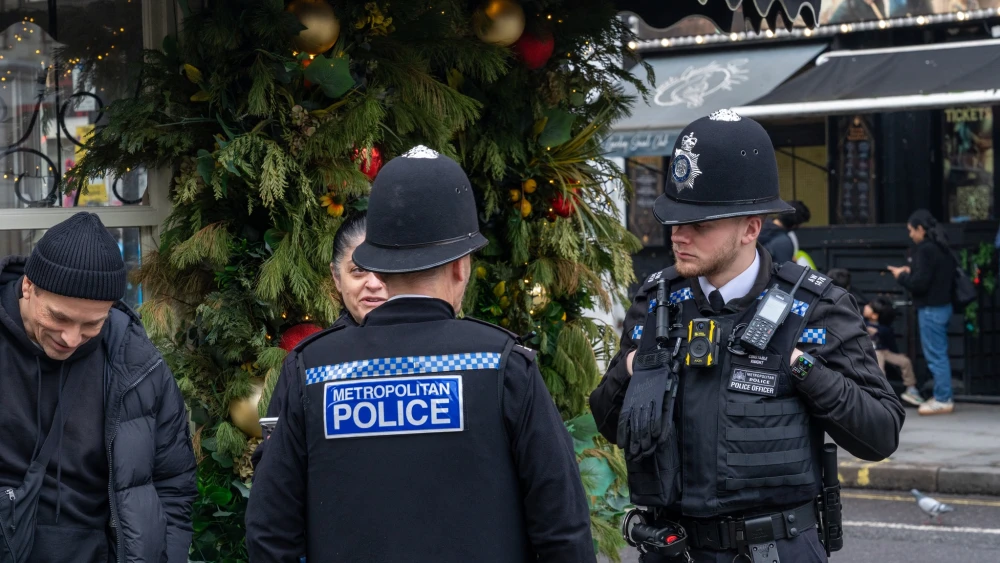
After London’s Metropolitan Police stated that it can’t ban a planned anti-Israel student protest on Oct. 7, the Campaign Against Antisemitism said that there is a statute that would justify police banning the protest and called on Mark Rowley, the department commissioner, to resign.
“‘Just ban it,’” the Met Police stated on Monday. “That was a common response to us urging students not to hold a pro-Palestine protest on Oct. 7.”
“We can’t ban protests and can only ask the home secretary to do so if the risk of serious disorder is so high that it can’t be managed by conditions,” the police department stated. “That’s not the case here.”
The Met Police released an infographic explaining its power to ban protests, which states that “the police do not have the power to ban a march” and that police can only apply to British Home Secretary Shabana Mahmood to ban a march “if the risk of disorder is so serious that it cannot be dealt with by conditions alone.”
The Jewish watchdog said that under section 11 of the Public Order Act of 1986, march organizers must provide a name and address to police. James Harman, deputy assistant commissioner for Met operations, said at a press conference on Friday that police had been unable to contact organizers.
“So the march is illegal,” the Campaign Against Antisemitism stated. “Furthermore, the Met seems to be saying that they feel that the march does not meet the conditions for calling for a ban under section 13 of the Act, so they will not even ask the home secretary to give her permission to ban it.”
“She cannot instigate the banning process under the law, and can only make a decision in response to a request from the Met commissioner,” the group stated. “Why will he not at least make the case and seek her decision?”
The group noted that Met Police banned a U.K. Independence Party march in Tower Hamlets “without hesitation.”
“But when it comes to the Palestine hate marches, they always plead impotence,” the group stated. “It is two-tier policing.”
The UKIP said that it has been banned from marching three separate times. The Met Police disputed that and said that it required the party to move its locations. Police have also publicly called on Oct. 7 march organizers to relocate.
The Jewish watchdog stated that Rowley “keeps saying that the law is inadequate and he needs more powers in order to do anything meaningful, but even now he is not using his existing powers.” It called on him to “resign over this disgrace and the many travesties that have preceded it.”
The Met Police stated that the “threshold of serious disorder not manageable using conditions is not close to being met.”
Asked whether organizers had been successfully contacted and had provided police with a name and address, a Met Police spokeswoman directed JNS to Harman’s press conference on Friday, where he said the department had not reached organizers.