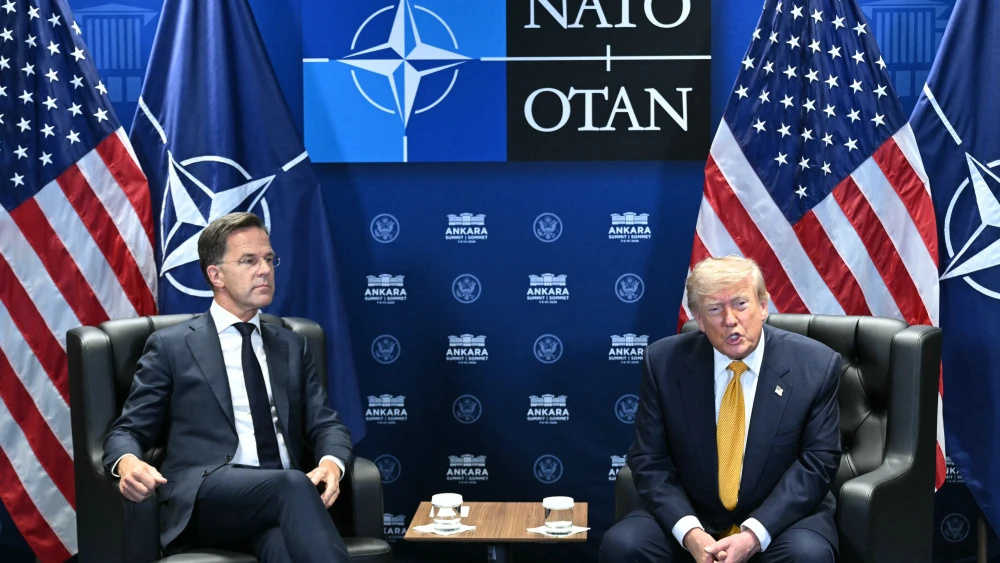
U.S. President Donald Trump on Wednesday effectively declared the Iran ceasefire and its accompanying Memorandum of Understanding dead.
“To me, I think it’s over. I don’t want to deal with them anymore,” he said in response to a reporter’s question on day two of the NATO summit in Ankara, Turkey.
The reporter had asked: “Is the ceasefire over? Is the ceasefire done? Is the MoU dead?”
“They’re scum... they’re sick people,” Trump said of Iran’s leadership. The Islamic Republic is “led by sick people, and they’re vicious, violent people, and if they had a nuclear weapon, they’d use it. As far as I’m concerned, it’s over,” he continued.
“I’ll speak to our negotiators. They want to negotiate. They’re good people—Steve Witkoff, Jared Kushner. But they have to come back to me. As far as I’m concerned, it’s just a waste of time dealing with them. They’re [the Iranians] liars. ... We make a deal, everyone’s agreed—no nuclear weapon. We make a deal. They go outside and talk to the press and say, ‘We never even talked about it.’ There is something wrong with them; they’re cuckoo. As far as I’m concerned, it’s over.”
Asked if this means negotiations will not continue once the funeral proceedings in Iran for slain Supreme Leader Ali Khamenei conclude on Thursday, Trump again dismissed the prospects for a successful outcome. “I don’t care. They can talk, but I think they’re wasting their time.”
He called the leaders of the Islamic Republic “a bunch of lying guys. ... They’re liars. They’re cheats. They’re sick people. They’ve hurt their people. They killed 54,000 people as of now who were protesting. When people say, ‘How come they haven’t taken over?’ They can’t take over because they’re dead. They killed them. Nobody is going to take over. They have no guns, and the other side has machine guns, and they’re killing them. The press doesn’t report it. But they’re bad people. They’re bad people, and frankly, I don’t want to waste my time with them. Now, I’ll let our wonderful negotiators keep talking if they want to, but I don’t see it. I don’t like these people, you know that?”
Trump told reporters later on Wednesday that the U.S. military was preparing to once more strike the Islamic Republic “hard.”
“We hit them very hard last night, very, very. Probably hit them hard again tonight,” Trump said. “I’ll give them a little warning. We’re going to hit them hard tonight,” he added. “We’ll see how it all works out—no, I’m not happy with them.”
US Central Command
American forces launched strikes against the Iranian regime in response to the Islamic Republic’s attacks on civilian-manned commercial ships on Tuesday, according to U.S. Central Command, which said it hit more than 80 targets to degrade Iran’s ability to continue attacking international commerce.
Iran fired missiles at commercial ships transiting the waterway between Iran and Oman, reportedly causing significant damage but no casualties.
The strikes come as the U.S. Treasury Department reimposed sanctions on the export of Iranian oil in response to Iran’s attacks.
Sirens sounded in Bahrain on Wednesday as the Gulf kingdom’s Interior Ministry urged citizens to seek safety, according to a post on X. The warning came after the IRGC said it launched missiles and drones at 85 U.S. military sites across Bahrain and Kuwait in response to the latest wave of American strikes.
Iranian Parliament Speaker Mohammad Baqer Ghalibaf accused Washington of committing “major violations” of the ceasefire deal known as the Islamabad Memorandum of Understanding following the renewed strikes.
In a post on X on Wednesday, Ghalibaf listed what he described as U.S. violations, including “persistent threats of further strikes,” the reinstatement of oil sanctions, attacks on southern Iran and continued Israeli military action in Lebanon. “The era of bullying and extortion is over. It leads nowhere. We don’t fold,” he wrote.
Iran’s deputy foreign minister for legal and international affairs, Kazem Gharibabadi, accused the United States of violating the Memorandum of Understanding, not only with Tuesday’s renewed strikes but also due to recent “actions of the Zionist regime in Lebanon and threatening statements against Iran.”
He warned that Iran “will take decisive actions to safeguard its national interests and security.”
NATO Secretary-General Mark Rutte, who was alongside Trump on the sidelines of the summit on Wednesday when the president shared his thoughts on the state of the Iranian negotiations, voiced support for the American attacks, calling them “absolutely necessary,” according to Reuters.
“When you have a ceasefire and Iran is basically violating the ceasefire, I think it is totally crucial that the U.S. forcefully react,” Rutte told reporters.