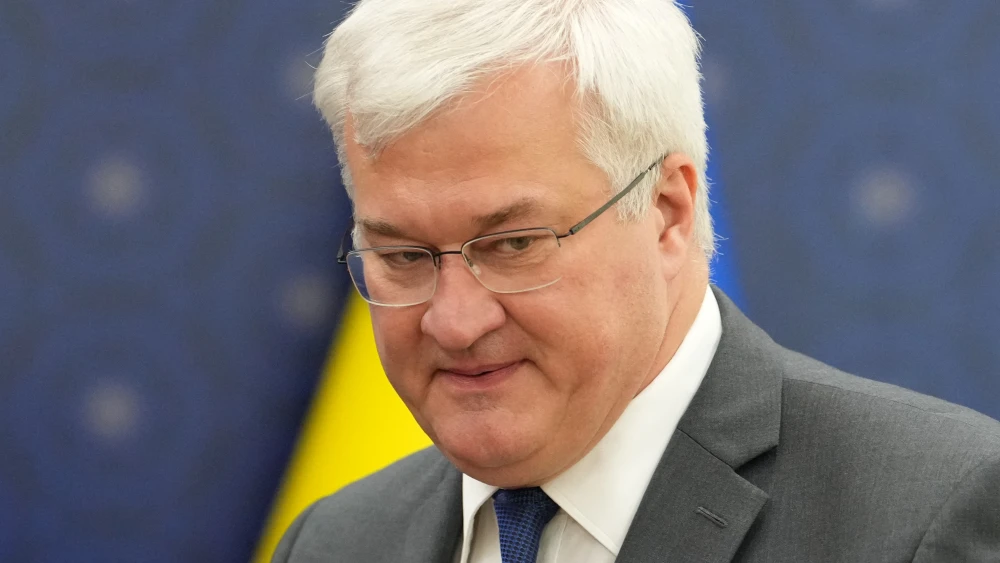
Ukrainian Foreign Minister Andrii Sybiha said on Tuesday that he told his Iranian counterpart Kyiv “never intended to target civilian vessels or people” in a recent attack on an Iranian ship in the Caspian Sea.
“I stressed that our goal is to avoid unnecessary escalation,” Sybiha said in a statement following the call with Iranian Foreign Minister Abbas Araghchi.
“I reiterated that all of Ukraine’s actions are aimed solely at defending our country from Russian aggression,” he added. “This is also true with regard to Iran’s statements about their national who died and a civilian vessel that was targeted in a recent incident.”
“It is Russia who bears full responsibility for all provocations and casualties,” stated Sybiha.
Sybiha also urged Tehran to end its military support for Russia in the war against Ukraine.
In a separate statement posted to X, Araghchi said Sybiha assured him that the attack on the vessel was “unintentional.”
“Iran does not seek escalation either, but made clear any attack on our citizens or interests is unacceptable,” Tehran’s top diplomat wrote, adding: “There must be restitution for losses.”
The strike on the Iranian cargo vessel killed one sailor and injured several others, according to Tehran.
Ukrainian President Volodymyr Zelenskyy on Saturday appeared to confirm the strikes, saying that “the warriors of our Defense Forces hit targets across different regions of Russia that are fueling this war.”
He added, “We also achieved very strong results with long range strikes in the Caspian Sea—including vessels used in military cargo shipments involving Iran, as well as a warship.”
Russia has long procured Iran’s Shahed suicide drones in its war against Ukraine, importing arms from Tehran via the Caspian Sea. Ukraine and its Western allies have repeatedly accused the Islamic Republic of sending weapons to Russia, an allegation Tehran has denied.