
The phrase “slouching towards … ” evokes “The Second Coming,” a poem by William Butler Yeats. It portrays a vision of an uncertain future with consequences yet to be determined.
In the opening paragraph, Yeats warned: “ … Things fall apart; the center cannot hold; Mere anarchy is loosed upon the world ... .”
We are headed into the 2028 presidential election cycle, facing bitter anti-Jewish headwinds. It will be the first election in 12 years without a philo-semitic candidate (Donald Trump), and it arrives following an alarming rise in hate crimes against Jews and broad-scale animus aimed at Israel.
After the 2026 midterms, the presidential contest could go sideways if the Republicans nominate Vice President JD Vance, who has openly criticized Israel, instead of U.S. Secretary Marco Rubio. The Democrats might choose U.S. House of Representatives progressive “Squad” member Rep. Alexandria Ocasio-Cortez of New York, who told a crowd in Munich that U.S. aid to Israel enables a Gaza “genocide.” And there are other problematic, radical candidates with congressional and presidential ambitions.
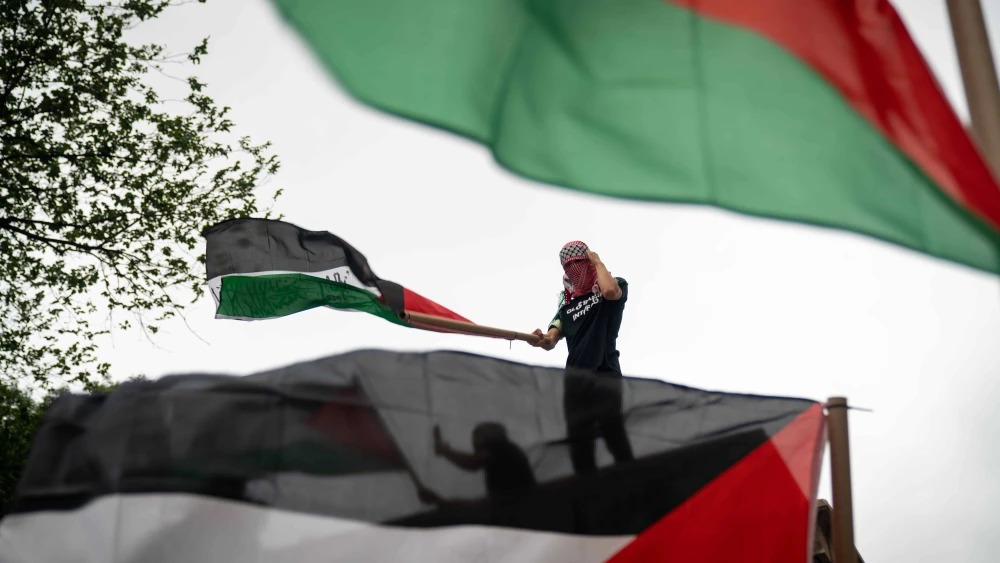
The crowd of Jew- and Israel-haters is wide, deep and aggressive. In the past few years, we have witnessed the election of New York City Mayor Zohran Mamdani, who won’t censure the idea or the words, “Globalize the intifada.” Pro-Hamas riots erupted on college campuses and city streets in the wake of the Hamas-led terrorist attacks in southern Israel on Oct. 7, 2023, and hostility toward the Jewish state started becoming a determining factor in elections across the country.
AIPAC’s legal lobbying and fundraising operations were cynically singled out. Far-left Sen. Bernie Sanders (I-Vt.) and far-right political commentator and podcaster Tucker Carlson have “horseshoe” connections impugning Israel and the Jews.
Three ideological movements developing over many decades have become increasingly influential in American public life. By 2028, Americans will be awash in the cumulative effects of these trends that have been developing for years.
The first is the growing visibility of Islamist political activism within segments of Western society. Qatar and other Muslim nations have invested billions to corrupt U.S. educational institutions by peddling anti-American indoctrination. Underpinning their strategy is a Quranic mandate to conquer the West—and to do it without firing a shot.
The second force is the continued influence of “woke” ideology. America’s youth have been persuaded that the paradigm of oppressor and oppressed (meaning, Israel and the Palestinians) explains all the problems with the world and negates the need for critical study. They find common cause to relegate Israel into their offending camp of “oppressors.”
The third force is the Democratic Socialists of America (DSA) political movement. Younger generations facing rising housing costs, student debt and economic uncertainty have shown greater openness to larger government programs and wealth redistribution. Israel and the United States are both pluralistic democracies fostering capitalist enterprises, and both are distrusted.
These three currents do not operate independently. They have been amplified by a broader cultural shift often described as postmodernism—a skepticism undermining objective truths and universal truths. The madness of open borders, sanctuary cities and defunding the police are painful examples. So, too, is acceptance of the antisemitic and anti-Zionist double standards, applied in wild “Gaza genocide” opprobrium, and vicious tropes leveled at Israel and the Jews.
The digital age has turbocharged this transformation. Social media rewards emotional engagement rather than careful analysis. Powerful artificial-intelligence access and algorithms favor outrage because it generates attention. False information, selective editing and hyperbolic, charged narratives spread faster than careful reporting. Campaigns no longer require large news organizations to shape public opinion, and bots and basement rogues are players.
For the “people of the book,” the abandonment of reading and learning should be a terrifying possibility.
The Oct. 7 atrocities and subsequent regional conflict involving Iran profoundly altered this already roiled landscape. For many Americans, particularly Jewish communities and their allies, these events marked a turning point in perceptions of antisemitism and the security of Israel.
The result has been an increasingly polarized debate in which support for Israel, criticism of Israel, concern for Palestinian civilians and opposition to Hamas—a terrorist organization—have often become politically entangled rather than treated as complex situations.
As Yeats darkly warned, history sometimes “slouches” toward moments of transformation.
Americans today face the responsibility of leaning toward unification or further division. The 2028 outcome will depend more on what is promised during the campaign than on what has already been sown in the nation’s culture, institutions and public discourse.
It is a “hinge moment,” and the 2028 election cycles will impact the path forward.