
Michigan’s $80 million Democratic U.S. Senate primary demonstrated that money can buy attention, but it cannot create a movement.
Dr. Abdul El-Sayed’s one-point victory over Rep. Haley Stevens (D-Mich.) revealed much about the Democrats and their electorate, but also showed the widening gap between political spending and grassroots organization. Stevens, who is openly pro-Israel, had a nearly 9:1 media spending advantage, according to AdImpact. And she still lost.
While outside groups spent heavily on ads and mail, the hard-left built massive capacity: volunteers, charismatic messengers and voter relationships that will survive through and past Election Day.
And so, the Michigan primary offers valuable lessons for incumbents, local Jewish organizations and pro-Israel funders.
Incumbents: Politicians should not take their constituencies for granted, regardless of the cash on hand. Just ask former House leader from Virginia Eric Cantor, who lost a 2014 primary despite a 40:1 spending advantage; or 10-term New York Rep. Joe Crowley, who in 2018 spent 18 times more than Rep. Alexandria Ocasio-Cortez (D-N.Y.) and lost that race.
These two defeats show the diminishing returns of political spending when fiscal power is treated as a substitute for voter connection and local organization.
Visionary funders should look to build infrastructure: strong technology, capable organizers and curated voter lists that survive after the ads and mailers disappear.
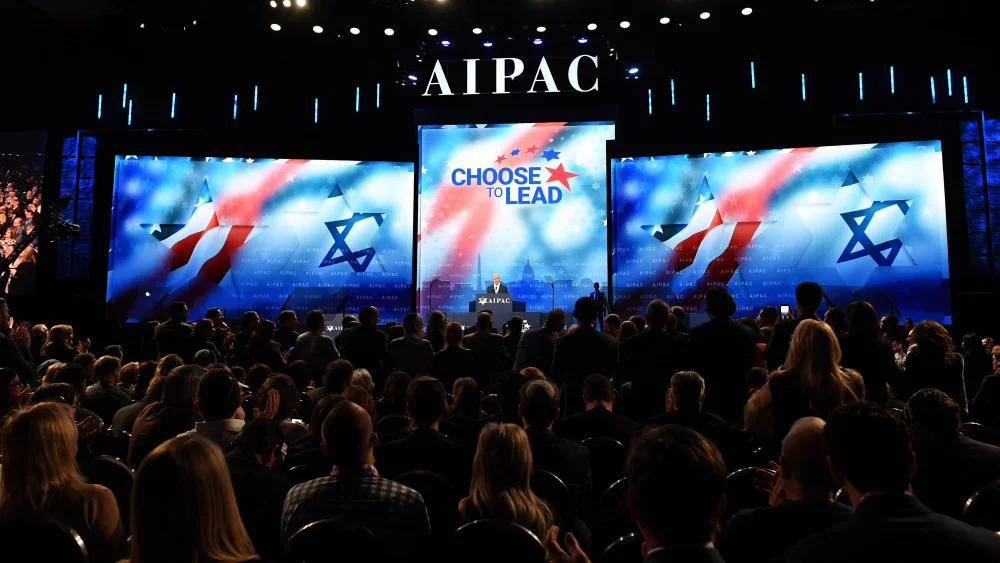
Elected officials cannot delegate the defense of the convictions that garner financial support. In Michigan, Stevens let her opponent portray her pro-Israel stance as political ownership. Whenever El-Sayed cited millions spent by groups such as AIPAC, she changed the subject.
A confident candidate should explain why Israel’s security, military cooperation and regional intelligence serve American interests. The same is true of advocating increased defense spending or a capitalist economy.
If a candidate is embarrassed by donors, then those donors become a liability. Consider Rep. Diana DeGette (D-Colo.), a 30-year progressive House incumbent who in June was primaried by Melat Kiros, a democratic socialist the congresswoman appeared to underestimate.
Opaque PAC money poured into the race to save DeGette’s seat, and she largely refrained from media interviews during the final weeks of the campaign. It is hard to campaign as a defender of democracy while anonymous organizations conduct the argument on your behalf. Kiros, who was born the year that DeGette first took office and has called Israel a genocidal apartheid state, won by more than 13 points.
Jewish organizations: After socialist challengers unseated two Democratic congressional incumbents in New York, Sen. Bernie Sanders (I-Vt.) proudly attributed the victories to “ordinary people who knocked on doors, made phone calls, organized in their communities.” That, he wrote, is how to “defeat establishment politicians and enormous amounts of money.” He was right.
El-Sayed’s allies claimed 270,000 voter contacts. His campaign reported hosting 500 events and having 12,000 volunteers.
Local pro-Israel organizers, by contrast, began much of their turnout work only in the final few weeks and mostly in Detroit. They lacked a unified or year-round statewide network that could have mobilized more of the state’s 105,000 Jewish voters. El-Sayed won by fewer than 15,000 votes, proving that the organizational gap mattered.
A recent primary in Missouri offered a counterexample: Rep. Wesley Bell (D-Mo.) successfully defended his seat against socialist-aligned and anti-AIPAC challenger Cori Bush, who had already served a term as a U.S. House representative, with help from both outside spending and a local coalition. Early this summer, that coalition organized canvassing, phone banking and turnout through dozens of synagogues and community organizations. The advertising reinforced an existing network instead of trying to replace one.
If a candidate is embarrassed by donors, then those donors become a liability.
Ironically, organizing is relatively cheap. Coordinators put the Missouri effort’s cost in the low five figures; less than a modest television buy. Strong volunteer training and neighborhood captain programs can add thousands of votes. The harder work is building lasting systems for shared data, volunteer networks and legal cooperation between elections.
Funders: Political donors, often successful entrepreneurs, should view six- and seven-figure political contributions as investments with the same expectation of measurable returns. Before funding another media blitz, backers should consider not only the number of impressions it will generate but also the political assets that will persist even after the campaign ends.
Visionary funders should look to build infrastructure: strong technology, capable organizers and curated voter lists that survive after the ads and mailers disappear. If this is done, a close or even badly lost race does not go to waste.
As a four-term congresswoman, Haley Stevens must be politically capable. She might have lost by considerably more without the boost of more than $63 million of publicity. But her defeat by a robust progressive machine dramatically demonstrates that without authenticity and sophisticated organization, no amount of cash can bring victory.
The American pro-Israel cause faces many uphill battles going into this year’s general election. More incumbents are likely to be replaced by ultra-progressive candidates running without big pockets but with much better organization.
Michigan’s lesson for politicians, voters and donors alike is clear: Money matters only when it is combined with a strong ground game. Investing earlier, locally and with an eye toward measurable results can build trust long before campaigns need to call on it.