
Brazil’s presidential runoff on Oct. 25 will decide whether it joins Latin America’s turn toward Israel.
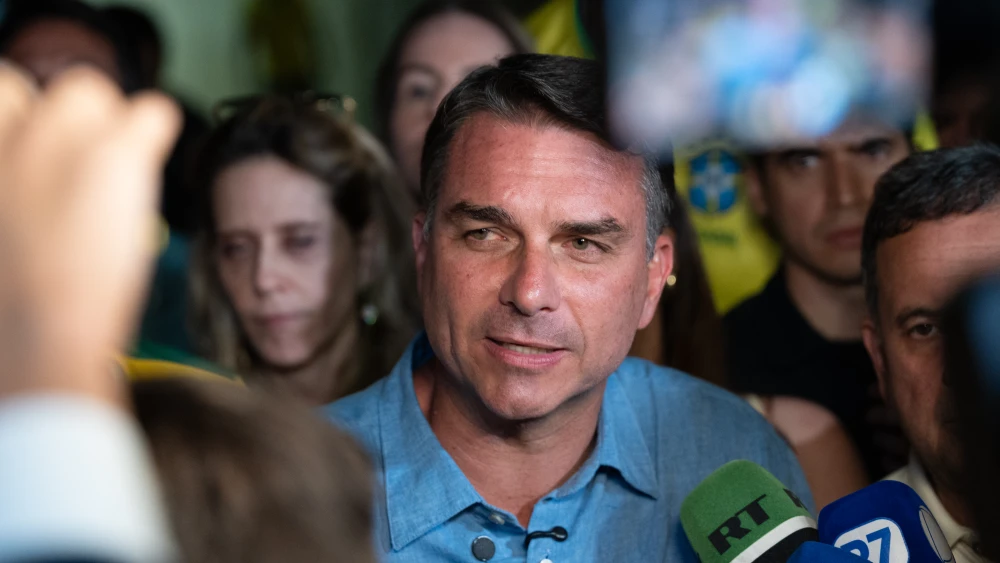
In last Sunday’s first round, Sen. Flávio Bolsonaro took 47.03% to President Luiz Inácio Lula da Silva’s 45.16%. Flávio Bolsonaro has pledged to move Brazil’s embassy to Jerusalem within six months of taking office and to join the Isaac Accords. In contrast, Lula recalled Brazil’s ambassador to Israel in 2024, compared Israeli operations in Gaza to the Holocaust and joined the case against Israel at the International Court of Justice.
Brazil’s vote follows a series of elections that have put pro-Israel leaders in office across Latin America. The opening is real, and credit is due to Israel’s Foreign Ministry, which made 2026 a “Year of Latin America.”
It moved quickly to build on the momentum by appointing an ambassador to Colombia, visiting the region and providing post-earthquake assistance in Venezuela. That aid was both sound humanitarian support and effective diplomacy, creating a genuine diplomatic opening.
For Israel, this means more favorable votes at the United Nations and more partners against Iranian-backed networks. For the Jewish communities of Argentina and Brazil, the region’s largest, relations with Israel shape the climate in which they live.
But the opening is narrow, and it rests more on the person in office than on the public behind that person.
Argentina’s President Javier Milei is the anchor. In April, he and Israeli Prime Minister Benjamin Netanyahu launched the Isaac Accords, a framework to expand cooperation in areas like security, high-tech and diplomatic cooperation modeled on the Abraham Accords. Colombia produced the sharpest reversal. President Abelardo de la Espriella, who took office in August, restored the ties his predecessor broke in 2024, agreed to move the country’s embassy to Jerusalem and recognized Israeli sovereignty over the Golan Heights, only the second country to do so after the United States.
The shift reaches well beyond those two capitals. Bolivia restored relations last December. Chile and Honduras returned their ambassadors to Israel in August. Paraguay, Guatemala and Honduras already have embassies in Jerusalem. Foreign Minister Gideon Sa’ar offered cooperation to Peru’s new president Keiko Fujimori.
But there is a real gap between those pro-Israel leaders and their voters. In Milei’s Argentina, the Pew Research Center’s Spring 2026 survey found that 55% of people held an unfavorable view of Israel, up from 46% a year earlier. Across the six Latin American countries surveyed by Pew, the unfavorable share ranged from 50% in Peru to 60% in Chile. Latinobarómetro’s 2024 survey found a favorable majority only in Guatemala.
Organized evangelical and some Catholic groups are more supportive. Many can even be called Christian Zionists. But they are not the average voter. In most of these countries, the president’s Israel policy rides on his broader mandate, not on a majority that shares it.
That lack of domestic support shows. Even friendly presidents find symbolic gestures expensive. Brazil’s former President Jair Bolsonaro, Flávio’s father, talked for years about moving Brazil’s embassy to Jerusalem and never did, after the Arab League warned in 2018 that the step could harm ties and Brazil’s halal exporters pressed the same case. Moreover, an embassy can be sent back to Tel Aviv and a Golan recognition withdrawn as quickly as they can be announced.
Israel needs friends beyond the president of the day.
Embassies, recognitions and votes at international forums are a president’s to give, and the next president can take them back. The task ahead is to use the current window, while pro-Israel leaders are in power, to make bilateral relations as valuable as possible by giving each relationship substance that ministries, companies and security services would lack otherwise. This would make it harder for future leaders to downgrade relations, because doing so would carry a real cost.
That is the essential goal: to develop the relationship with Israel to a level where it can outlast any change of power.
Some of the newer ties already have this substance. There are Israeli eye surgeons and water projects in Honduras, an Ecuadorian innovation office in Jerusalem and a free-trade agreement with Costa Rica that still awaits ratification. There is room for more wherever Israel is strong and governments already spend money on important projects. A pilot irrigation scheme that raises yields in a drought-prone state, a cyber-training course that regulators have already budgeted for, or a maintenance contract that keeps border sensors running—each gives people inside the bureaucracy and the private sector a reason to preserve the relationship, and these incentives do not disappear when the presidency changes.
Israel also needs friends beyond the president of the day. That starts with restraint in Jerusalem, not just outreach in the region. In late September, Chile sent a protest note to Israel’s ambassador over his public comments on former President Michelle Bachelet, calling them interference in internal affairs. An Israeli official had handed a friendly government a political cost.
Brazil poses the same test. Congratulating a winner after the votes are counted is ordinary diplomacy. Netanyahu lauded Flávio Bolsonaro the day after the first round, with the runoff still ahead, and sent a recorded message to his campaign launch in July. Taking sides before the vote ties the relationship to a single leader and undercuts efforts to make relations with Israel as nonpartisan as possible.
Outreach is the other vital part of the equation. Israeli diplomats—to the extent that they are not already doing so—need to maintain contacts with opposition parties, congressional committees and governors, even if they know that some parties may never shift their position on Israel. Any relationship-building that creates openings or even simply softens some positions is helpful.
The Jewish state can bring committee chairs and party foreign-policy officials to meet companies and agencies working on problems those politicians already care about. That builds familiarity that does not depend on a president’s friendship. It is worth the effort because legislatures often control budgets and oversight, and the next minister might otherwise inherit only a relationship associated with a rival.
A real gap exists between pro-Israel leaders and their voters.
The priority should be the countries that have already moved: Colombia, Argentina, Chile, Peru, Bolivia, Guatemala and Brazil if Flávio Bolsonaro wins. The clock is already running. Guatemala votes in June 2027 and Argentina later that year, so Israel’s work should produce visible results before those campaigns begin; results that show the relationship has value and that downgrading or breaking it would carry a cost. Governments that have not moved can wait.
Who does the work? The Foreign Ministry’s Latin America desk and its ambassadors know the countries, set annual targets and remain in place when coalitions change. Still, a foreign minister cannot make every year a “Year of Latin America.” After 2026, maintaining a consistent, high-level focus would be easier with a deputy foreign minister whose portfolio includes the region.
Abroad, a deputy minister opens doors: A Paraguayan or Colombian foreign minister will make time for one, whereas a visiting Latin America desk director would, at most, secure a meeting with a peer. At home, the deputy minister would keep Latin America on the ministry’s agenda once the foreign minister’s attention moves elsewhere.
A Bolsonaro victory would not fully flip the map toward Israel, but it would bring Latin America’s largest economy into an alignment that already includes Argentina, Colombia, Chile, Peru, Bolivia and several smaller states. With or without Brazil, this is the moment to build relations that outlast any president.
The same is true in Jerusalem. Whoever forms Israel’s next government after the Oct. 27 elections will inherit the same fragile gains. The rule follows from the calendar.
In each priority country, Israel should initiate or accelerate two or three projects to show results before the next election. In every other country that has moved, it should take at least one measurable step each year in trade, training or technology.
A later Israel-skeptic president could well decide that the cost of walking away from Israel is acceptable. But this strategy would reduce that risk as the value of the relationship grows beyond one president or one party, more people use Israeli technology and more opposition politicians engage with Israelis. The time to cement the current relationships in Latin America is now, while pro-Israel leaders are in power. Don’t let this brief window pass.