
Critics seeking to undermine the strategic relationship between the United States and Israel have for years weaponized a single, tragic event: the 1967 incident involving the USS Liberty.
Despite multiple exhaustive investigations by both nations concluding that the strike was a devastating mistake caused by misidentification in the fog of the Six-Day War—for which Israel formally apologized and paid compensation—it remains a favorite talking point for those attempting to portray Israel as an unreliable partner.
Yet those who endlessly evoke the USS Liberty universally ignore what transpired less than a year earlier: one of the greatest intelligence windfalls in modern military history, delivered directly from Jerusalem to Washington and ultimately helping save American lives.
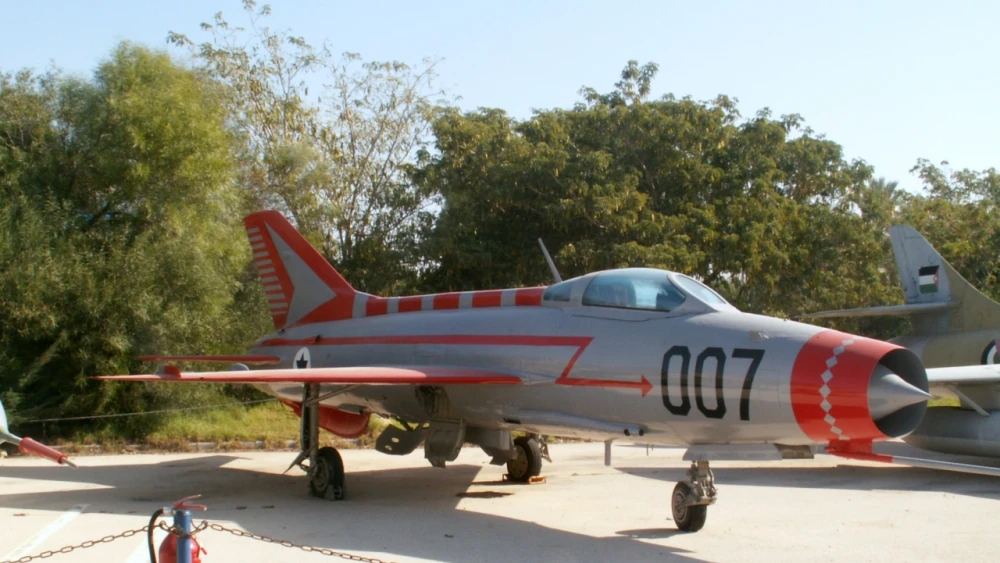
Exactly 60 years ago this week, in mid-August 1966, Israel’s Mossad intelligence agency executed “Operation Diamond,” a complex covert operation in which Israel orchestrated the defection of Iraqi pilot Munir Redfa, who landed a state-of-the-art Soviet-made MiG-21 aircraft at an airbase in Israel.
At the time, the MiG-21 was a lethal mystery to Western intelligence. Over North Vietnam, American aviators were suffering alarming attrition rates against these agile Soviet interceptors because U.S. pilots lacked firsthand data on the jet’s performance envelope. Western intelligence organizations had failed to obtain even minimal information about the aircraft. Israel got the aircraft itself, without the Soviets even realizing what had happened.
It is important to remember that in those years, a formal strategic alliance between Washington and Jerusalem did not exist. The United States maintained a de facto arms embargo on Israel, seeking neutrality in the Arab-Israeli conflict while protecting ties with Arab oil producers. Weapons sales were strictly limited.
France served as Israel’s primary military supplier until President John F. Kennedy tentatively approved defensive Hawk missiles in 1962 and President Lyndon B. Johnson permitted limited sales of A-4 Skyhawk attack aircraft in 1966.
The relationship then shifted, not out of American charity or sentimentality, but through cold, hard strategic calculation. Israel demonstrated the irreplaceable value of its intelligence assets and real-world combat experience.
Rather than hoarding this intelligence advantage for its own survival, Israel handed the captured jet over to the U.S. Defense Intelligence Agency. Transported secretly to Area 51 under “Operation Have Doughnut,” the aircraft underwent joint test flights that exposed critical Soviet engineering flaws, including severe canopy blind spots and engine throttle lag.
These findings helped the U.S. military refine its air-combat tactics and gave American pilots invaluable insight into the capabilities and vulnerabilities of Soviet-designed aircraft.
When France abruptly cut off arms sales to Israel in 1967, Washington stepped in. It did so not out of simple generosity or moral obligation, but because Israel had proven itself to be an indispensable strategic partner. In 1968, the United States approved the landmark sale of F-4 Phantom fighter jets, cementing an alliance grounded in mutual benefit: American hardware in exchange for Israeli combat testing, tactical innovation and unmatched regional intelligence.
To judge a historic, mutually advantageous partnership solely by its worst friendly-fire tragedy while erasing milestone contributions such as “Operation Diamond” is bad-faith revisionism.
As former Mossad officer and intelligence historian Avner Avraham recently detailed in the Israeli daily Maariv on the 60th anniversary of this daring operation, the historical record deserves to be remembered in full. In the years that followed, the United States benefited tremendously, and on numerous occasions, from Israeli intelligence gathering and military developments.
Israel’s intelligence gift during the Cold War demonstrated that real strategic alliances are forged not out of charity, but through shared efforts to defend American lives when it matters most.