
Several years ago, I had a conversation with the late Israeli Ambassador Dore Gold about his argument that strategic depth remains crucial for Israel, even in the era of missiles. At the time, except on Israel’s security-minded right, his argument fell on deaf ears.
American and international pressure compelled Israel to take territorial risks for peace. Simultaneously, Israelis increasingly believed deterrence, superior intelligence, technology and limited military action could effectively manage threats to their borders. The “war between the wars” against Iran and Hezbollah, along with periodic “mowing the grass” against Hamas, seemed sustainable.
Oct. 7 shattered that assumption.
Allowing terrorist armies to build military infrastructure virtually up to Israel’s borders, as Hamas did in Gaza and Hezbollah did in Lebanon, is no longer tolerable to Israeli security planners across the political spectrum.
This goes far beyond establishing buffer zones. Israel’s threshold for proactive kinetic action must be lower, striking threats before adversaries acquire the capabilities, infrastructure or territorial control to endanger Israeli civilians. Anything less would defy the will of a population that will live with the trauma of Oct. 7 for decades.
Israeli Prime Minister Benjamin Netanyahu’s previous “quiet for quiet” approach had short-term benefits. It allowed Israel’s economy to flourish while giving Israelis extended periods of relative normalcy. But Israelis understand something Americans repeatedly forget: In the Middle East, the question is often not whether another war will occur, but when.
Americans tend to believe wars end. A superpower has that luxury because it can eventually leave, even after strategic failures from Vietnam to Afghanistan and Iraq. But Israel cannot leave the Middle East.
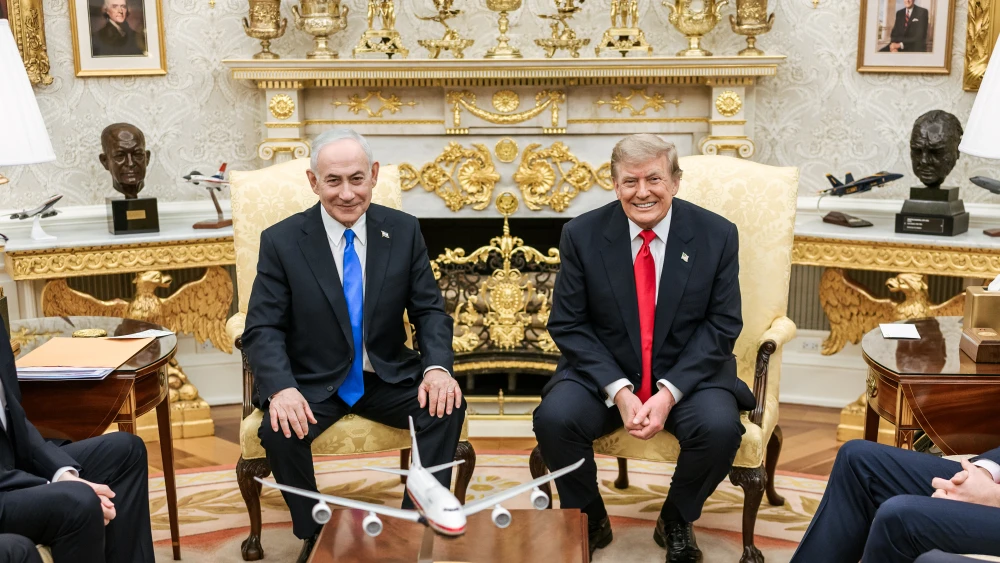
That fundamental difference explains the potential collision between Israel’s new security doctrine and U.S. President Donald Trump’s vision for the region.
America has repeatedly failed to internalize a central lesson of confronting radical Islamists: They can wait out American political cycles. They rebuild during pauses, use ceasefires to rearm and continue pursuing long-term ideological objectives while Washington celebrates short-term diplomatic breakthroughs. Americans too often interpret several years of relative quiet as evidence that the Middle East is moving toward peace. That is America’s strategic Achilles’ heel.
After Israel’s upcoming election, whether Prime Minister Benjamin Netanyahu or the opposition forms the next coalition, the government will confront a Trump administration eager for tangible diplomatic victories in Gaza, Lebanon, Syria and Iran. Where will Israel draw its red lines?
Will Israel insist on maintaining strategic buffer zones in Gaza, Lebanon and Syria? Will Washington accept Israel’s freedom to strike Hamas and Hezbollah when they rebuild? Most consequentially, will Israel retain freedom of action against Iran if Tehran reconstructs its nuclear program or ballistic-missile capabilities?
Trump may sincerely believe he can achieve lasting peace. But well-intentioned American diplomacy cannot be allowed to undermine Israel’s post-Oct. 7 security doctrine.
Where will Israel draw its red lines?
Washington should reconsider what “peace” realistically means when dealing with revolutionary Islamist movements and regimes. Islamic history has a name for temporary truces—hudna. Hamas, Hezbollah and Iran can compromise when it serves their interests, but Washington should not mistake tactical flexibility for ideological transformation.
That is why recent comments from U.S. Vice President JD Vance are concerning to Israelis and other American allies. Vance called it the “coolest thing” that senior Iranian and IRGC officials appeared willing to rethink their approach to the United States. He has also said Iran was finally “negotiating like a normal country.” Vance distinguished between ideological extremists and Iranian “pragmatists.”
The vice president should understand that just because an Iranian hardliner is willing to talk to Americans does not make him a pragmatist. Nor does it wash the blood from his hands.
The Iranian regime can negotiate rationally because survival, power, regional hegemony and economic relief matter to it. That does not mean its view of America, Israel or the West has fundamentally changed, or that its desire for regional hegemony has disappeared. When Washington speaks enthusiastically about Iranian pragmatists while Israeli and Gulf leaders see a revolutionary regime calculating how to survive, rebuild and regain leverage, America risks projecting naiveté and weakness.
Needed: A meeting of minds
Meanwhile, growing numbers of Americans are hostile to Israeli defensive actions while paying insufficient attention to what Israel sees beyond its borders. In Gaza, Hamas continues to exploit civilian infrastructure, using hospitals as torture chambers. In Lebanon, Hezbollah is exploiting its civilian arms as a vanguard to establish pilot zones.
Trump’s final two years after the midterms could therefore be decisive for U.S.-Israel relations and America’s role in the Middle East.
This is about more than Trump’s foreign-policy legacy. Israel remains America’s irreplaceable regional ally and the military power most capable of independently imposing high costs on shared adversaries. Israeli power, combined with credible American offensive and defensive capabilities, creates deterrence that diplomacy alone cannot produce.
By contrast, some wealthy American regional partners have purchased hundreds of billions of dollars in sophisticated U.S. weaponry while remaining reluctant to act decisively against shared threats. Meanwhile, Turkey’s Islamist regional ambitions and Pakistan’s further radicalization could increasingly undermine American national security interests.
What is needed is a meeting of the minds between the next Israeli government and the Trump administration.
Washington and Jerusalem need a coordinated strategy that pursues realistic diplomacy in Syria, Lebanon, Gaza and Iran without sacrificing the military leverage that makes diplomacy possible. Hamas and Hezbollah must be genuinely demilitarized, not merely pushed underground until the next war. Turkish Islamist expansion into Syria must be constrained. Israel must retain freedom of action if Iran rebuilds its nuclear infrastructure or ballistic-missile production. This needs to be settled before a new American president, Republican or Democrat, takes office in January 2029.
Trump wants peace. But after Oct. 7, Israel cannot afford to confuse quiet with peace, a ceasefire with meaningful reconciliation or an enemy’s temporary pragmatism with a permanent change of intent. If Washington pressures Israel to return to the assumptions of Oct. 6, it may inadvertently help create the conditions for another Oct. 7.