



Tehillim (Psalms) teaches: “Turn from evil and do good, seek peace and pursue it” (Psalms 34:15). This verse is a reminder that moral responsibility requires active pursuit, not passive observation.
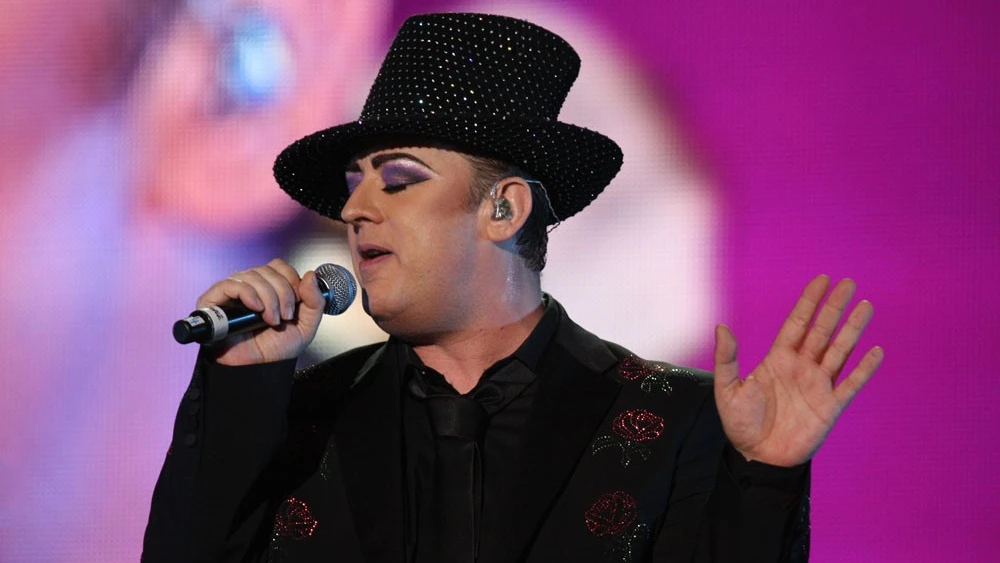
Boy George has stepped forward with a clarity that is rare in today’s cultural climate. His new song, “Od Nirkod” (“We Will Dance Again”), carries a message of hope and resilience. One line captures this spirit: “Hold on to love, hold on to life.”
His decision to speak publicly matters because it comes from outside the Jewish community. When a non‑Jewish artist chooses conscience over convenience, it exposes the silence of many who should speak first. His stand is not political performance; it is a human response to suffering, injustice and the distortion of truth. His courage invites a deeper question: Why are so many Jewish voices in entertainment quiet when others are willing to speak?
Boy George’s support for Israel demonstrates that moral clarity is not limited by identity. He chose truth over trend, conscience over cultural pressure and integrity over applause. His voice cuts through a landscape where hostility toward Israel is often rewarded, and where moral complexity is dismissed in favor of slogans. His stand further reveals that courage is a matter of character, not ethnicity or religion.
His voice arrives in the backdrop of two nations where support for Israel is uncommon of late, particularly in the world of pop music: Ireland is increasingly hostile toward Israel, and many voices in the United Kingdom’s entertainment world have echoed similar sentiments.
Rabbi Jonathan Sacks wrote that moral courage is the willingness to “stand up and be counted,” even when the crowd moves in the opposite direction. Boy George’s actions reflect this teaching. His willingness to speak publicly highlights a painful reality. When non‑Jewish artists show courage, their voices illuminate the silence of many Jewish artists who fear professional consequences, reputational harm or social isolation. His stand is a reminder that moral clarity can emerge from places we do not anticipate.
The entertainment world is filled with Jewish creators, producers, executives and performers. Yet very few speak publicly about Israel, Jewish history or the current wave of hostility. This silence is not new. Jewish artists have long felt pressure to minimize their identity in order to succeed. Today, that pressure is amplified by social media, cultural polarization and the weaponization of accusations such as “genocide,” which are used to intimidate and silence.
Orthodox Rabbi Meir Soloveichik often writes about the importance of Jewish courage and public presence. He argues that Jewish identity is not meant to be hidden, but lived openly and confidently. When Jewish voices remain silent, the cultural narrative is shaped by others. Into that vacuum step narratives that distort history, erase context and turn Israel into a symbol of global resentment. Silence is not restraint, but surrender.
#Shalom pic.twitter.com/0BfHIrThzO
— Boy George (@BoyGeorge) July 26, 2026
Accusations of genocide against Israel are not simply political statements. They are rhetorical weapons. They are used to delegitimize Jewish identity, Jewish history and Jewish sovereignty. Global elites often adopt these accusations to conceal misconduct, corruption or failures within their own systems. By directing outrage toward Israel, they redirect scrutiny away from themselves.
This pattern is not new. Throughout history, powerful actors have used anti‑Jewish hostility as a diversionary tool.
Sacks warned that the oldest hatred often reappears in new forms. Today, the language has changed, but the mechanism remains the same. Genocide rhetoric is used to intimidate, to silence and to invert reality. It transforms the victim into the villain and the defender into the aggressor. This inversion is not only false but dangerous. It erodes moral clarity and encourages violence. The world, and especially the Jewish community, must confront this distortion directly.
Jewish tradition teaches that silence in the face of falsehood is itself a form of participation. The Torah commands justice, truth and moral courage. The prophet Isaiah warns: “Woe to those who call evil good and good evil, who make darkness light and light darkness” (Isaiah 5:20). Jewish thought does not permit passive witnessing; it demands active moral presence when truth is distorted and injustice is allowed to stand.
Soloveichik often emphasizes that Jewish responsibility is rooted in memory. The Jewish people carry the weight of history, and with it, the obligation to speak when truth is threatened. In this moment, when Israel is accused of crimes it has not committed—when Jewish communities are threatened and when truth is distorted—Jewish voices carry a unique responsibility. Silence is not humility, but abdication.
‘Open your mouth for the mute’
Entertainment shapes imagination. It influences how societies understand conflict, identity and morality. When Jewish voices remain silent, the cultural narrative is shaped by others. Boy George’s stand shows what cultural courage looks like. It’s not about politics. It’s about humanity. It is about refusing to allow lies to define a people. His voice demonstrates that culture can be a force for truth.
Sacks wrote that Judaism is a “protest against the world that is” in the name of the world that ought to be. Jewish artists in America have the ability to embody this protest. Their silence allows falsehood to spread unchecked. This moment demands accountability from those who hold cultural influence.
And so, this new song, which no one asked him or made him do, is more than a gesture. It is a reminder that joy, resilience and identity cannot be erased. Another line captures this spirit: “Love is stronger than the dark.” These words echo Jewish teachings about hope, perseverance and the refusal to give in to despair. The song becomes a cultural mirror: If a non‑Jewish artist can sing for Jewish resilience, then Jewish voices must be willing to speak for themselves.
The current moment is not only political. It is cultural, moral and spiritual. Jewish voices in entertainment have influence that reaches millions. Their silence is felt. Their presence would matter. To stand up is not to engage in politics. It is to defend truth, identity and the dignity of a people who have endured centuries of distortion and hostility.
Jewish artists must reclaim their place in the cultural conversation. American Jewish entertainers, in particular, hold immense cultural influence. Their silence is no longer acceptable.
“Open your mouth for the mute, for the rights of all who are destitute” (Proverbs 31:8). This verse closes the circle. It is a command to act, speak and refuse silence.
Boy George’s courage is admirable, but it should not be exceptional.
Jewish voices must reclaim their place in the cultural conversation. The world is watching, and the responsibility is ours. Jewish artists, leaders and cultural figures must understand that silence is not safety. Accountability begins with voice and voice begins with courage.
American Jewish entertainers, in particular, hold immense cultural influence. Their absence is felt. And their presence would matter.


