
When Jimmy Carter occupied the White House, Menachem Begin was prime minister of Israel. Carter viewed the world through a deeply religious and, at times, naive lens. To him and many around him, Ayatollah Ruhollah Khomeini appeared to be a pious and even saintly religious figure. Even CIA director Adm. Stansfield Turner—and perhaps those responsible for the Tehran desk—lacked a real understanding of Khomeinism or of the ideological doctrines contained in the Shiite clerical canon.
Yitzhak Hofi, however, then head of the Mossad, understood that Israel’s true regional ally, SAVAK, was warning of the emergence of a poisonous mushroom, a cancerous growth and an expanding infection inside Iran. Shah Mohammad Reza Pahlavi—America and Israel’s loyal ally and trusted friend—was battling cancer, yet he understood better than anyone the danger posed by the rise of Islamist terrorism. Carter and the CIA failed to grasp the Shah’s warnings, and their misjudgment burdened the world with a crisis that has endured for nearly half a century.
The monstrous genie of Islamist terrorism and militant Shi’ite ideology escaped from the bottle. Nearly 50 years later, the people of Iran have yet to experience peace and normalcy, and the Middle East stability and lasting security. The Arab states of the Persian Gulf, which once regarded the Shah of Iran as the guarantor of regional peace and security, suddenly found their own existence, identity and survival under threat.
A group seized power that had little understanding of humanity, law, order or peace. An ideology was constructed upon the lies and deception of a Shi’ite clerical octopus, centered on the myth of the Twelfth Imam—a figure who, in reality, has no physical existence. Upon this belief, a state was established whose rulers—from Khomeini to Khamenei and others—claimed to be his representatives until his eventual return, when, according to their doctrine, all humanity would supposedly be redeemed as he would conquer the world with his sword and deliver humankind before God.
Regrettably, this ideological language of Khomeini and Khamenei was never properly translated or explained to the intellectual world. Beyond Israeli media, even many Arab, American and European circles were reluctant to expose or confront it openly. Those who wrote critically in Israeli publications often faced assassination threats, while today the Iranian regime’s mafia-like networks and its lobbying apparatus routinely wage campaigns of character assassination against anyone perceived as sympathetic toward Israel or the Jewish people.
Yet the ideological framework of Khomeini and the Shi’ite Islamic Revolution consists of several interconnected dimensions that together form the clerical doctrine. At its foundation lie deception, manipulation, fraud, malice, terrorism, expansionism and ideological domination.
What Hitler or Saddam Hussein only dreamed of accomplishing against Israel, Khomeini and Khamenei sought to implement. They established an extensive network of Islamist terrorist organizations, including Palestinian Islamic Jihad, Hamas, Hezbollah, the PKK, Hashd al-Shaabi, the Zeynabiyoun Brigade, the Fatemiyoun Brigade, the Houthis and others. They pursued nuclear and chemical-weapons programs. They built a 24-hour propaganda and media machine over nearly five decades. They developed terrorist sleeper cells inside Israel, Europe and the United States. They manufactured missiles, drones and bombs, transforming Iran into a vast military garrison and weapons depot.
This regime began its rule through executions, mass killings, torture and repression against the Iranian people, turning cemeteries into monuments of its governance.
Even today, much of the Western world remains unfamiliar with the ideological foundations of the Shi’ite clerical doctrine. The European and American political imagination often lacks the capacity to comprehend the scale of brutality, malice and ideological fanaticism embodied by the rulers of Iran and their worldview. Otherwise, by the most basic standards of morality and humanity, they would never willingly share a platform or a photograph with them, negotiate with them, or expect rational diplomacy and good faith from such a regime.
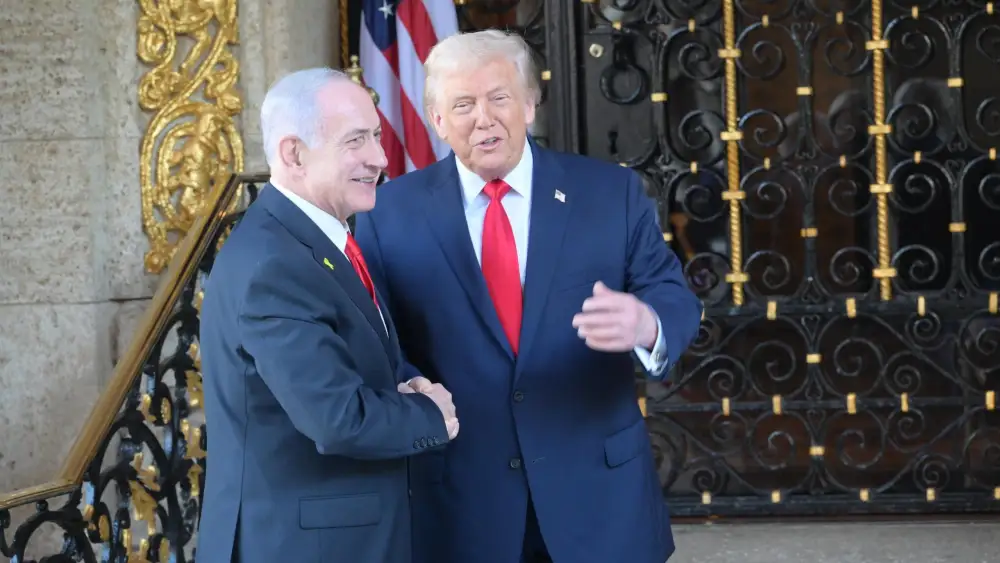
As the world celebrated the collapse of apartheid, communism and Nazism, so, too, the day will eventually come when Islamist terrorism meets the same fate. That day, however, has not yet arrived. History may ultimately record that Israeli Prime Minister Benjamin Netanyahu left his fingerprints on that struggle—and U.S. President Donald Trump as well.
The two leaders plan to meet again this week. Perhaps the strategic convergence between the Mossad and the CIA will encourage Trump to act with greater resolve. Yet regrettably, the influence of lobbying networks affiliated with the Islamic Republic in Washington and across Europe continues to muffle the genuine call for regime change in Tehran.
Still, for the historical record, one may write this: From Tehran comes the sound of savagery. The remnants of the Islamic Republic continue to sell deception as diplomacy. Even the so-called mediators are manipulated and orchestrated by the regime itself. From Pakistan, which became a significant trap for Trump, to Turkey, Qatar and Iraq, Tehran has repeatedly sought to manipulate and mislead Washington through intermediaries.
Whether to end a historical mistake
There is reason for cautious optimism that Trump understands that the voice emanating from Tehran is not one of peace but of violence. The CIA likewise understands that this regime has little genuine interest in negotiations or a lasting agreement. Perhaps during the meeting between Trump and Netanyahu, one central truth will once again be voiced: that the collapse of the nearly five-decade-old regime of Islamist terrorism and the Shi’ite Islamist state in Tehran would mark the birth of a new Middle East—liberating 90 million Iranians while freeing the broader Middle East, and indeed humanity in the 21st century, from a regime built upon destructive and extremist ideas.
Undoubtedly, even after such a collapse, the period before genuine democratic elections would be turbulent. Society would witness the eruption of long-suppressed grievances, personal reckonings and the exposure of underground Islamist terrorist networks embedded in mosques and clandestine organizations. Yet even the most imperfect democracy is preferable to tyranny. Religious despotism, and the reign of death and barbarism, would finally depart from Iran.
If Trump comes to understand this historical reality, history may remember him as one of the leaders who helped transform the Middle East. If, however, he yields to illusions or to the deceptive narratives promoted by some within his own circle, history may judge him far less kindly. The deceptive marketplace created by Tehran’s rulers may ultimately descend into internal rivalries and power struggles, but that is of secondary importance. Such turmoil would simply be the painful labor through which a nation is reborn.
Today, officials such as CIA director John Ratcliffe and Trump on one side, and Netanyahu and Maj. Gen. David Zini Gafni, head of the Israeli Security Agency (Shin Bet), on the other, understand the nature of the regime they are confronting. A government willing to slaughter some 50,000 of its own citizens merely to preserve its grip on power has every intention of leaving behind a scorched-earth Iran if it cannot survive. To suggest that this regime has fundamentally changed is not only an unconvincing argument but one that defies reason.
The structure and core of the Islamic Republic remain rooted in a destructive and pathological ideology. Nothing short of its complete dismantlement and a change of regime can resolve the crisis.
After nearly half a century, one of the most reviled, brutal and inhumane regimes of the modern era will finally come to an end. When that day arrives, the free world will celebrate the defeat of a system that has exported terror, repression and instability for decades. Fortunately, the Iranian people are not without a credible and widely recognized alternative. They have Crown Prince Reza Pahlavi—a national figure capable of guiding Iran through a peaceful democratic transition, preventing the country from descending into a bloodbath and helping safeguard a nation whose civilization stretches back more than 7,000 years.
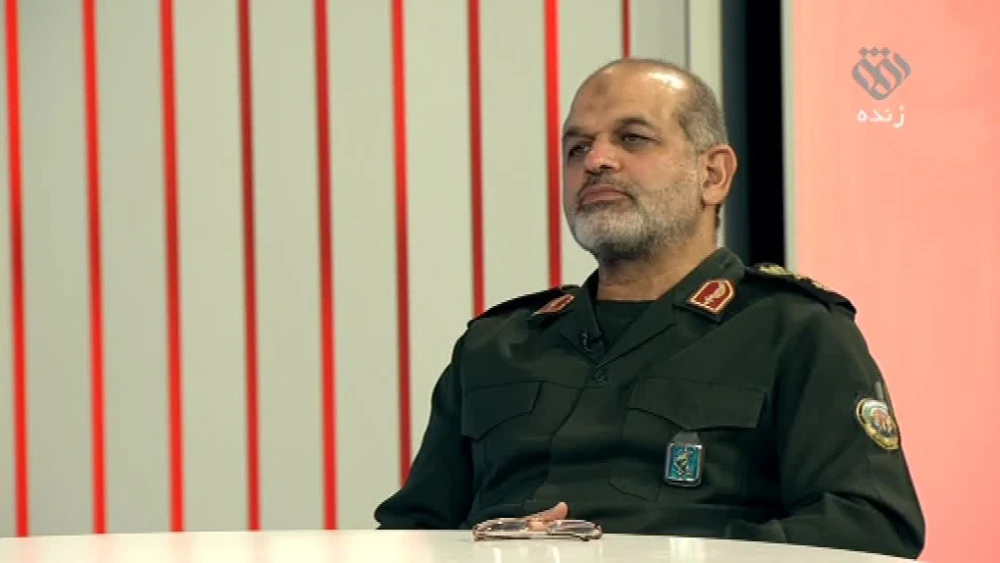
The choice before Trump and Netanyahu is, therefore, not merely whether to confront another hostile regime, but whether to end a historical mistake that has destabilized the Middle East for nearly half a century. Power in Tehran is now shifting toward the Islamic Revolutionary Guard Corps’ most ideological, inflexible and reckless core—figures such as Ahmad Vahidi, who mistake apocalyptic conviction for strategy and aggression for strength.
These men believe they have already read Trump’s hand and concluded that hesitation will prevail over resolve. History will now judge whether they have misread him—or understood him perfectly.