
Massad Boulos, a U.S. senior adviser on both Middle Eastern and African issues, recently met separately with the foreign ministers of Egypt, Somalia and Eritrea. Egypt and Eritrea invoked littoral geography to exclude Ethiopia from Red Sea security, stating that it should not be included because it has no Red Sea coastline.
A “littoral” state is one with a coastline along a particular body of water, and it’s true that Ethiopia is landlocked. However, Egypt has also demanded Israel’s exclusion from any Red Sea security framework, even though Israel does have a coastline on the Red Sea and thus is demonstrably a littoral state. By accepting Egypt’s double standard, Washington risks appearing partisan and undermining both Ethiopia and Israel.
The debate over the security of the Red Sea—concurrent with another regarding the Nile River—is no longer simply about geography, but whether international principles are applied consistently. Egypt, Saudi Arabia and Eritrea insist that only Red Sea littoral states should determine the area’s future. This was institutionalized via the 2020 Council of Arab and African Coastal States. Yet Israel, a recognized littoral state, was excluded. Ethiopia is excluded for being non-littoral and Israel for being littoral. Geography, therefore, is not the real criterion. Politics is.
Egypt also insists that geography grants certain countries exclusive rights in the Red Sea while rejecting geography’s implications regarding the Nile. The majority of the Nile’s flow reaching Sudan and Egypt originates in tributaries from Ethiopia. Yet Egypt argues Ethiopia’s development should be tightly constrained, including the Grand Ethiopian Renaissance Dam (GERD), even though the dam generates hydroelectric power rather than consuming water flow.
If only littoral states should be involved in Red Sea security, then logically, only nations that contribute the Nile’s principal upstream waters should have the decisive voice in its use. If Cairo demands exclusive geographical rights to the Red Sea, it cannot reject that same principle when applied to the Nile.
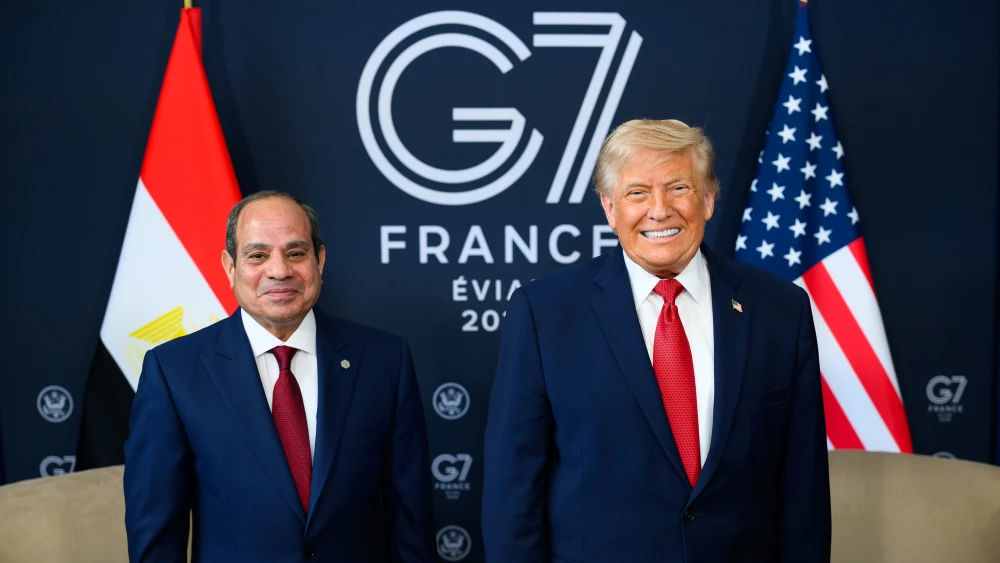
Unfortunately, U.S. President Donald Trump appears to be going along with Egypt’s position on the Nile. In June, Trump told Egyptian President Abdel Fattah el-Sisi that Egypt had been unfairly treated on the GERD issue and warned that the dam causes tremendous problems, which gave Cairo additional diplomatic leverage.
Egypt also coaxed Washington into accommodating Eritrea’s hostility toward Ethiopia. Indeed, a common denominator for Egypt and Eritrea is their shared hostility toward both Israel and Ethiopia. Both Egypt and Eritrea loudly insist that Somalia’s sovereignty and territorial integrity must be respected. They do so not as a matter of legal principle, but to serve the geopolitical purpose of blocking Somaliland’s independence and preventing a stronger Israeli presence in the region. Eritrean President Isaias Afwerki made that objective explicit in July.
If only littoral states are involved, then logically, only nations that contribute the Nile’s principal upstream waters should have the decisive voice in its use.
Rather ironically, Eritrea supported Russia’s invasion of Ukraine by voting against a 2022 U.N. resolution condemning Moscow. Eritrea also opposes Israel’s African Union observer status and maintains close ties with Iran. If Eritrea invokes territorial integrity to block Somaliland’s diplomatic ties with Israel while simultaneously backing Russian aggression against Ukraine’s territorial integrity, it is difficult for Eritrea to claim to uphold international law with any credibility.
Egypt’s intervention in the Horn of Africa extends far beyond its maximalist posturing on the Nile. Together with Eritrea, its aggressive opposition to Ethiopia’s Memorandum of Understanding with Somaliland can be understood as an effort to permanently deny Ethiopia durable access to sea and port services. This, by extension, seeks to suffocate the emerging diplomatic and economic alignment between Ethiopia, Somaliland and Israel, which has significant implications for regional peace and security.
Rather than encouraging practical arrangements, Egypt and Eritrea work systematically to block Ethiopia’s options for peaceful maritime access. Eritrea refuses dependable access through its ports while, together with Egypt, it opposes alternative gateways. Ethiopia, a country of over 130 million people and Africa’s most populous landlocked state, cannot reasonably accept an order in which every peaceful avenue to maritime access is constrained by external vetoes. Ethiopia’s search for reliable maritime access is a legitimate economic objective, not an act of aggression.
If Egypt genuinely prioritizes Red Sea security and regional cooperation, why is the discussion focused so heavily on excluding Ethiopia while the Houthi threat to the Bab el-Mandeb strait receives comparatively little attention? The irony is that the Nile is still flowing into Egypt, while insecurity around Bab el-Mandeb has already disrupted the maritime artery on which Egypt’s economy depends. This raises a fundamental question about Egypt’s stated commitment to Red Sea security.
Washington’s approach to Egypt and Ethiopia risks reinforcing these regional contradictions. Public rhetoric supporting Egypt’s position on the Nile, combined with efforts to reengage Eritrea, is inevitably interpreted as validation of the two countries’ hardline approach. If the U.S. seeks stability in the Horn of Africa, it must be cautious not to reward policies that deepen regional tensions. Any strategy endorsing Egypt’s effective veto over upstream Nile development while overlooking Ethiopia’s legitimate economic interests risks fomenting conflict rather than encouraging compromise.
Ethiopia has repeatedly stated that it does not seek to deprive Egypt of Nile waters. At the same time, Egypt opposes Ethiopian development while resisting Ethiopia’s peaceful access to the Red Sea. If Egypt expects Ethiopia to safeguard downstream water security, it must also recognize Ethiopia’s legitimate interest in economic development and dependable maritime access. Reciprocity, not selective application of international principles, is the foundation of lasting regional peace.
Washington should not allow Egypt’s geopolitical preferences to place limits on Ethiopia’s legitimate national interests. Ethiopia is not asking for special treatment; it is asking for the same respect for its sovereignty and national interests that Egypt demands for its own.
If Washington accepts a littoral-states-only principle for Red Sea security while excluding Israel despite its littoral status, it should not simultaneously accept Egypt’s attempt to impose upstream restrictions on Ethiopia’s use of the Nile.