
In March 1977, Zuheir Mohsen, a senior PLO official, told the Dutch newspaper Trouw: “The Palestinian people does not exist. The creation of a Palestinian state is only a means for continuing our struggle against the State of Israel for our Arab unity.” Yet despite such admissions, Israel and the West continue treating “the Palestinians” as an ancient nation with indigenous rights.
It is time to stop playing along with this fiction. The reason is that words have power. Terminology creates reality. When people repeat a term over and over, it gets absorbed.
Since 1967, Israel’s primary strategic vulnerability hasn’t been military; it’s been the “Palestinian” myth. After failing on the battlefield in their wars against Israel, Arab states pivoted to narrative warfare: They fabricated a fictional nation to claim the land and squeeze Israel into indefensible borders. In fact, the Arab residents of Judea and Samaria are descendants of Sunni Arabs who migrated across the region for employment in the late 19th and early 20th centuries. Historically and nationally, a “Palestinian” people does not exist.
This fabricated identity created three major crises for Israel:
The first is diplomatic. The world began demanding that Israel “return” Judea, Samaria and Gaza to the Sunni Arabs, who had suddenly rebranded themselves as “Palestinians.” The international community branded Israel an “occupier,” ignoring that it had liberated its own ancestral lands from Jordanian control. In 1967, Israel did not fight a nonexistent country called “Palestine.” It fought Jordan, Egypt and Syria.
The second is internal. The “Palestinian” myth drove a wedge deep into the Jewish world. It alienated liberal, progressive Jews in Western countries, especially the United States, from Israel, because these Jews bought into the “Palestinian” myth. Unable to reconcile their values with a country they were told was stealing land from indigenous Palestinians, they joined the global chorus demanding Israel’s withdrawal from the liberated territories.
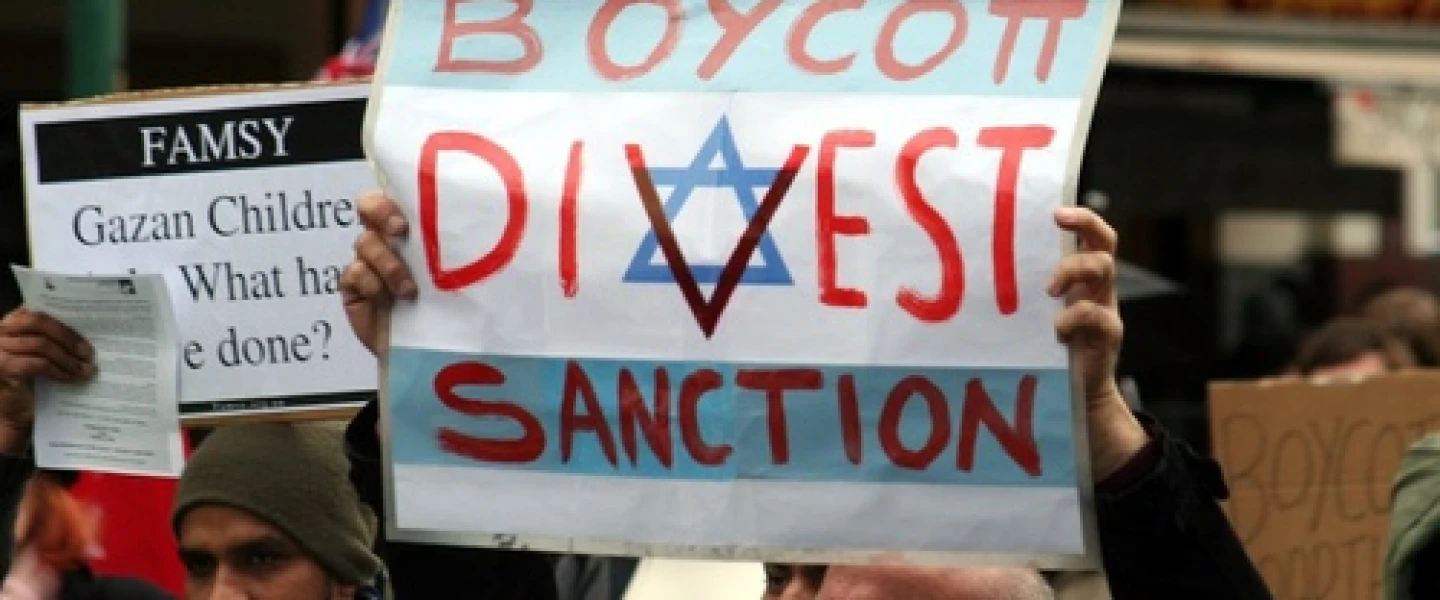
The third is the explosion of antisemitism. The “Palestinian” flag has become the standard-bearer of modern antisemitism. Protesters on the streets of London, New York and Sydney chant “From the river to the sea, Palestine will be free,” while most of them are utterly ignorant of the geography or history behind the words they shout. On college campuses, Jewish students are harassed, bullied and forced to hide their identity, all under the banner of a fabricated cause.
Historically, the term “Palestine” derives from the ancient Philistines, an Aegean people unrelated to Arabs. After suppressing the Bar Kokhba revolt in 135 CE, the Roman Emperor Hadrian renamed Judea “Syria-Palaestina” to erase its Jewish ties. Yet the Jewish people eventually returned.
Local geography and surnames tell the same story of migration rather than ancient nationhood: Shechem became Nablus (from the Roman Flavia Neapolis), while common Arab surnames like Al-Masri (the Egyptian) or Al-Yamani (the Yemenite) reflect regional immigration. Even Arab leaders acknowledged this. In 1974, Syrian President Hafez Assad reminded PLO chief Yasser Arafat that “Palestine” was historically part of “Greater Syria.”
Consider recent history: Between 1948 and 1967, when Judea, Samaria and Gaza were under Jordanian and Egyptian occupation, no one marched in London, Paris or New York chanting “Free Palestine.” There were no demands for Jordanian withdrawal, because the issue was never Arab self-determination. It was always about destroying the Jewish state.
Dismantling the concept of “Palestine” would solve immense diplomatic and strategic challenges.
Practical solutions exist for the Sunni Arabs currently living in the liberated territories. Left-wing fear-mongering claims that applying sovereignty means either losing Israel’s Jewish majority or becoming an “apartheid state.” Both claims are false. Globally, millions hold legal residency in various countries without national voting rights, such as U.S. citizens in Puerto Rico.
The “apartheid” accusation collapses upon examining reality. Israelis entering Arab-controlled towns in Judea and Samaria face mortal danger, while Israeli Arabs serve as Supreme Court judges and Knesset members. Under full Israeli sovereignty, Sunni Arabs could manage their municipal affairs, while Jews could finally purchase homes in cities like Shechem and Ramallah, just as Arabs freely buy property in Tel Aviv.
Dismantling the concept of “Palestine” and stripping it of its narrative power would solve immense diplomatic and strategic challenges for Israel.
Once Israeli leaders, commentators and thought leaders begin using the term “Sunni Arabs” and make it unequivocally clear that a “Palestinian” state will never happen—because no such nation exists—it will shatter the illusion of a “Palestinian” state once and for all.
This, in turn, will alleviate the relentless diplomatic pressure on Israel to establish a terror state in its own backyard. Today, nearly every foreign diplomat, including Israel’s closest friends, mechanically recites slogans about a two-state solution. Putting an end to the “Palestinian” lie is the only way to break this cycle.
This shift can also heal the growing rift in the Jewish Diaspora. Many young, progressive Jews genuinely care about Israel but have internalized the false narrative that it stole someone else’s land. Exposing the historical truth—that Israel liberated its ancestral homeland from Jordanian control, not from a fictional “Palestinian” entity—removes the core obstacle alienating them, allowing them to embrace their heritage and stand proudly with Israel again.
Furthermore, dismantling the “Palestinian” fabrication will directly shield Jewish students on college campuses. While antisemites will always find reasons to hate Jews, stripping away their foundational myth puts them on the defensive. Deprived of this narrative shield, campus mobs will lose their momentum, giving Jewish students the safety and relief they desperately need.
The massive street rallies will also lose their foundation once the cause itself is exposed as a fiction. Without a narrative to hide behind, these mobs will have to reinvent themselves, and the “Palestinian” flag will lose its hollow glory.
This is not just a shift in rhetoric; it’s taking back the narrative. Words create reality, and it is time we finally used the right ones.