
In a small museum in northern Azerbaijan sit two objects that tell a surprisingly long story. They are a pair of tefillin so tiny that the black boxes are barely a centimeter wide. During the Soviet era, when openly observing Judaism invited trouble, Jews could conceal them beneath a hat or sleeve.
Today, the tefillin are displayed in the Museum of Mountain Jews in Qırmızı Qəsəbə, or Red Village, across the Kudyal River from the Muslim city of Quba. The museum occupies the restored Karchag Synagogue and opened in 2020.
For most Western Jews, Azerbaijan barely registers in Jewish history. Yet for centuries, this small country on the shores of the Caspian Sea has been home to one of the Jewish world’s most distinctive communities.
The Mountain Jews, who call themselves Juhuro, are neither Ashkenazi nor Sephardi. Their roots lie in the Persian Jewish community, and their traditional language, Juhuri or Judeo-Tat, is Persian-based, with Hebrew and other influences. When their ancestors first reached the eastern Caucasus is debated. Mountain Jewish tradition traces their origins to Jews exiled from the ancient Land of Israel, while scholars generally point to later migrations northward from Persia.
Jews have lived in the region for centuries. Benjamin of Tudela, the famed 12th-century Jewish traveler, wrote of Jewish communities in the mountains near the frontiers of Media. By the 18th century, one of the most remarkable centers of Mountain Jewish life had emerged in what is now northern Azerbaijan: Red Village.
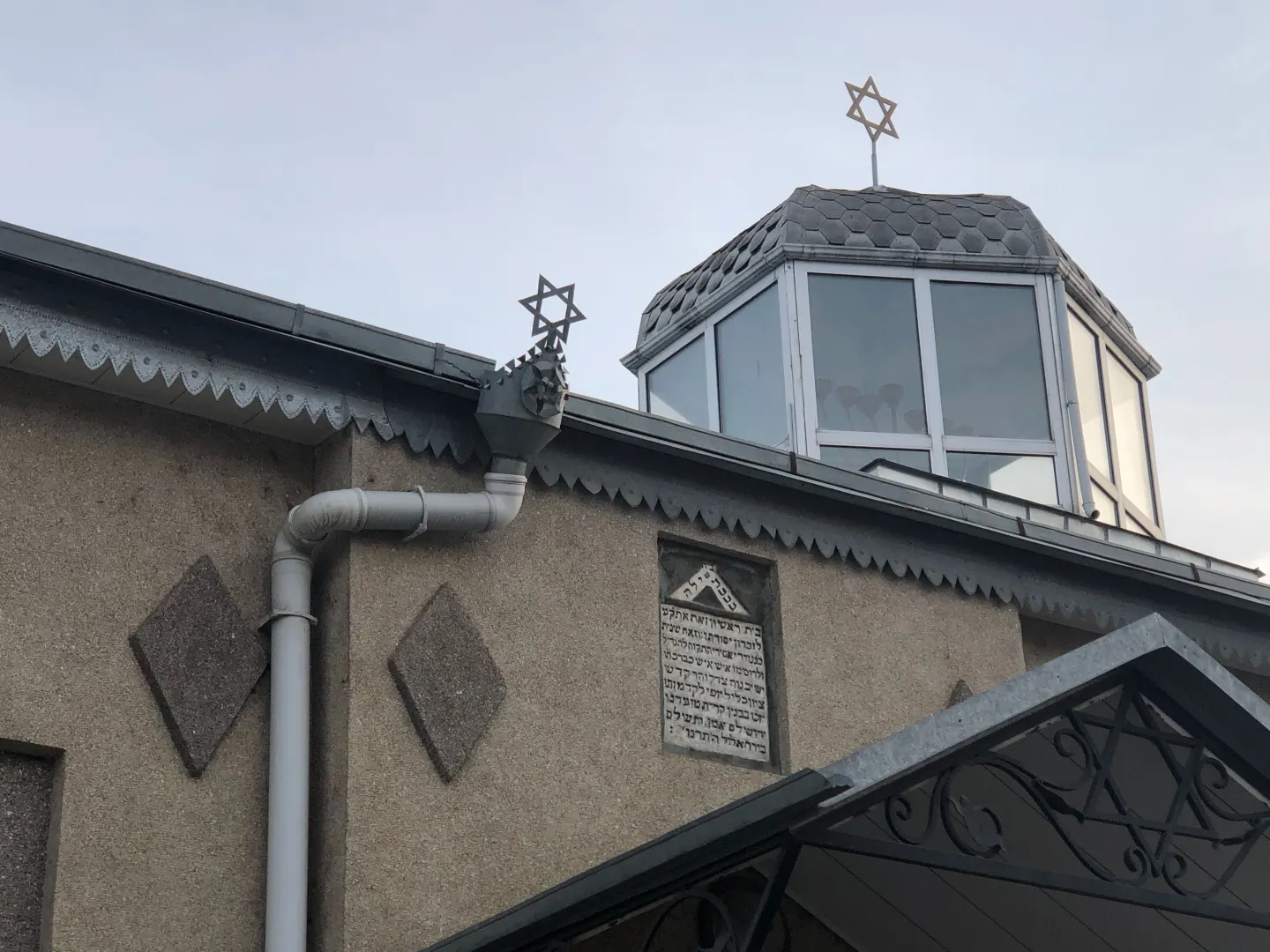
The settlement took shape when Jews fleeing violence elsewhere were granted protection by Huseynali Khan, the ruler of the Quba Khanate, and later by his son and successor, Fatali Khan. Under their rule, Jews were permitted to settle across the river from Quba and build a community of their own. Groups arriving from different villages established their own neighborhoods, or mahallas, often building synagogues reflecting the communities from which they had come.
What emerged was something remarkable: an overwhelmingly Jewish town in the Caucasus.
Red Village once had 13 synagogues, and its population at one point reached roughly 18,000. Even today it remains one of the few places outside Israel where Jews comprise the overwhelming majority of a town.
But Azerbaijan’s Jewish population was never limited to the Mountain Jews. As the Russian Empire expanded into the region during the 19th century, Ashkenazi Jews began settling in Baku just as the oil boom was turning the city into a major commercial center. By the beginning of the 20th century, Baku had a sizable Ashkenazi community. The Rothschild family’s Caspian-Black Sea Company was among the major players in the city’s oil industry.
Georgian Jews also settled in Baku, and the city still has congregations serving Mountain, Ashkenazi and Georgian Jews. The community produced a number of notable figures, among them Lev Landau, born in Baku in 1908 to a Jewish family. One of the towering figures of 20th-century theoretical physics, he won the 1962 Nobel Prize in Physics for his work on superfluidity.
Jews also played a role in the country’s public life. When the Azerbaijan Democratic Republic was established in 1918, the Jewish physician Jevsei Gindes served as minister of health and social welfare.
The republic lasted less than two years. The Bolsheviks seized control in 1920 and quickly began dismantling independent Jewish religious life. Jewish schools were closed, Zionist activity was suppressed, rabbis were arrested and religious observance was pushed behind closed doors.
Even Juhuri, the language of the Mountain Jews, was transformed under Soviet rule. For centuries, it had been written in Hebrew letters. In the late 1920s, Soviet authorities switched it to a Latin-based alphabet. One of those involved in developing the new script was Yakov Agarunov, a Mountain Jew born in Red Village in 1907 who became a poet, playwright and important figure in Juhuri literature. Agarunov devoted much of his life to preserving the language, including compiling Juhuri dictionaries.
What emerged was something remarkable: an overwhelmingly Jewish town in the Caucasus.
But the alphabet he helped create did not last long. In 1938, Soviet authorities replaced Latin with Cyrillic. Within a single generation, the same Jewish language had been forced to change alphabets twice. Today, Juhuri is still written mainly in Cyrillic, although Latin is occasionally used as well.
Language was only part of the broader assault on Jewish life.
Most of Red Village’s synagogues were closed or repurposed by the Soviet authorities. The Six Dome Synagogue became a warehouse and later a sewing workshop. The nearby Gilaki Synagogue was a remarkable exception, remaining open throughout the Soviet period. When it was renovated in 2000, workers reportedly discovered a hiding place in one of its walls containing some 50 Torah-scroll cases, apparently connected to scrolls confiscated from the village’s synagogues by the Soviet authorities.
During those years, what could no longer be practiced openly often continued in private. Families held on to traditions at home, Jews studied Torah clandestinely, and some found ingenious ways to perform mitzvot without attracting attention. That helps explain the miniature tefillin now sitting in the museum. By the late 1980s, however, Soviet control was loosening. Jewish cultural and Zionist organizations reemerged in Baku and Sumqayit, and in 1987 Baku became home to what the World Jewish Congress says were the first legal Hebrew courses in the Soviet Union.
Then, in 1991, the Soviet Union collapsed, and Azerbaijan regained its independence. The new era brought religious freedom, though economic upheaval prompted many Azerbaijani Jews to leave for Israel, Russia, the United States and elsewhere.
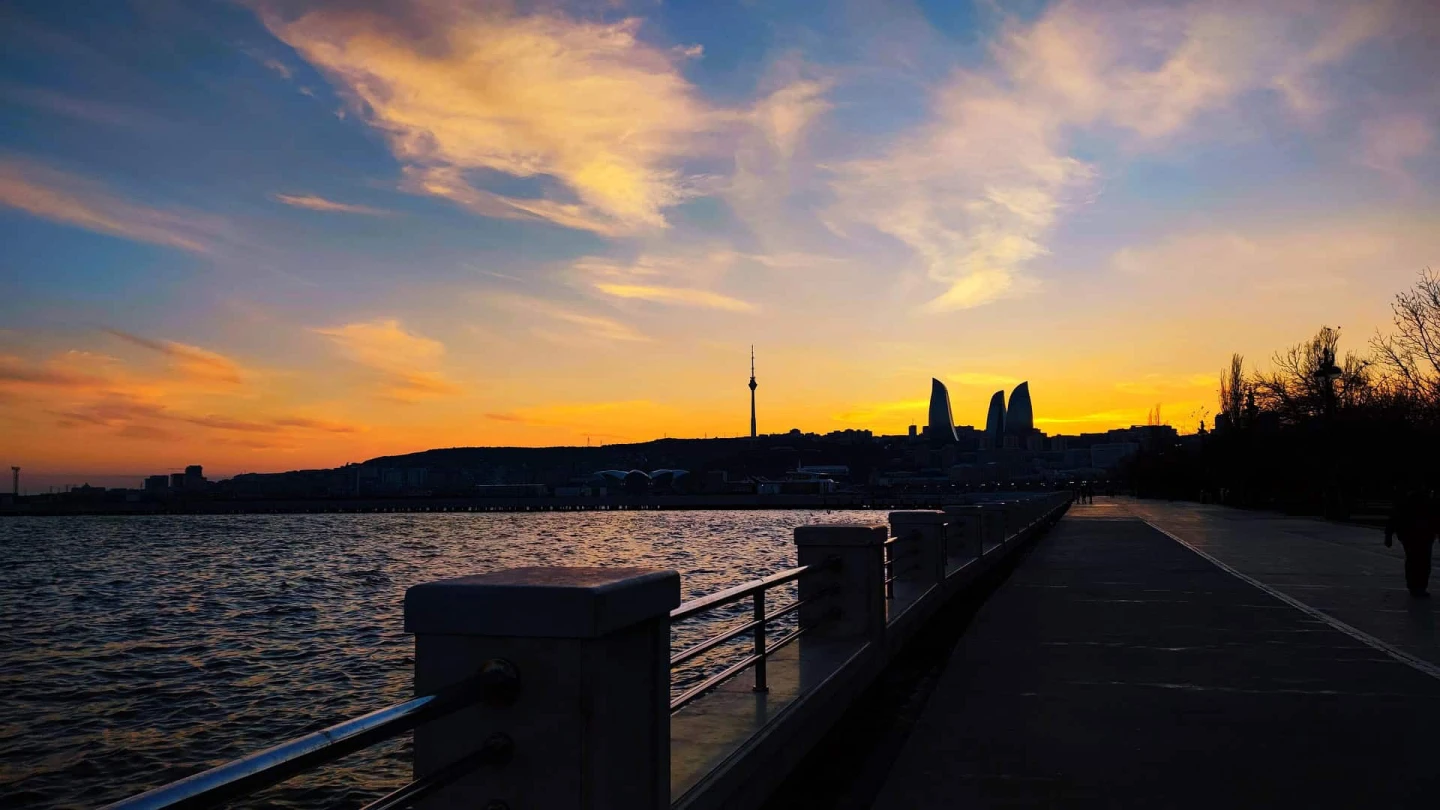
A 2022 New Lines Magazine report found that Red Village’s population falls to about 500 in winter but rises above 3,000 in summer, when families return from Moscow, Brooklyn, Tel Aviv and Baku. Many spend most of the year thousands of miles away, but they still regard Red Village as home.
Azerbaijan’s Jewish population is currently estimated at 7,200. Synagogues, Jewish schools and communal institutions function openly. Moreover, the Jewish community has helped strengthen the close ties that developed between Azerbaijan and Israel after the fall of the Soviet Union.
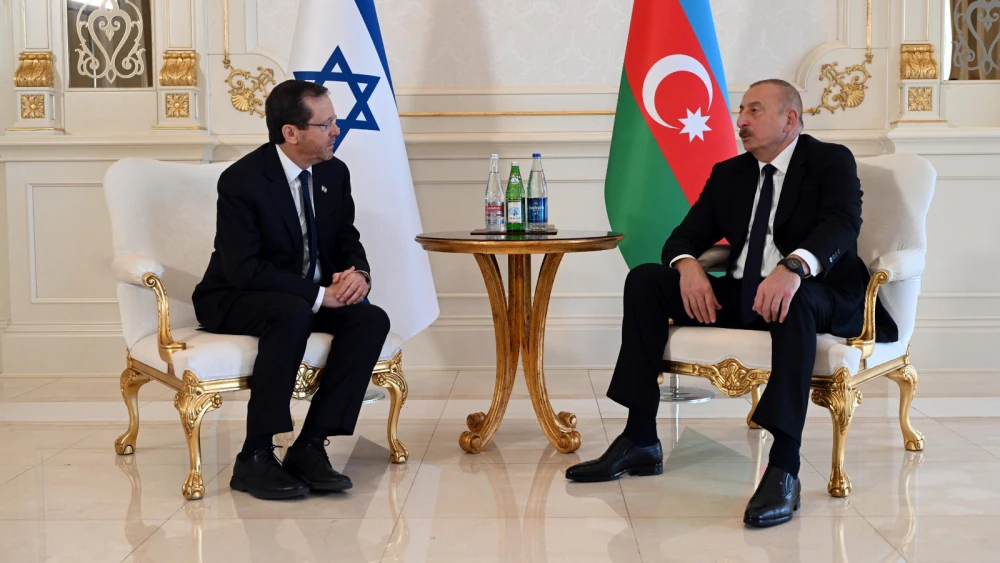
Israel recognized Azerbaijan’s independence on Dec. 25, 1991, and formal diplomatic relations were established on April 7, 1992. Israel opened an embassy in Baku the following year. Azerbaijan became a major source of crude oil for Israel, much of it carried through the Baku-Tbilisi-Ceyhan pipeline to Turkey and shipped onward by tanker. Israel, in turn, became an important supplier of defense equipment and technology, while cooperation expanded into agriculture, cybersecurity and trade.
Israel proved a valuable partner during Azerbaijan’s conflict with Armenia, supplying weapons systems that played an important role in Azerbaijani military operations. That was especially visible in the 2020 war, when Israeli-made drones and other systems were used extensively.
In March 2023, Azerbaijan opened an embassy in Israel, becoming the first Shiite-majority Muslim country to do so. Azerbaijan shares a long border with Iran, but Baku has resisted Tehran’s pressure over its close ties with Israel.
Oil, arms and Iran go a long way toward explaining why Jerusalem and Baku cooperate so closely. But they do not tell the entire story.
Tens of thousands of Jews of Azerbaijani origin live in Israel, many retaining close emotional and family ties to the country. Azerbaijani officials have repeatedly emphasized the Jewish community’s role as a bridge between the two countries.
This is likely why, in the days after Hamas-led terrorist attacks in southern Israel on Oct. 7, 2023, Azerbaijanis came to the Israeli Embassy in Baku to lay flowers and wreaths in memory of the victims.
The story of Albert Agarunov illustrates just how deeply rooted Jews are in Azerbaijani society.
A member of Azerbaijan’s Mountain Jewish community, Agarunov was born in Baku’s Amirjan district to a family originally from Red Village. He volunteered for the Azerbaijani army during the first war with Armenia over Nagorno-Karabakh. A tank commander, he was killed in 1992 at age 23 during fighting for Shusha, a strategically important city in the then-disputed region.
He was posthumously named a National Hero of Azerbaijan, the country’s highest honor, and buried in Baku’s Martyrs’ Lane. Rabbis and Muslim clerics attended his funeral. In 2019, a monument depicting Agarunov with his tank was unveiled in Baku’s Narimanov district.
Its presence in the capital says something important about how Azerbaijan views its Jewish citizens—as part of the country’s history, not apart from it.
Azerbaijan’s Jews have written their story in Hebrew, Latin and Cyrillic, and somehow managed to preserve the same identity through them all.