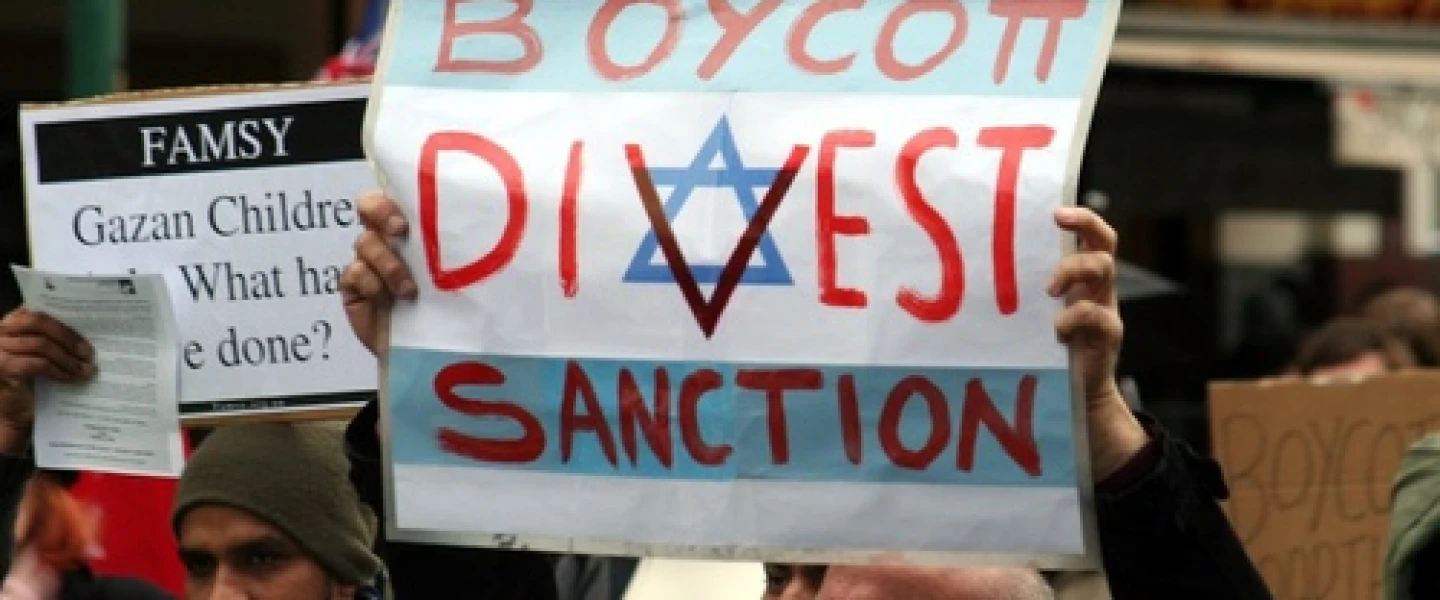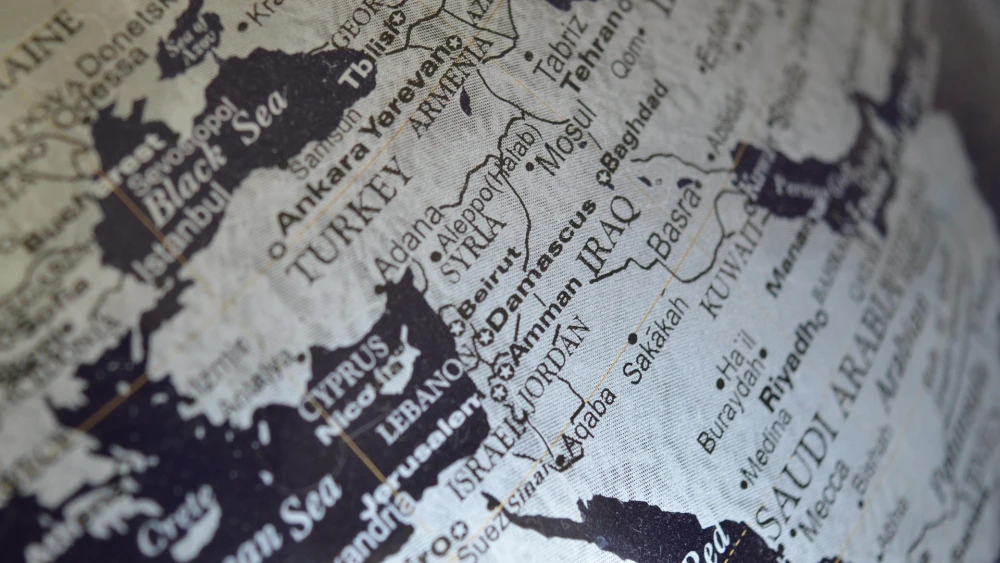

The standard map of the Middle East was drawn for decades around one supposedly permanent fact: the Israeli-Palestinian conflict.
Israel was the problem. “Palestine” was the question. The Arab states were the audience. America was the referee. Europe was the conscience. The feckless United Nations was, apparently, the supreme court.
That map is becoming obsolete. The Middle East of 2026 is being organized around something less sentimental: power.
Iran wants regional influence. Saudi Arabia wants economic transformation and strategic autonomy. Turkey wants influence commensurate with its history and geography. The Gulf states want security, prosperity and access to technology. India wants reliable trade routes and energy. China wants access and authority. America wants to retain its position without bearing every burden.
And Israel? Israel wants to survive.
That simple distinction has profound geopolitical consequences. Israel has long been treated as a peculiar little state with a mighty army and a superpower best friend. Its strategic environment was essentially local: Egypt, Jordan, Syria, Lebanon and the Palestinians.
That is now insufficient. Israel’s current strategic map stretches from the Mediterranean to the Gulf, from the Red Sea to the Indian Ocean and, increasingly, toward India and Asia.
It is not that Israel has become ambitious and imperialist, but that the Middle East itself has changed. Consider the Gulf: For years, Arab governments were expected to subordinate their national interests to the Palestinian cause. The assumption was that no meaningful Arab-Israeli relationship could develop until the Palestinian question had been resolved. Egypt and Jordan’s peace treaties with Israel were deemed matters of practicality, not strategic alignment.
Then came the Abraham Accords, in which the United Arab Emirates, Bahrain and Morocco recognized Israel. This showed that Arab states were finally acting in their own strategic interests, independent of the Palestinian issue.
These states worry about Iran, economic stagnation, shipping lanes and green energy replacing demand for their fossil fuels. They want advanced technology, intelligence cooperation, investment, trade and defense capabilities. Increasingly, they understand that Israel is a powerhouse in many of these areas and could be a useful partner.
The Palestinian issue has not disappeared, but it has lost its monopoly. That is an important development. Israel’s emerging relationship with the Gulf is not based on everyone suddenly falling in love with Zionism. It is based upon converging interests, which tend to be more durable than sentiment.
Israel’s treaties with Egypt and Jordan have become embedded into the region’s strategic architecture. Border security, intelligence cooperation, energy, counterterrorism and regional stability create incentives that, when sufficiently important, can transcend rhetoric.
It is often said that we are entering a multipolar world, but the Middle East itself is also becoming multipolar.
Moreover, Israel’s relations with Greece and Cyprus are growing in importance, particularly regarding energy, maritime security and the Eastern Mediterranean. These relationships cannot be viewed through the prism of the Arab-Israeli conflict. They belong to a larger strategic picture involving Turkey, Europe, NATO, shipping and energy.
Then there’s India, which may become one of the most consequential pieces of Israel’s new geopolitical map. India is not a small Middle Eastern player. It is a vast country with a huge economy and increasingly important in the Indo-Pacific.
India needs secure energy supplies and reliable trade routes. Israel possesses technological, military, agricultural and intelligence capabilities that India values. Both face radical Islamist terrorism and a shared interest in maritime security.
The Middle East is no longer simply a region connecting Europe and Asia. It is part of a strategic corridor connecting the Mediterranean, the Red Sea, the Gulf and the Indian Ocean. Israel sits close to the center of that system.
This changes how Iran should be understood. Iran’s regional strategy was never confined to Iran itself. Tehran constructed a network of armed proxies and partners stretching through Iraq, Syria, Lebanon, Gaza and Yemen to give it strategic depth.
Israel has attacked that depth. While Iran is militarily and economically weakened, however, it has not become harmless. A weakened or threatened Iran could prove more dangerous than before.
Israel’s old assumption that it could be strategically contained within its borders has become untenable. Iranian missiles, drones and terrorism do not care about borders or maritime disruption. The Middle East has become an interconnected strategic theater, and Israel has been forced to respond accordingly.
One result of this is that Israel is becoming less dependent on any single diplomatic relationship. America remains extraordinarily important and, at this point, it is fantasy to think otherwise. Strategic diversification is not the same as abandoning an ally. However, a country that has relationships with Washington, New Delhi, Abu Dhabi, Riyadh, Cairo, Amman, Athens, Nicosia and others has a much broader strategic portfolio than one whose security depends upon pleasing a single capital.
This matters because the international system itself is changing. The post-Cold War assumption that American power would remain overwhelmingly dominant is gone. China is expanding its influence. India is rising. Regional powers are becoming more assertive. Arab Gulf states are pursuing more independent foreign policies.
It is often said that we are entering a multipolar world, but the Middle East itself is also becoming multipolar. Somewhat paradoxically, Israel may be better positioned for this new world than the old map suggests.
Israel can be America’s ally without being a client state, cooperate with India without becoming part of its geopolitical camp, work with Gulf Arab states without pretending that all have identical interests and collaborate with European countries while disagreeing bitterly with some of their governments. That is what a mature foreign policy looks like.
The new map of the Middle East prompts questions like: Who controls trade routes and technology? Who can deter Iran, protect energy infrastructure, influence the Gulf, secure the Red Sea and connect Europe with Asia? Who has the military capability to enforce its interests?
These questions don’t make the Palestinian issue irrelevant, but they do put it in perspective.
For decades, the world acted as though the Middle East could not move until Israelis and Palestinians made peace. The Middle East has moved on anyway, including Israel. This means Israel is no longer just a country on the map of the Middle East, but one that can help draw the map itself.