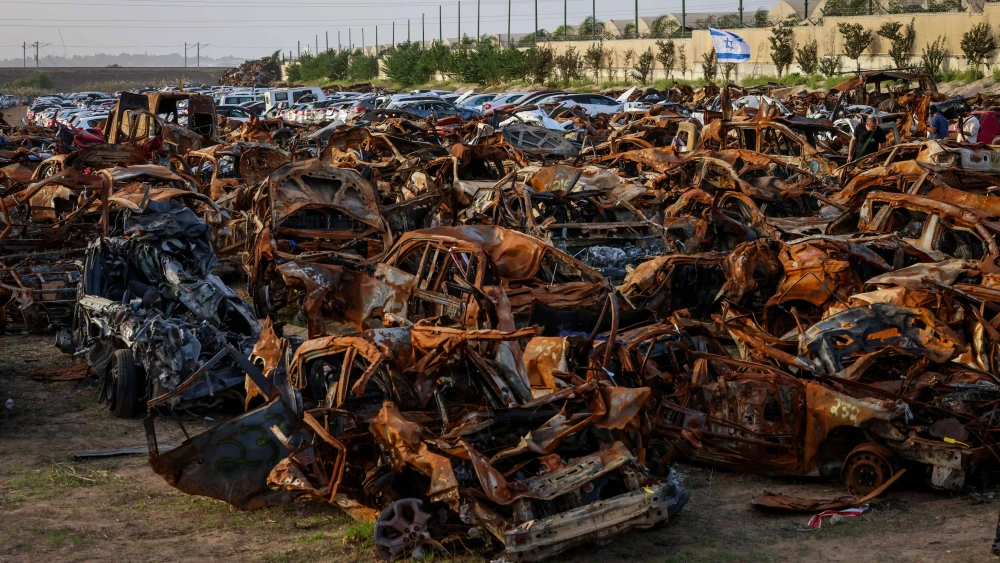

By multiple required legal standards, Israel has not committed genocide in Gaza. Hamas, on the other hand, has not only committed atrocities; it has mastered the art of reframing them.
By invoking the word “genocide,” Hamas has turned its own crime into a political weapon; a weapon aimed at Israel and the truth itself. The tragedy is not only a loss of life but the loss of clarity. It creates a world in which the perpetrator can claim the mantle of victimhood and be believed.
Understanding the legal meaning of the word “genocide” is essential, but recognizing how easily it is manipulated is even more urgent. If we fail to do so, we risk allowing the worst crimes to hide behind the most powerful words and mistaking propaganda for justice.
In 1992, in Butare prefecture in southern Rwanda, someone sat down and wrote a memorandum on how to run a propaganda campaign. It was mimeographed, unsigned and largely cribbed from a French textbook on advertising. Investigators found a copy years later, after the killing was over.
Buried in it was a technique the author called accusation en miroir— “accusation in a mirror.” The instruction was simple: accuse your enemy of exactly what you intend to do yourself. “In this way,” the author wrote, “the party which is using terror will accuse the enemy of using terror.”
The technique did not die in Rwanda. It has become a standard instrument of modern conflict. We have watched it deployed at scale twice in the last four years—in Russia’s invasion of Ukraine and now in Gaza.
The term “genocide” carries enormous moral force. Because it is widely regarded as the “crime of crimes,” it is increasingly used not only to describe atrocities but also to justify them. “Accusations in a mirror” are now common among perpetrators.
Russia used the tactic in 2022 when it claimed Ukraine was committing genocide in the Donbas region. No credible evidence supported the allegation. Ukraine responded by bringing a case before the International Court of Justice, seeking a formal declaration that no genocide occurred. The case is still years from resolution, but the strategy is unmistakable: weaponize the word genocide to legitimize aggression.
To understand why this tactic is so powerful, it helps to look at the legal definition of genocide.
Article II of the Convention on the Prevention and Punishment of the Crime of Genocide lists five categories of genocidal acts, only one of which involves killing. The convention defines genocide as “Any of the following acts committed with intent to destroy, in whole or in part, a national, ethnical, racial or religious group.”
Intent is the core requirement. Without the intent to destroy a particular group, the crime of genocide is not being committed.
The instruction was simple: accuse your enemy of exactly what you intend to do yourself.
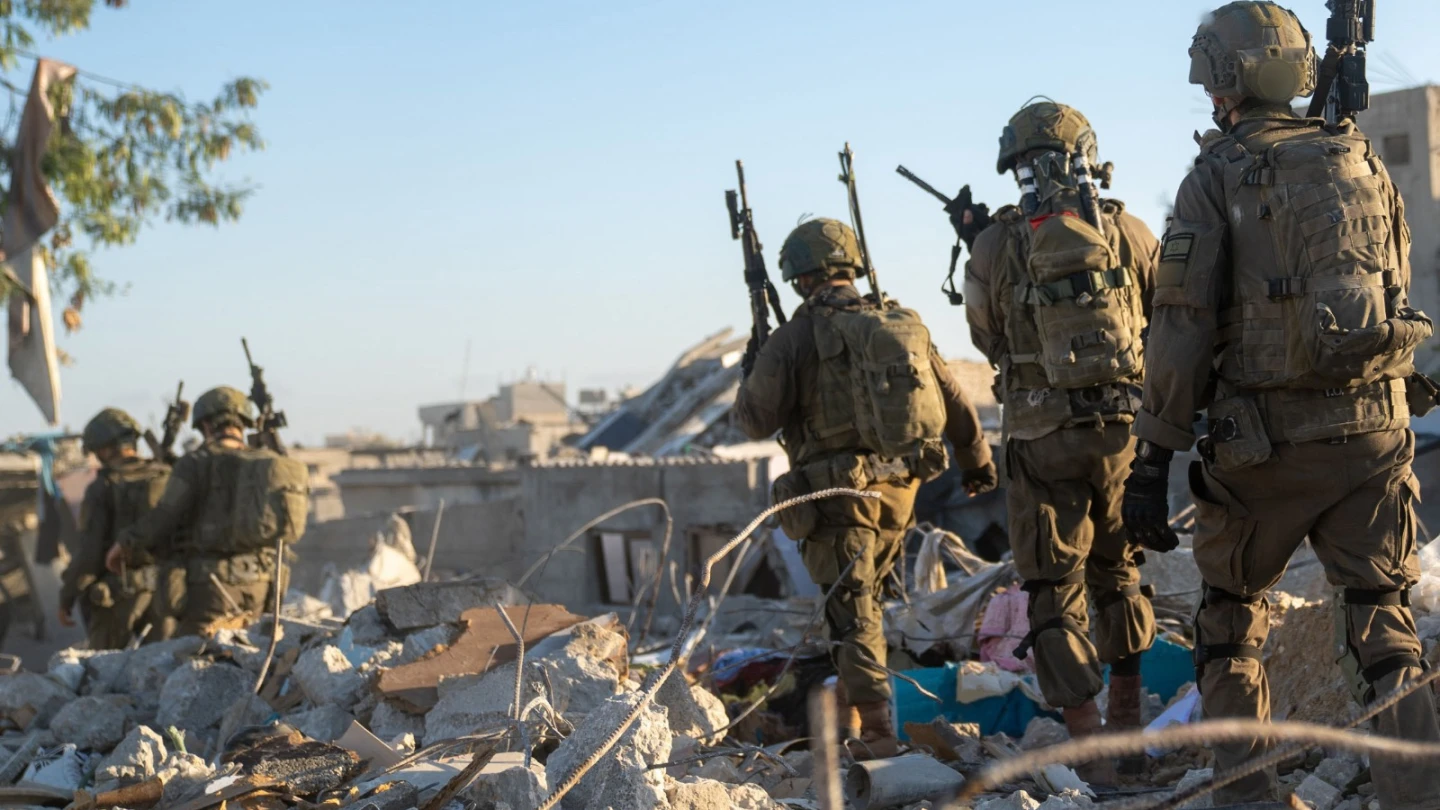
This element—intent to destroy—is absent from Israel’s conduct in Gaza. Israel’s practice of issuing more than 105 mass evacuation orders, creating “safe corridors” of evacuation (in areas where Hamas was shooting civilians to keep them as human shields), creating evacuation zones and dropping leaflets before building strikes all demonstrate an intent to avoid civilian casualties, not to eliminate or destroy a population. These practices are incompatible with genocidal intent.
In war, civilian deaths, while tragic, are not automatically illegal under international law. The governing standard is proportionality: civilian harm must not be excessive in relation to the anticipated military advantage. Proportionality recognizes that civilian casualties can occur lawfully during armed conflict, especially when combatants embed themselves among civilians—as Hamas purposely does.
Hamas does not fall under any of the protected categories listed in Article II. It is not a “national, ethnical, racial or religious group.” It is a political and military organization: a political party with an armed wing. The convention deliberately excluded political groups from its definition. As a result, Hamas casualties do not constitute genocide under international law.
In 2007, the ICJ clarified that genocide requires the destruction of “at least a substantial part” of the targeted group; large enough to threaten the group’s future viability. Gaza’s population at the start of the war was approximately 2.2 million. Even using the highest estimate of 60,000 civilian deaths, the casualty rate is roughly 2.7%. This is tragic, but nowhere near the threshold required for genocide.
Similarly, the estimated 100,000 Gazans who have emigrated represent an insubstantial part of the population. Neither figure approaches the level of destruction necessary to make a specific group unable to continue as a viable community.
Determining civilian‑to‑combatant ratios is difficult. Israel counts combatant deaths; Hamas counts nearly all deaths—including natural deaths and individuals executed by Hamas—as civilian. Combatants often fight in street clothes, making them appear civilian at the site of death even when armed. Hamas also counts journalists as civilians even when they are on Hamas’s payroll or photographed carrying weapons.
Israel has stated that it intends to kill every Gazan who participated in the atrocities of Oct. 7. Those individuals, regardless of clothing, were combatants engaged in a mass-murder operation inside Israel. Their deaths cannot be counted as civilian casualties.
The use of human shields further complicates the numbers. Human shields are victims of a war crime committed by Hamas, but unless they directly participate in hostilities, they are still counted as civilians. Hamas understands this dynamic and exploits it. The more civilians die, the more Hamas can incorrectly claim genocide and the more sympathy it gains in the global media.
This brings us back to “accusations in a mirror.”
Hamas committed mass atrocities on Oct. 7, yet it successfully redirected global outrage by falsely accusing Israel of genocide. The accusation is emotionally potent, easy to spread and difficult for the public to evaluate against legal standards. Social media amplifies the charge until it becomes an illusion-of-truth narrative, regardless of its accuracy. Hamas started this war intending to cause civilian deaths. The global outrage should be against Hamas.