
The baby should not have survived.
This week, a 7.4-magnitude earthquake ripped through Colombia, and a five-story residential building in Cali collapsed into a mountain of concrete and rubble. There was almost no reason to believe that anyone could possibly still be alive beneath the devastation.
Rescuers searched through the wreckage. Then they heard something, a faint whimper. They stopped and listened. From somewhere deep beneath the concrete came a man’s voice: “Save us! I’m with a baby.”
The rescuers began frantically digging with their bare hands. A massive concrete slab stood between them and the child. One person could not move it. Two could not. But together, they pushed and lifted until finally, they saw him.
A tiny baby, covered in dust, barely able to breathe. His little head had turned purplish from lack of oxygen. But as the rescuers cleared away the rubble, something remarkable happened. The baby began to breathe. His color returned. That faint cry had led the rescuers to a life buried beneath tons of concrete. It was almost imperceptible, but it was all that was needed.
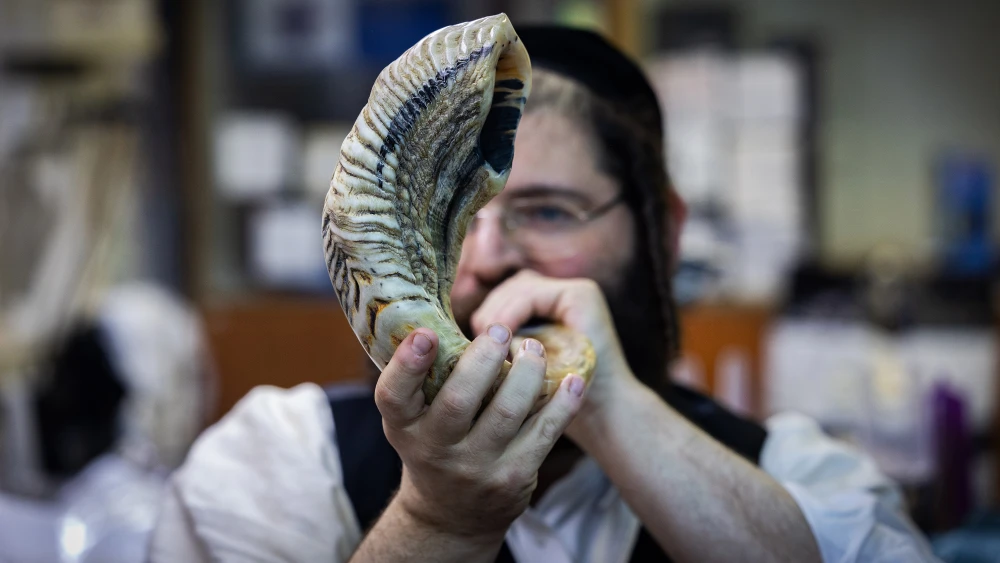
The shofar is a pure, unsophisticated pleading from somewhere deep inside our Jewish soul. And that is precisely its power.
There is a remarkable parallel to this in a famous teaching of the Bal Shem Tov, explaining why we begin to blow the shofar as the month of Elul begins.
The Bal Shem Tov tells of a king who had an only son whom he loved dearly. The king sent his son away to a distant land, where the prince eventually lost everything. He became poor, disheveled and unrecognizable.
Eventually, the prince decided to return home.
He finally reached the gates of his father’s palace, but there was a problem. The lost prince had forgotten the language of his homeland. The guards didn’t recognize him. He could not explain who he was, and he looked like a vagabond. The once royal prince could not even speak the words necessary to gain entrance to his childhood home.
What could he do? So the lost prince cried out in pain. And when the king heard the cry, he immediately recognized the voice of his beloved son. The prince didn’t need an identification card. He didn’t need to look distinguished. He didn’t need to speak the royal language perfectly. The king, just like any father, knew his son’s cry.
The Bal Shem Tov teaches that this is the deeper meaning of the shofar.
As we approach Rosh Hashanah, we are that prince. Sometimes, we don’t feel like princes. We look at ourselves and see the rubble of our mistakes, disappointments, failures and distance from God. We may feel spiritually disheveled. We may wonder whether we still belong in the king’s palace.
And perhaps, like the prince, we have forgotten the royal dialect. We don’t know what to say. We don’t know how to pray. We don’t know how to explain ourselves to our Father in Heaven. But then comes the shofar.
The shofar does not speak words. It does not offer a sophisticated argument. It is simply a cry—a pure, unsophisticated pleading from somewhere deep inside our Jewish soul. And that is precisely its power.
The cry of the shofar is the cry of the prince.
It is the same cry we heard from that tiny baby buried beneath the rubble. The baby’s cry was weak, almost imperceptible, but it told the rescuers that beneath all that destruction, there was still a life pleading to be saved.
So, too, when we hear the shofar, we are meant to hear the cry of the Jewish soul buried beneath the rubble of our lives.
Because before we became successful or unsuccessful, before we accumulated accomplishments or failures, before we became who we think we are, we were first and foremost a precious Jewish soul. There is something inside every one of us that has never been corrupted: a pure and untarnished neshamah that remains eternally connected to its Father.
We may not always look like princes. We may sometimes feel like the prince who has wandered through the wilderness, covered in dust and unable to find his way home. We may feel overly judged and shunned because of our past mistakes. But our Father knows us. He recognizes the cry. That is the message.
When we begin to blow the shofar ahead of the High Holidays, we are not merely making a sound but awakening the deepest part of ourselves.
“Father, father help me.” “Father, father, have mercy on me.” “I want to finally come home.”
Our mistakes do not erase who we are. Our failures do not sever our connection. Our distance does not make us strangers. We are still the king’s children. And when the shofar cries, it is as though that buried soul is crying out.
“Father, I am here. Please hear me. I want to come home.” And the king hears that familiar voice. He knows exactly who is calling.
May all of our cries be heard, may the rubble be lifted, and may we all be welcomed home to the king’s palace with a happy, healthy and sweet New Year.