
History has an uncomfortable way of revealing who is willing to stand up when doing so comes at a cost.
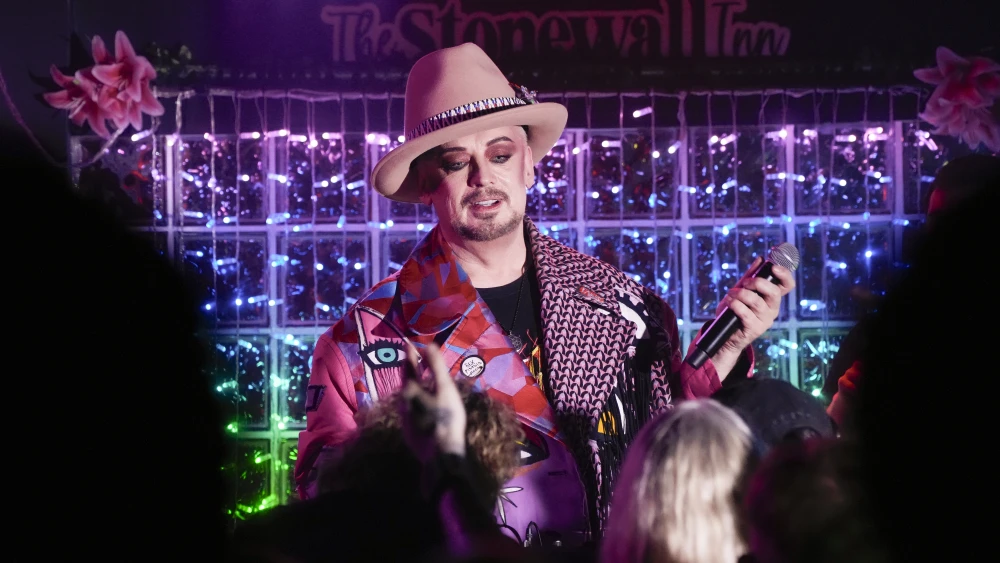
Recently, it wasn’t a rabbi, the head of a major Jewish organization, a billionaire donor, a university president or a Hollywood executive who stood up for the Jews. It was Boy George. Yes, that Boy George.
The British pop icon, who is not Jewish, looked at the explosion of antisemitism since Oct. 7 and refused to remain silent. He watched Jewish students face harassment on college campuses, synagogues become targets and protesters rationalize or even celebrate the massacre of innocent civilians. In response, he wrote a new song, “Od Nirkod” (“We Will Dance Again”), honoring the victims of the Hamas-led terrorist attacks in southern Israel on Oct. 7, 2023, and expressing solidarity with the Jewish people.
Boy George undoubtedly knew what would follow. He knew activists would attack him, social-media mobs would target him, and that there could be professional consequences for publicly standing with Israel and the Jewish community. And there have been, though he did it anyway.
That is what courage looks like. And it forces us to confront a difficult question: Where are the people whose full-time job is to defend the Jewish people?
He has reminded us that courage can be contagious.
For nearly three years, Jewish communities around the world have endured an extraordinary wave of antisemitism. Jewish-owned businesses have been vandalized. Students have been threatened and intimidated. Protesters have glorified terrorism and openly praised those responsible for murdering Jews. Families have hidden their mezuzahs, removed Stars of David and wondered whether it is safe to wear a kippah in public.
Yet too many Jewish institutions have responded with carefully worded statements designed to offend no one, press releases read by almost no one, private meetings and appeals for quiet diplomacy.
There is certainly a place for diplomacy, strategic advocacy and serious work behind the scenes. There is, however, no place for silence masquerading as strategy.
The Jewish people do not need more committees or another round of empty declarations. We need conviction. We need leaders who understand that moral clarity matters more than political convenience and that defending the Jewish people sometimes requires making others uncomfortable.
#Shalom pic.twitter.com/0BfHIrThzO
— Boy George (@BoyGeorge) July 26, 2026
Boy George understood something many Jewish leaders appear to have forgotten: Neutrality in the face of hatred is not neutrality. It benefits the hater.
He did not ask whether standing with Jews would damage his brand. He did not hire consultants to test the political winds or wait for permission from the cultural gatekeepers. He simply made it clear that he stands with the Jewish people.
That should not require bravery in a democratic society. The tragedy is that today, it often does.
This is not an indictment of every Jewish organization. Many are doing extraordinary and necessary work: providing security, pursuing legal action, educating the public and supporting communities under threat. Their efforts deserve recognition and support.
We must demand more from the leaders and institutions that claim to represent us.
But behind-the-scenes work cannot replace visible leadership. The battle against antisemitism is being fought in the public square: in classrooms, on social media, throughout the entertainment industry, inside government and on college campuses. If those defending the Jewish people remain invisible, those spreading hatred will dominate the conversation. Silence creates a vacuum, and extremists are always eager to fill it.
Boy George has reminded us that courage can be contagious. His example should inspire thousands of others, not only celebrities, but also business leaders, professors, athletes, clergy, elected officials and ordinary citizens who still know the difference between right and wrong.
Most importantly, his courage should inspire Jews and their supporters. For generations, we have taught our children not to hide who they are, not to apologize for their existence and not to wait for someone else to defend them. Now is the moment to live up to those values.
We should publicly thank those who stand with us. We should buy their books, stream their music, attend their concerts, share their messages and ensure that courage is rewarded rather than punished. At the same time, we must demand more from the leaders and institutions that claim to represent us.
History rarely remembers those who remained safely silent. It remembers those who stood up when standing came at a cost. Boy George has chosen his place in history. The question is whether the rest of us will choose ours.