
The Rohingya tribe once numbered more than 1.4 million. Located primarily in the Indo-Asian region, this population has been subjected to recurring waves of abuse and systemic torture. They are a stateless, indigenous group of primarily Muslims.
In 2017, after a terrorist attack, Myanmar launched a war against the Rohingya. Some 10,000 were killed, and 700,000 fled to Bangladesh. The official defense forces of Myanmar, the Tatmadaw, have been repeatedly accused of crimes against humanity related to this operation, including ethnic cleansing, mass displacement, political repression, torture, sexual assault, war crimes, extrajudicial punishments, summary executions and the massacre of civilians involved in peaceful demonstrations.
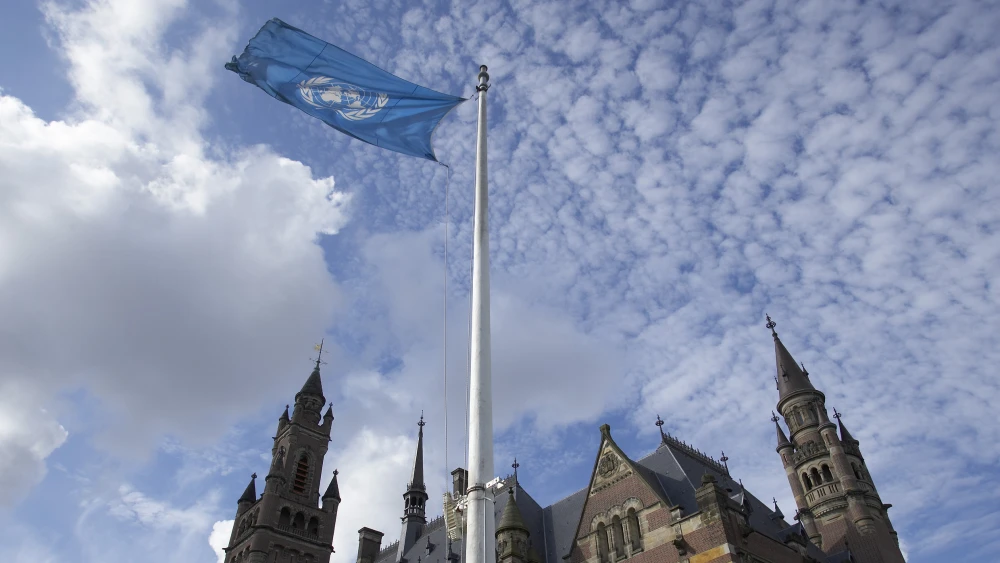
On Nov. 19, the International Court of Justice ruled that Myanmar had committed a genocide against the Rohingya.
This case against Myanmar carries a great deal of merit. The Tatmadaw burned entire villages and carried out depraved mass executions of men, women and children.
However, the court appears to have found that assessing genocidal intent requires “a pattern of conduct” that leaves no room for any other “reasonable inference.”
Nobel Prize laureate Navi Pillay of South Africa has been arguing that the “reasonable inference” criterion would lessen the burden of proof requiring a state with the charge of “genocide.” It reflects the “lowest common denominator.”
Raphael Lemkin, a Polish Jew who had witnessed far too many atrocities against his people, first coined the term “genocide.” I am sure he would now believe that his term is suffering from a paradoxical effect, because Israel and the United States could be next on the docket.
As The Wall Street Journal has written, “The ICJ voted 9-6 that Myanmar committed genocide. The ruling was needlessly complicated, but the upshot is this: The court found another way to weaponize bogus accusations of genocide.” Among other things, the court introduced a new theme: “failure to prevent” genocide.
As Judge Peter Tomka of Slovakia stated, the ICJ’s decision “threatens to result in the politicization of the Court” because “states with greater resources and power, more extensive international relationships and a stronger commitment to legal process could consequently bear a disproportionate share of the scrutiny.”
This appears to constitute the weaponization and politicization of the ICJ, using it as a weapon against wealthier countries that abide by the rule of law.
Where are the reports against the treatment of Uyghurs in China? War crimes against the Sudanese Armed Forces and Rapid Defense Forces? The wide-scale murder of human-rights protesters in Iran? The Russian slaughter of Ukrainians? The Taliban’s wholesale eclipse of human rights for women?
As Tal Becker, Israel’s lead attorney in The Hague, wrote: “The attempt to weaponize the term ‘genocide’ against Israel in the present context does more than tell the court a grossly distorted story, and its does more than empty the word of its unique force and special meaning. It subverts the object and purpose of the [Genocide] Convention itself, with ramifications for all states seeking to defend themselves against those who demonstrate total disdain for life and for the law.”
What began with Myanmar may end with Israel and, very possibly, the United States.