
In my new book, Free Expression Under Fire, I make an argument I’ve spent years defending: that free expression doesn’t just live in the courtroom or the ivory towers where I trained. My case is that the First Amendment’s 45 words have durable meaning when ordinary people take them out of litigation briefs and law reviews and into “kitchen table conversations, coffee shop debates and civic discussions that shape our communities.”
I stand by that. But I left something out. This month, as Carnegie Mellon University investigated eight students over hateful messages painted on a campus wall and a university chancellor accused his peers of “hiding behind freedom of speech” to avoid confronting antisemitism, I kept thinking that our institutions of higher education have made a genuinely hard question look impossible.
Where does free expression end and real harm begin? The deans convene task forces. The lawyers draft speech codes. Yet every Friday night, American Jews answer the same question without a single committee.
For a Jewish family, the most important kitchen table conversation of the week has a name, a set time and a liturgy. It’s called Shabbat dinner. And it may be the last functioning forum for free expression most of us belong to.
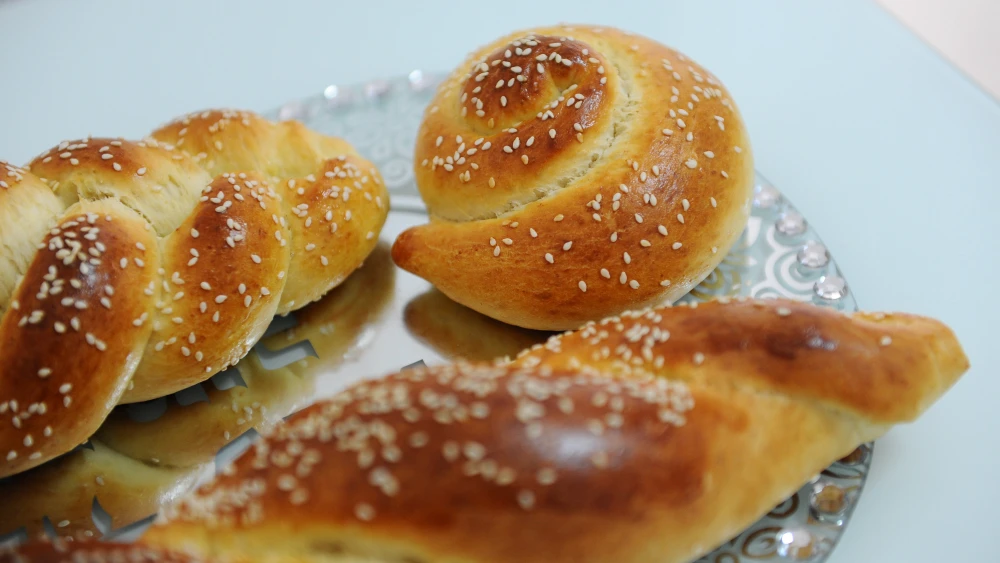
I don’t mean that grandly; I mean it literally. The candles are lit, the wine is blessed, the challah is torn. And then the arguing begins. Israel. The election. Whether young people are too fragile or the old people too stubborn. Someone says something the rest of us find impossible. Nobody is deplatformed. Nobody storms off for good. We pass the brisket and go again next week.
Our platforms are built for exit: unfollow, unfriend, leave. Shabbat is built for return.
We have spent a decade wringing our hands over the collapse of civil discourse: the campus shout-downs, the social-media pile-ons, the sense that to disagree is to declare war. I’ve written about most of it. And all the while, the oldest deliberative institution many of us belong to has been sitting in the dining room, hiding in plain sight.
The Shabbat table works where the internet fails, and it’s worth asking why.
Start with the fact that it is embodied. The person you disagree with is your uncle, and he will still be your uncle on Sunday. You cannot mute him. You cannot block him. You cannot reduce him to his worst sentence, because you’ve also seen him cry at a grandchild’s bris and fumble the words to Shalom Aleichem. Online, we meet strangers at their most extreme. At the table, we meet family and friends at their most whole. That difference is the whole ballgame.
Judaism did not invent this table yesterday. Our tradition is a centuries-long argument that, remarkably, decided to preserve the losing side. The Talmud records the minority opinion beside the majority—Beit Shammai next to Beit Hillel—not because both are law, but because both are Torah. A machloket l’shem shamayim—“an argument for the sake of Heaven”—is one of the few disputes our sages promised would endure. We were trained to believe that being wrong in public is not a disqualification. It is a contribution.
That is a deeply American idea, too, though we rarely notice the overlap. Supreme Court Justice Louis D. Brandeis understood both inheritances. He wrote that the remedy for bad speech is “more speech, not enforced silence.” The First Amendment and the Talmudic page share a wager: that truth is better served by keeping the argument open than by shutting it down. One protects dissent with law; the other with liturgy. Both refuse to let the majority have the last word.
So what do we owe the table, across the generations now crowded around it?
To the elders: patience with the vocabulary. When a grandchild says “safe space” or “harm,” resist the urge to hear surrender. Hear a generation trying, clumsily, to name real wounds, and then insist, gently, that a table where no one can be uncomfortable is a table where no one can be honest.
To the young: patience with the bluntness. When a grandparent says something that lands wrong, before you decide that he’s beyond reach, remember that he learned to argue in a world that didn’t yet flinch. His directness isn’t cruelty. It may be the highest respect he knows how to pay you—the assumption that you’re strong enough to take it.
And to everyone: the discipline of staying. The most radical act in American discourse right now isn’t saying the brave thing. It’s remaining at the table after the brave thing has been said.
Our platforms are built for exit: unfollow, unfriend, leave. Shabbat is built for return. You should come back next week whether the argument is resolved or not because the relationship outranks the disagreement.
That is not a small lesson for a fractured country as we celebrate America 250. It may be the only one that matters.
Light the candles. Pour the wine. Tear the challah. Say the thing you’re afraid to say … and then stay to hear the response.
Shabbat Shalom!