


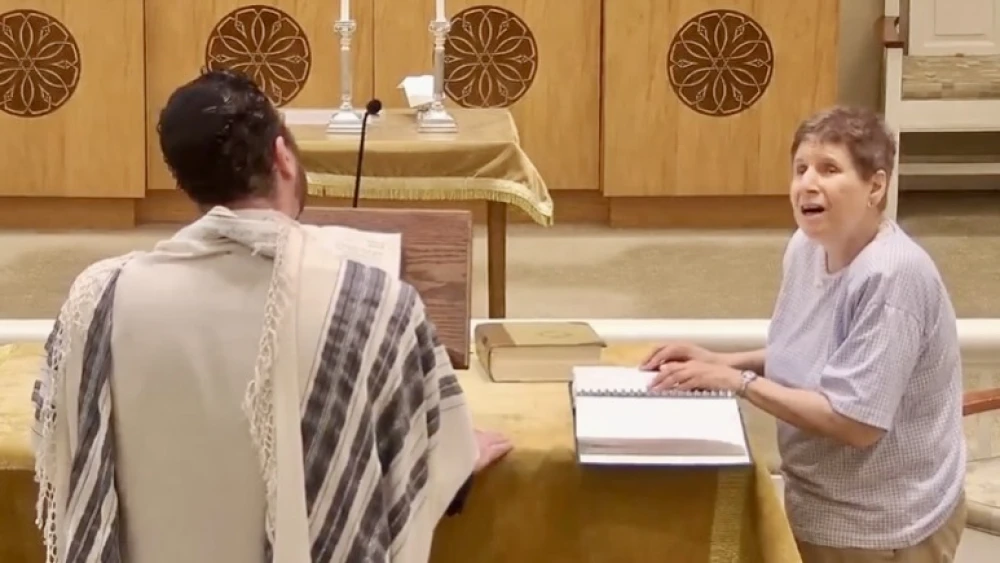
With the Jewish High Holy Days quickly approaching, JBI Library has expanded its free collection of accessible prayer books, liturgical materials, digital resources and community programming, helping people who are blind, have low vision or have a print disability fully participate in one of the holiest times of the Jewish year.
New this year from JBI is a braille edition of Machzor Lev Shalem, the Conservative movement’s High Holy Day prayer book, as well as braille and large-print aliyah cards featuring the blessings recited at the bimah before and after Torah readings.
In addition to physical materials mailed free of charge, JBI offers a growing collection of downloadable prayers and liturgical resources that can be accessed instantly through its website, helping patrons prepare for or participate in services wherever they are. JBI is pleased to have recently partnered with Rabbi Lenny Sarko and the Devarim Institute to offer their e-braille edition of Mishkan HaNefesh, the Reform movement’s machzor for Rosh Hashanah and Yom Kippur. Designed specifically for refreshable braille displays, the e-braille edition allows users to quickly search, navigate and jump directly to prayers and readings in either Hebrew or English.
“No one should be excluded from the High Holy Days because they can’t access the prayer books or materials they need,” said Michelle Shapiro Abraham, executive director of JBI Library. “Whether someone prefers braille, large print, audio or digital materials, our goal is to remove barriers so every person can pray, reflect, learn and connect with the Jewish community in the way that works best for them.”
Beyond its library services, JBI will also host free virtual programs that invite participants to explore Jewish traditions, literature and culture together throughout the High Holy Day season.
Resources available free of charge
JBI’s collection spans multiple Jewish traditions and formats, ensuring that individuals and organizations—including synagogues, community centers, hospitals, senior living communities and other Jewish institutions—can find resources that meet their needs.
Available materials include:
- New: Machzor Lev Shalem (Conservative) in braille
- New: Mishkan HaNefesh in e-braille for use with refreshable braille displays through the National Library Service (NLS)
- New: aliyah cards with blessings read on the bimah before and after Torah readings in large print and braille
- Mishkan HaNefesh (Reform) in braille and audio
- Traditional High Holy Day machzorim in braille, large print and audio
- Mishkan HaLev Selichot materials in braille
- Large-print Orthodox, Conservative and Russian High Holy Day prayer books
- PJ Library’s A Time to Grow: A Family Guide for Starting the Jewish New Year
- Children’s High Holy Day resources
- Yizkor services and other holiday liturgy in accessible formats
- Braille and large-print Jewish reference calendars and a large-print Russian version
In addition to its mailed braille, large print and audio materials, JBI is highlighting its growing collection of free digital downloads, allowing users to instantly access many of the High Holy Days’ most frequently used prayers and texts. Resources include Yizkor, Tashlich, Selichot, Kiddush, Kohelet (Ecclesiastes) and other holiday liturgy, providing flexible options for individuals and congregations.
All High Holy Day materials are provided free of charge to eligible patrons who are blind, have low vision or have a physical or reading disability that makes reading standard print difficult. JBI also provides accessible sacred texts at no cost to synagogues, JCCs, nursing homes and other Jewish organizations because financial constraints should never prevent individuals or communities from fully participating in Jewish life.
To ensure delivery before Rosh Hashanah, orders should be placed by Aug. 28 for both organizations and individuals.
To browse materials, place an order or download prayers, visit https://jbilibrary.org/our-library/high-holy-day-materials.
New High Holy Day programs explore Jewish traditions and bring people together
This year’s virtual programming includes “Customs of the High Holy Days,” a two-part online series exploring some of Judaism’s most unusual and enduring traditions. Designed for participants of all backgrounds, each informal session combines historical information with conversation about the customs that have shaped Jewish holiday observance for generations.
They include:
‘The Meaning of Tashlich (Casting Away)’
Thursday, Sep. 3, 12:30-1:15 p.m. ET
Participants will explore the 600-year-old tradition of Tashlich, in which Jews symbolically cast away the previous year’s mistakes by tossing breadcrumbs into flowing water. The discussion will examine the origins of the custom, its evolution across Jewish communities, and the theme of beginning the new year with reflection and renewal.
‘The Art of Ushpizin (Welcoming Holy Guests)’
Thursday, Sep. 24, 12:30-1:15 p.m. ET
Held just before Sukkot, this session explores the mystical tradition of ushpizin, the symbolic welcoming of honored spiritual guests into the sukkah. The conversation will use this centuries-old custom as a starting point to discuss hospitality, memory and personal influences.
JBI will also host a virtual book club on Thursday, Oct. 1, at 5 p.m. ET. Participants will discuss author Dara Horn’s novel Eternal Life, which explores faith, family, mortality and what it means to live a life of purpose. More information will be available at: https://jbilibrary.org/programs-events.
To learn more, visit: jbilibrary.org/our-library/high-holy-day-materials or contact JBI’s librarians at library@jbilibrary.org or 212-545-8025.



